The U.S. Department of Education opened investigations on Monday, October 26, 2026, into three California school districts — North Monterey County Unified School District, Palo Alto Unified School District and San Francisco Unified School District — over allegations that students were required to reveal intimate personal and family information in classroom activities without their parents' knowledge or written consent, the department's Student Privacy Policy Office (SPPO) announced.
Source: U.S. Department of Education
The investigations will determine whether the three districts violated the Protection of Pupil Rights Amendment (PPRA), the federal parental-rights law that requires schools to notify parents and obtain their written consent before administering a survey, analysis or evaluation that would reveal protected information about a student and their family, the department said. Opening an investigation is not a finding of wrongdoing, and none of the three districts has been found to have broken the law.
Source: U.S. Department of Education
What the federal government alleges
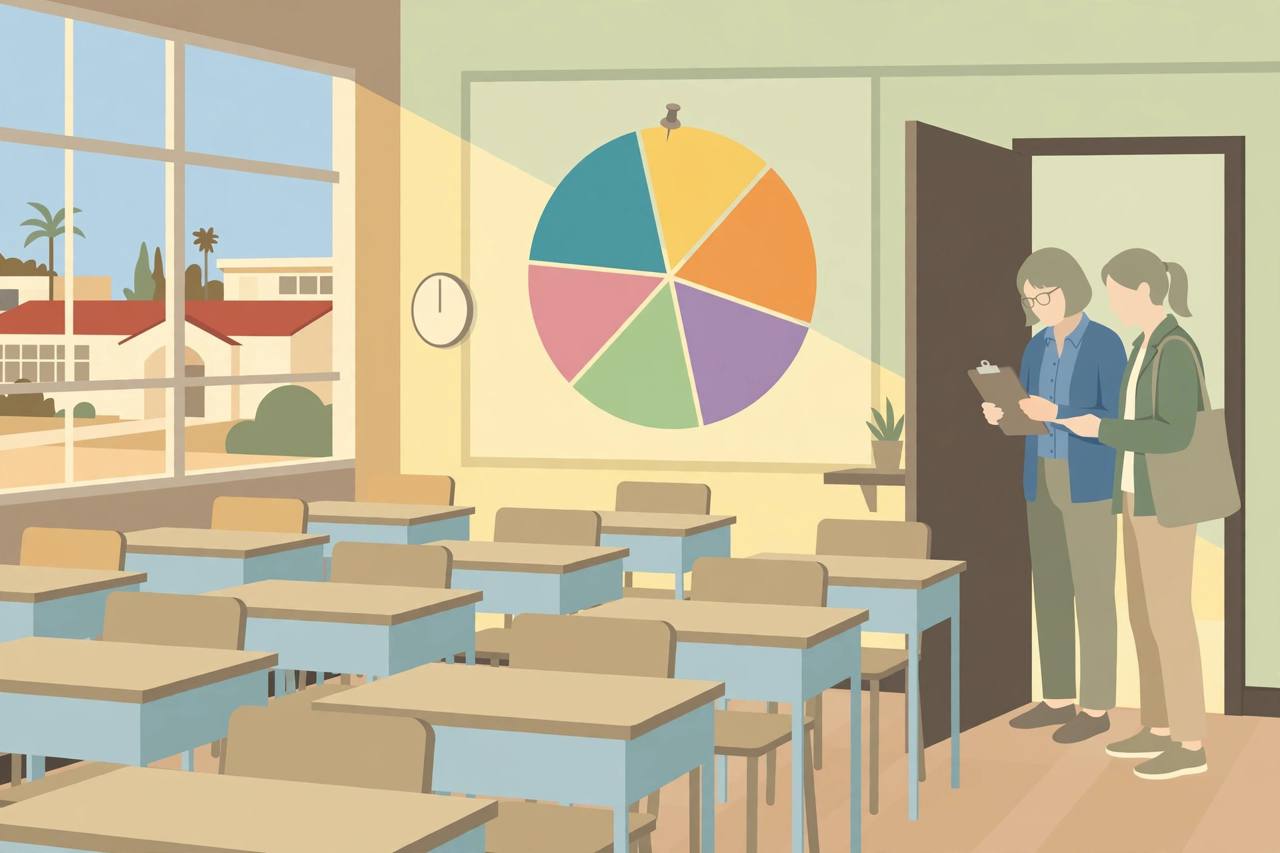
According to the department, the districts require students to take part in activities called the “Wheel of Power/Privilege” and/or “Mapping My Identities” as part of mandated Ethnic Studies curricula. The department described the activities as “invasive questionnaires” that require students to identify personal information such as their sexual orientations, gender identities, mental and physical health conditions, family economic status, race and more — and students are then asked to determine their “privilege status” based on the information they provide.
Source: U.S. Department of Education
“Schools in California seem to be collecting a myriad of protected and private information on students without involving parents, raising serious concerns that they deliberately keep parents in the dark about the most sensitive information pertaining to their children,” said Frank Miller, director of the Student Privacy Policy Office. “Students should not be pressured into identifying intimate details about themselves and their families without parental awareness and consent. Education leaders in California must stop undermining parental rights and we will work with these Districts to bring them into full compliance with federal laws.”
Source: U.S. Department of Education
Parents also allege that the districts were not responsive to requests to review the Ethnic Studies curriculum, or allowed parents to review only parts of it, according to the department. PPRA separately requires schools to make all curriculum available for review to parents on request, and gives parents rights to inspect instructional materials used as part of their child's education.
Source: EdSource
Palo Alto's response: students are not asked to complete the wheel
Palo Alto Unified Superintendent Jason Glass, who joined the district this summer, said the district will fully cooperate with the investigation and has already begun reviewing its own practices, in a message to Palo Alto Online. “Both of our high schools have confirmed that students are not asked to complete the 'Wheel of Power/Privilege' or 'Mapping My Identities' activities named in the Department's letter,” Glass wrote. “The wheel appears in our Ethnic Studies Syllabus only as a teacher example used for class reference, and it is labeled that way.”
Source: Palo Alto Online
Glass said the district is reviewing how the lessons named in the complaint were distributed, whether any personal disclosure was required, and how parent requests to view instructional materials were handled — and that if the district finds wrongdoing, it will work to fix the issue. “Parents have a right to know what their children are learning and to make decisions about sensitive personal matters,” he wrote. “We take that seriously, along with our responsibility to teach ethnic studies well. Those commitments are not in conflict.” Palo Alto parents can view Ethnic Studies course materials online and request specific coursework through their child's teacher or principal, he added.
Source: Palo Alto Online
A review of Palo Alto's 9th-grade course materials, reported by K-12 Dive, shows the nuance investigators will have to weigh: the wheel — whose segments include gender, citizenship, skin colour, education level, ability, body size, housing and wealth status — is labelled in the document as a teacher example that students are not asked to complete, yet the course description also invites students to use the wheel to write a reflection “on the degree of privilege you've experienced, areas in your life where you experience privilege versus marginalization.” Representatives of San Francisco Unified and North Monterey County Unified did not immediately respond to requests for comment, EdSource reported.
Source: K-12 Dive
Background: how a state graduation requirement reached a federal privacy probe
The dispute traces back to California Assembly Bill 101, signed by Governor Gavin Newsom in 2021, which required districts to create a new Ethnic Studies graduation requirement by 2025. Palo Alto Unified formed an Ethnic Studies committee of high school teachers, reviewed hundreds of pages of state documents and worked with local institutions including UC Berkeley. When the course came up for approval in 2025, former Superintendent Don Austin asked leaders to pull the plug, and many California districts dropped their courses after learning the state had not appropriated the funding to implement them; Palo Alto proceeded anyway, and its Board of Education adopted the requirement 3–2 in January 2025 — celebrated by supporters as a fuller picture of U.S. history and criticised by opponents as divisive and adopted without transparency.
Source: Palo Alto Online
The federal probe also sits inside a wider enforcement push. SPPO clarified its PPRA guidance in Dear Colleague letters in March 2025 and August 2026; the August letter said even optional mental-health screenings and surveys will be treated as “required” under the law, that an opt-out does not substitute for written parental consent, and that students' answers can be shaped by peer pressure or a wish to please a teacher. On October 5, 2026, the Education Department and the Department of Justice wrote to all state attorneys general pointing to that guidance and raising concerns about school districts' compliance, particularly around mental-health screenings. Violations of PPRA can lead to enforcement actions and a potential loss of federal funding, the department says.
Source: U.S. Department of Education
California is home to one of the largest Punjabi and South Asian communities in the United States, including many families with children in Bay Area and Central Valley public schools. The case turns on a question every parent can test directly: whether a school must notify you and get your written consent before a required class activity asks your child about family income, health, identity or status — and whether you can see the full curriculum when you ask. Palo Alto Unified says its materials are viewable online and through teachers and principals; the federal investigation will test how that worked in practice in all three districts.
What happens next
The SPPO investigations are now the active step: investigators will examine what activities were actually used in each district's classrooms, whether personal disclosure was required or optional, what notice parents received, and how curriculum-review requests were handled. San Francisco's curriculum has already faced separate local legal scrutiny — earlier this year a Lowell High School group critical of the course sued that district over the process of adopting it, EdSource noted. No findings, deadlines or penalties have been announced for the three federal investigations, and the districts remain under investigation, not under a judgment. Awaaz Punjab will update this report when the districts or the department publish findings.