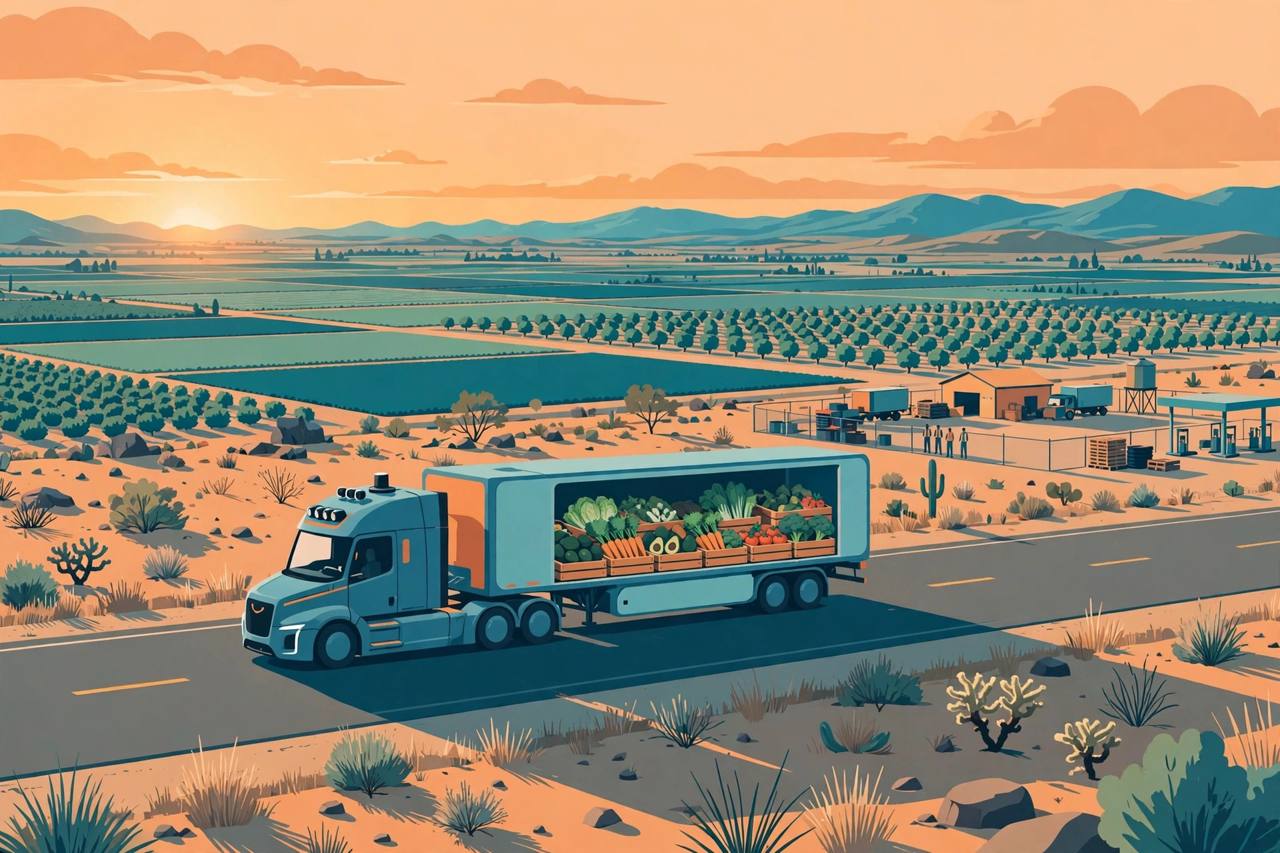
A Fresno, California family trucking company led by Lucky Dosanjh has become the first long-haul carrier in the United States to sign a binding agreement to operate driverless trucks inside its own fleet. Kodiak AI announced on Wednesday, October 28, that DTL Transport Inc. will deploy the Kodiak Driver autonomous driving system in 75 driverless trucks owned and operated by DTL, paying Kodiak a per-mile fee under its Driver-as-a-Service model.
Source: Kodiak AI / GlobeNewswire
Kodiak described the contract as the first-ever publicly announced definitive agreement by an interstate trucking company to run driverless trucks within its own fleet. TechCrunch, which interviewed Kodiak founder and CEO Don Burnette about the deal, reported that deliveries of the 75 trucks are expected to begin in 2028 and called it Kodiak's first binding commercial deal for driverless big rigs that will run on public highways.
Source: TechCrunch
A Fresno family carrier at the centre of the deal
DTL Transport has operated for more than 36 years from Fresno, in California's Central Valley, running dry and refrigerated full-truckload freight from a seven-acre gated yard. The company serves major grocery chains, meat processors and fresh-produce customers, specialises in cross-country team runs, and moves time-sensitive freight for some of the nation's largest grocers, according to the announcement. It is led by second-generation owner Lucky Dosanjh, president and CEO, while his son Jovan Dosanjh, the third generation, heads the dispatch department.
"Working with Kodiak underscores our commitment to affirming our leadership position in the industry," Dosanjh said in the announcement. "By integrating this technology into our fleet, complementing our experienced, professional workforce, we can expand capacity, enhance safety and drive innovation forward." Kodiak's Burnette said the Driver-as-a-Service model is "tailor-made for commercial trucking" and called the agreement "a major new chapter in the central role Physical AI now plays in strengthening the U.S. supply chain."
The September pilot on I-5 and CA-99
The deal grew out of a California pilot the two companies completed in September. The Kodiak Driver autonomously hauled perishable goods for DTL for 225 miles along the Interstate 5 and CA-99 freight corridors between Fresno and Los Angeles — the first commercial goods ever autonomously hauled by a Class 8 truck in California, the companies said. The deliveries ran under Kodiak's new heavy-duty Autonomous Vehicle Testing permit from the California Department of Motor Vehicles, granted earlier this summer, and a safety officer was behind the wheel during the pilot runs, TechCrunch reported.
Where the driverless trucks will run
DTL will first deploy the driverless trucks on two long-haul Sun Belt routes Kodiak has already tested: Interstate 10 between Dallas and El Paso, Texas, and Interstate 20 between Dallas and Atlanta, Georgia. The companies said those routes let DTL operate beyond current driver hours-of-service limitations, and additional lanes will be added over time. Before the DTL trucks arrive, Kodiak plans to pull human safety operators out of the cab in December and launch driverless highway service carrying goods for IKEA on Interstate 45 between Dallas and Houston, a 219-mile stretch.
The DTL contract builds on Kodiak's earlier Driver-as-a-Service work. The company first launched the model in an industrial application in December 2024, and as of June 30, 2026, its system was already integrated on 35 driverless trucks owned and operated by Atlas Energy Solutions in West Texas, a fleet Kodiak has committed to growing to 100 trucks by mid-2027. Kodiak, listed on Nasdaq as KDK after going public in September 2025, did not disclose the value of the DTL deal; TechCrunch noted its shares have fallen 87% from their first day of trading, and that a 2025 investor presentation suggested each truck could generate roughly $150,000 to $190,000 a year in recurring revenue at about $0.97 per mile — a company projection, not a contract figure.
What it means for Punjabi truckers
For the Punjabi diaspora, which supplies a large share of California's Central Valley trucking workforce and many long-haul drivers on Texas corridors, the deal is a concrete marker of how autonomy is arriving: not first through a faceless tech fleet, but through a mid-sized, family-run, Dosanjh-led carrier in Fresno that hauls the region's produce. Kodiak and DTL both framed the technology as complementing, not immediately replacing, the existing workforce, and Burnette told TechCrunch that mid-market carriers appeal to Kodiak because they can move at startup speed and integrate the system into a smaller fleet faster. The practical timeline also matters for drivers planning their careers: DTL's own driverless trucks do not start arriving until 2028, and the first routes are in Texas and the Southeast, not California.
Kodiak aims to begin fully driverless highway operations in December, starting with IKEA freight on I-45 between Dallas and Houston. DTL's 75 trucks follow from 2028 on I-10 (Dallas–El Paso) and I-20 (Dallas–Atlanta), with more lanes promised over time.
The announcement is a forward-looking company statement: Kodiak cautioned that its plans depend on closing its long-haul safety case and that actual results could differ. What is signed, however, is the commitment itself — 75 trucks, a per-mile fee, and the first time an interstate carrier has contractually agreed to run driverless trucks as part of its own fleet.