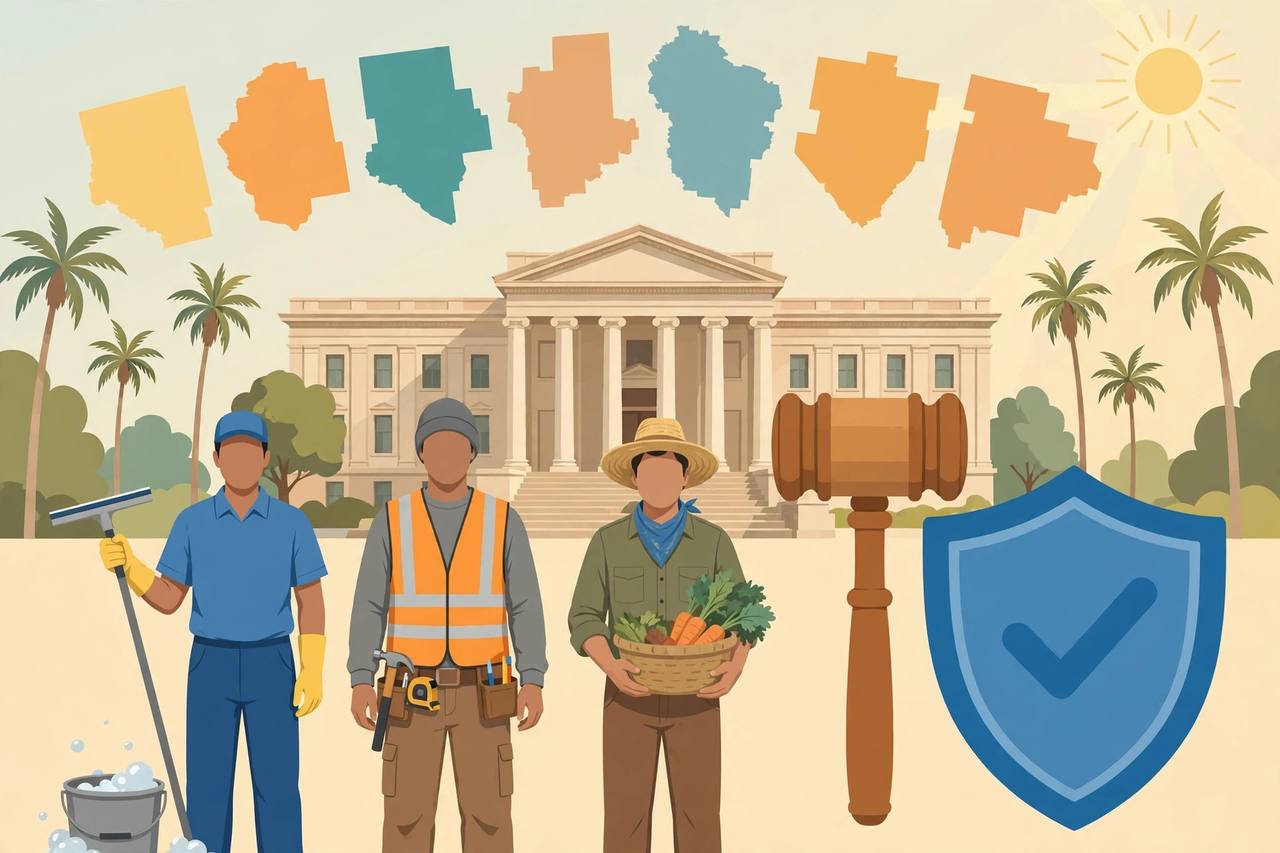
A federal judge in Los Angeles has granted a preliminary injunction blocking the Trump administration from conducting suspicionless and racially discriminatory immigration stops across Southern California, according to court papers that became public on Thursday. U.S. District Judge Maame Ewusi-Mensah Frimpong issued the order last Friday in the case Vasquez Perdomo v. Mullin, but it remained largely sealed from public view until Thursday, when the ACLU of Southern California announced the ruling and published the order.
Source: MyNewsLA
The order prohibits the defendants — the U.S. Department of Homeland Security and its agencies — from enforcing a policy and practice of conducting detentive immigration stops in the Central District of California based on racial stereotyping, except when a stop is made at a port of entry, a checkpoint or another functional equivalent of the border. Judge Frimpong also partly certified a class of people who have been affected by the practice, meaning the protection extends beyond the individual plaintiffs who brought the case.
Source: ACLU of Southern California
Where the order applies
The ruling covers the federal Central District of California, a seven-county region that includes Los Angeles, Orange, Riverside, San Bernardino, San Luis Obispo, Santa Barbara and Ventura counties — home to millions of immigrant workers, including one of the largest Punjabi and South Asian communities in the United States, spread from Los Angeles and Orange County to the farm belts of Ventura and the Coachella Valley in Riverside County.
What agents may no longer do
The order spells out how reasonable suspicion must be built: “In developing reasonable suspicion, an immigration agent or officer must consider the totality of circumstances and may not rely solely on apparent status as low-income or working-class and Latino, even when an identified target is allegedly low-income or working-class and Latino.” In plain terms, looking Latino and working-class is not, by itself, a lawful reason to stop someone. Plaintiffs argued the Constitution prohibits using race as a substitute for individualized suspicion, alleging violations of the Fourth Amendment protection against unreasonable searches and seizures and the Fifth Amendment guarantee of equal protection.
Source: ACLU of Southern California
How the case reached this point
Residents, Latino workers and immigration advocacy groups sued the Department of Homeland Security, alleging an ongoing campaign of warrantless and discriminatory enforcement stops in the region since the summer of 2025. The July motion for the injunction included body-camera footage and depositions of federal agents, gathered after Judge Frimpong ordered evidence turned over. A federal district court had earlier issued a temporary restraining order limiting some enforcement actions, but the U.S. Supreme Court stayed that order while the litigation proceeded, allowing the challenged practices to continue until this week's injunction. In a video discussed in the plaintiffs' motion, a DHS agent is heard telling another, “Yeah, just plug us in wherever you see some tonks,” while other agents guessed whether people were “wet” based on appearance — terms the complaint describes as derogatory slurs directed at migrants.
Source: MyNewsLA
What the plaintiffs said
“This order recognizes that the armed goons who targeted and abducted Latino community members in Southern California were in fact simply racially profiling as many people as they could get handcuffs on, a practice that violates multiple provisions of the U.S. Constitution,” said Mohammad Tajsar, director of immigrants' rights at the ACLU Foundation of Southern California. “Having spent more than a year amassing reams of evidence of widespread illegal behavior, we will now closely monitor compliance with this court order.” Flor Melendrez, executive director of the CLEAN Carwash Worker Center, a plaintiff in the case, said: “For over a year, agents have been showing up at car washes and taking people without a warrant, never asking whether they have a family and a home to return to. The law requires more than a biased guess about someone's status, and today the court made the government follow it.”
United Farm Workers president Teresa Romero, whose organisation is also a plaintiff, said the order “will strengthen protections for farm workers in the Central District of California, from the strawberry fields of Ventura to the date plantations of Coachella.” Annie Lai, director of the UC Irvine School of Law Immigrant and Racial Justice Solidarity Clinic, said: “The government was shown, through a large body of evidence, to be stopping people based on race. Their witnesses expressly admitted this. That is antithetical to the promise of equal protection in our Constitution.” Carl Bergquist, general counsel at the Coalition for Humane Immigrant Rights (CHIRLA), said the plaintiffs “will make sure this injunction is followed to the T.”
Source: ACLU of Southern California
The government's position
The Department of Homeland Security has frequently insisted that federal agents in the field are operating within the law to protect American citizens. “Our agents are focused on protecting the American people — not entertaining performative outrage,” DHS said in a statement quoted in reporting on the case. “Where is the media's outrage for Angel families who lost a loved one to illegal alien crime?” — a reference to relatives of people killed by undocumented individuals in the United States. Judge Frimpong heard arguments in the case in September in Los Angeles federal court before issuing the sealed order last Friday.
Southern California's workplaces — car washes, farms, construction sites, warehouses and trucking yards — employ large numbers of immigrant workers, including Punjabis. The injunction does not end immigration enforcement in the seven counties, and stops at ports of entry and checkpoints are expressly excepted. What changes is the legal test on the street: an agent must now be able to point to the totality of circumstances, not a person's appearance, language or type of job alone.
What happens next
A preliminary injunction stays in force while the underlying lawsuit continues, so the Vasquez Perdomo case will proceed in Los Angeles federal court and the government can be expected to defend its enforcement practices as the case moves forward. The plaintiffs say their immediate focus is compliance — monitoring stops across the seven counties and returning to court if they believe the order is being violated. For workers in the region, the practical test begins now: any detentive stop away from the border must rest on more than racial stereotyping, and people stopped can point to a court order, unsealed this week, that says so.