Los Angeles, California — A strike that could have snarled cargo at the busiest container port complex in the United States days before the midterm elections has been pushed back. The Pacific Maritime Association (PMA), which represents marine terminal employers on the West Coast, announced on Friday, October 30, that it and the International Longshore and Warehouse Union (ILWU) Local 26 had signed an extension of their contract talks through 5 p.m. Pacific Time on Wednesday, November 4 — averting a walkout that had been set to begin when the previous extension expired on Sunday, November 1. Negotiations will continue with the assistance of the Federal Mediation and Conciliation Service, the PMA said.
Source: Reuters via Q106 (Oct 30)
What watchmen actually do at the gates
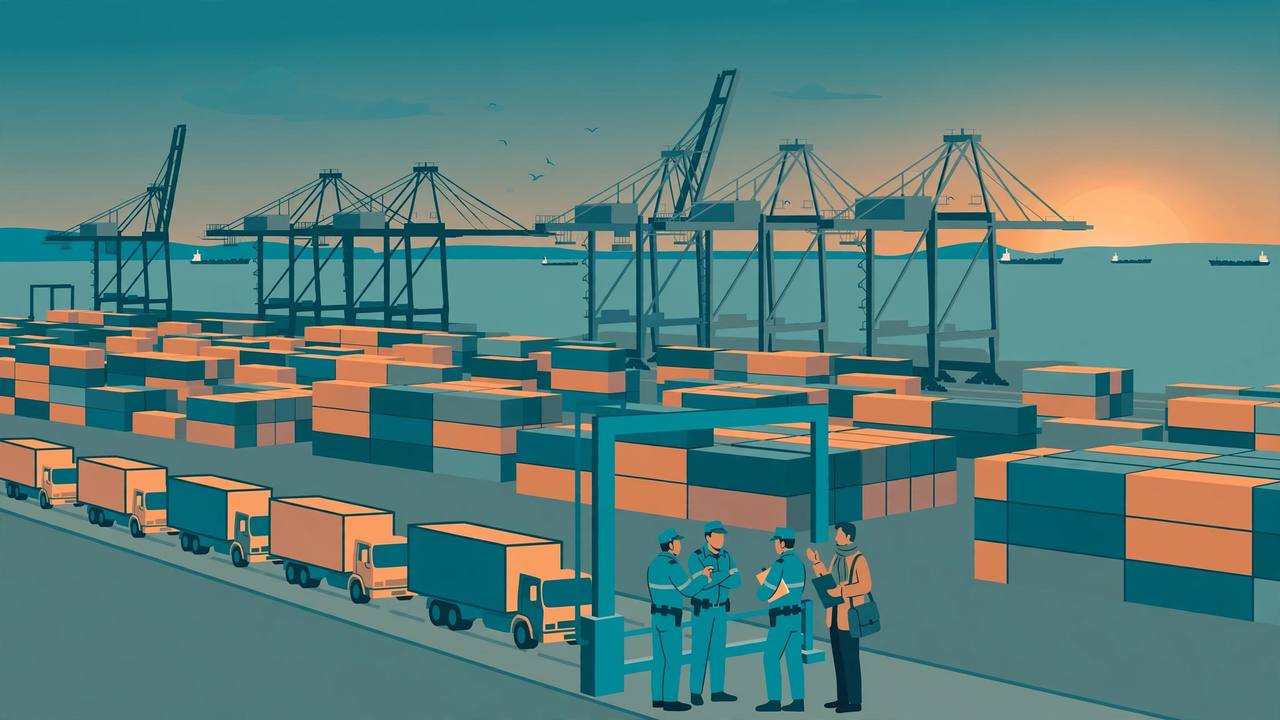
Watchmen are the security layer of the terminals. According to Reuters' account of the dispute, they control and inspect truck and employee entries at terminal gates, provide terminal security, and guard and track critical cargo crossing the docks. That gate role is why a walkout by a small crew matters out of all proportion to its size: every container that enters or leaves a terminal by road passes a gate the watchmen staff. For the thousands of truck drivers — including the many Punjabi owner-operators and port drayage drivers who haul containers out of Los Angeles and Long Beach into California's Central Valley and beyond — the gates at San Pedro Bay are the front door of the working day.
Why 250 workers can stop two giant ports
The PMA itself has warned that longshore workers, marine clerks and other ILWU members — who work under a separate coastwide contract and are not party to this dispute — are not expected to cross a Local 26 picket line. If that happened, vessel work, yard operations and gate operations at the affected terminals could all halt at once, the association said: no ships worked, no containers moved in the yard, and no trucks in or out. The two sides do not even agree on the footprint. The PMA counts six container terminals employing Local 26 watchmen; the union's strike notice listed eight locations, including APM Terminals, Long Beach Container Terminal, Total Terminals International, SSA terminals and Pacific Container Terminal, according to shipping-industry reporting.
Source: gCaptain (Oct 30-31)
A contract fight fifteen months old
This dispute did not begin this week. The previous agreement between the PMA and Local 26 expired in July 2025, and the watchmen have worked under extensions ever since while the two sides met regularly with federal mediators, without reaching a new deal. The union had authorised a strike, and in a letter dated October 23 its president, Luisa Gratz, told the employers that negotiations had been under way since 2025 without producing an agreement, according to Journal of Commerce reporting carried by Kuehne+Nagel's customer advisory. The November 1 deadline — and now the November 4 extension — are the latest in a series of cliff edges in that long negotiation.
Source: Kuehne+Nagel advisory citing Journal of Commerce (Oct 29-30)
Pay is a sticking point — the employers' claim, attributed
The PMA said earlier in the week that every tentative agreement reached so far had been on a union proposal, and that significant differences remain, including on wage proposals. The association asserts that full-time watchmen currently earn an average of more than $170,000 a year, plus employer-paid healthcare and pension benefits. That figure is the employers' claim in a live negotiation and is presented here as their position, not as an independently verified payroll fact. An ILWU representative did not immediately comment when Reuters reported the extension on Friday, and the union's own account of its pay demand has not been published alongside the PMA's statements.
Source: Seatrade Maritime (Oct 31)
Both ports are fully operational today and no strike is in effect. The risk has moved, not vanished: if there is no agreement by 5 p.m. Pacific on Wednesday, November 4 — the day after the midterm elections — the authorised walkout can still happen, and PMA's own assessment is that other ILWU members honouring the picket line could halt vessel, yard and gate operations at the affected terminals. Drivers and dispatchers should treat November 4 evening as the next decision point for San Pedro Bay gate appointments.
Record cargo is the backdrop
The timing could hardly be more sensitive. Los Angeles and Long Beach — the San Pedro Bay complex, the nation's busiest container gateway — each reported all-time cargo volume records for the month of September, Reuters noted, and the complex has been handling record volume through the peak shipping season. Industry trackers have also warned that the ports were already struggling to move containers inland before any labour disruption, and the National Retail Federation expects imports at major U.S. container ports to ease seasonally from about 2.25 million TEU in October to about 2 million TEU in November. A gate shutdown in that environment would not just delay ships; it would back containers up into yards, rail ramps and the truck queues that feed warehouses across Southern California.
What happens next
Talks continue under the Federal Mediation and Conciliation Service through the new deadline. The PMA said in its October 30 statement that it 'remains committed to reaching a fair agreement at the bargaining table that avoids disruption at the nation's two busiest ports' — an attributed statement of intent, not a guarantee of a deal. If negotiators reach a tentative agreement before Wednesday's 5 p.m. deadline, the strike threat ends; if they agree another short extension, the cliff edge moves again; and if neither happens, Local 26's authorised strike begins at the terminals that, on the employers' own numbers, handle more than half of the combined cargo of the two ports. This site will follow the November 4 deadline as the next development in this story.