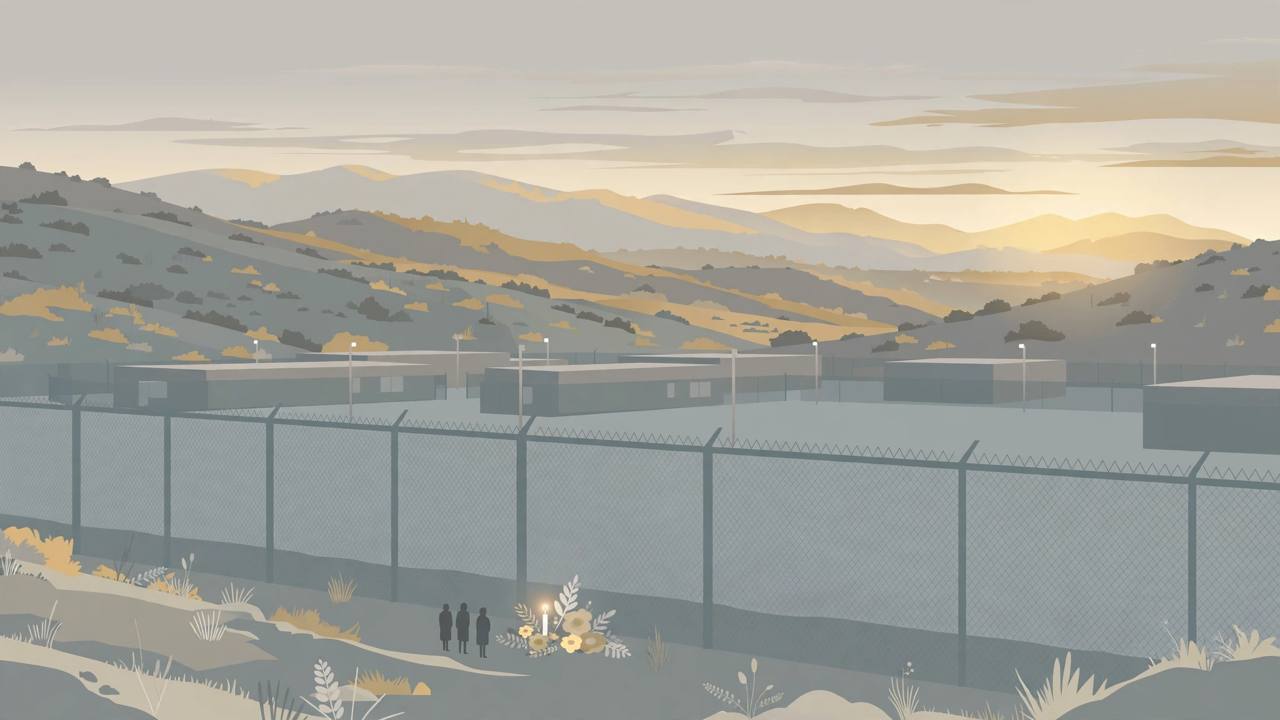
SAN DIEGO, California — Immigration and Customs Enforcement (ICE) on Tuesday, October 27, publicly identified the man who died in its custody at the Otay Mesa Detention Center in San Diego as Roberto Jimenez Gutierrez, 43, from Guatemala. He died on Saturday, October 24, in an assigned safety cell at the facility. ICE said his death is under investigation and that an autopsy will be conducted to determine the official cause and manner of death.
Source: Daylight San Diego
According to ICE's death notice, facility staff found Jimenez Gutierrez unresponsive in his cell at about 11:31 a.m. on Saturday and tried to wake him. Staff declared a medical emergency and called 911. Medical personnel began CPR at about 11:38 a.m.; paramedics from the California Department of Forestry and Fire Protection (Cal Fire) arrived at about 11:52 a.m. and continued lifesaving measures. A paramedic pronounced him dead at about 12:23 p.m., before he could be transported from the facility.
Source: Associated Press, via EuropeSays
CoreCivic, the private prison company that operates the detention center, confirmed the death to Daylight San Diego on Monday — before ICE had named the man — and said ICE was notified immediately. "We are deeply saddened by the loss of anyone in our care," a CoreCivic spokesperson said in an emailed statement.
How he came to be in the safety cell
ICE said its San Diego agents arrested Jimenez Gutierrez on October 9 during an enforcement operation in Escondido, reinstated a prior final removal order, and transferred him to Otay Mesa pending his removal to Mexico. He had been in custody for just over two weeks when he died. ICE said it has notified his next of kin and the Consulate of Guatemala. The Mexican Consulate in San Diego said the man who died was not a Mexican national.
One part of ICE's account remains unexplained in its own notice: the agency said an immigration judge ordered Jimenez Gutierrez deported to Mexico in 2006, but did not explain why a Guatemalan citizen would be removed to Mexico, and it did not immediately answer Daylight San Diego's question asking for clarification. ICE also said he was convicted in July 2024 of selling liquor to a minor and pointed to several arrests that do not appear to include convictions. Daylight San Diego reported it was unable to locate criminal records for anyone with his name in San Diego County court records, and ICE did not immediately say where the conviction and arrests happened — so that part of ICE's account remains unverified against court records.
County supervisors demand answers
On Tuesday afternoon, San Diego County Supervisors Terra Lawson-Remer and Paloma Aguirre held a press conference demanding that the Trump administration and CoreCivic fully cooperate with the county medical examiner's investigation into the death. They said they are sending a letter with what they called nonnegotiable demands: cooperate with the medical examiner, preserve all records related to Jimenez Gutierrez's detention, care and death, provide a timeline of events, and notify the appropriate consulate. They also demanded that ICE promptly publish its death notice and its detainee death report.
Source: Daylight San Diego
The supervisors' intervention sits inside a longer fight over access to the facility. Earlier this year the county sued the Department of Homeland Security, ICE and CoreCivic to allow a health inspection after officials denied the county's public health officer full access to the facility and the people held there. County officials say earlier visits found unreported tuberculosis cases and gaps in care, and on Tuesday they asked the county public health officer to review what follow-up inspections and public-health actions the county is allowed to take.
The facility and the wider picture
The Otay Mesa Detention Center, in the dry hills near the U.S.–Mexico border in San Diego County, is operated by CoreCivic and owned by the Department of Homeland Security, and has operated for at least 20 years. According to the latest Deportation Data Project figures cited by immigration researcher Austin Kocher, the facility recently held 1,231 people. Advocates point to a California Department of Justice finding this year that Otay Mesa faced overcrowding, limited access to water and medical care, and other substandard conditions — findings the facility's operators dispute in the ongoing access litigation.
How many people have died in ICE custody is itself reported differently by different counters, and readers should know whose number they are reading. NBC 7 San Diego reported the Otay Mesa death was at least the 29th reported death in ICE custody so far this year, after a record 33 deaths in 2025. The Associated Press, reporting ICE's confirmation on Tuesday, called it the 61st such death under the Trump administration. Researcher Austin Kocher, who tracks the figures separately, counts 60 deaths in detention under this administration — 37 in fiscal year 2026, which he calls already the deadliest on record, plus three so far in fiscal year 2027, including a death at Folkston, Georgia, one day before Jimenez Gutierrez died. The counters use different definitions, which is why their totals differ.
What is solid
- Roberto Jimenez Gutierrez, 43, of Guatemala, died at Otay Mesa on Oct 24; ICE confirmed his identity on Oct 27
- He was found unresponsive in an assigned safety cell; CPR and paramedics could not revive him; an autopsy is pending
- He was arrested in Escondido on Oct 9 and held pending removal; next of kin and Guatemala's consulate were notified, ICE says
- San Diego County supervisors have formally demanded cooperation, records and a published death report
What is only claimed
- ICE's claim of a July 2024 conviction for selling liquor to a minor — Daylight San Diego could not find matching San Diego County court records and ICE has not said where it occurred
- Why a 2006 removal order named Mexico for a Guatemalan national — ICE has not explained
- The running total of ICE custody deaths — NBC 7, AP and researcher Austin Kocher publish different totals using different definitions
Why this matters beyond San Diego
Deaths inside immigration detention land directly on the communities Awaaz Punjab serves. California's Central Valley and its cities hold one of the largest Punjabi diaspora populations in the United States, and detention, removal orders and custody conditions are everyday concerns for immigrant families following cases like this one — including the basic question of whether a death inside a facility will be investigated in public, with records preserved and a cause of death established by an independent medical examiner.
What happens next
The San Diego County Medical Examiner will conduct the autopsy that establishes the official cause and manner of death; as of Tuesday morning the office had released no further details. ICE says its investigation continues and that a detainee death report will follow. The county's letter to the administration and CoreCivic, and its separate court fight over inspection access to Otay Mesa, will decide how much of that investigation happens in public. Awaaz Punjab will report the autopsy finding and ICE's death report when they are published.