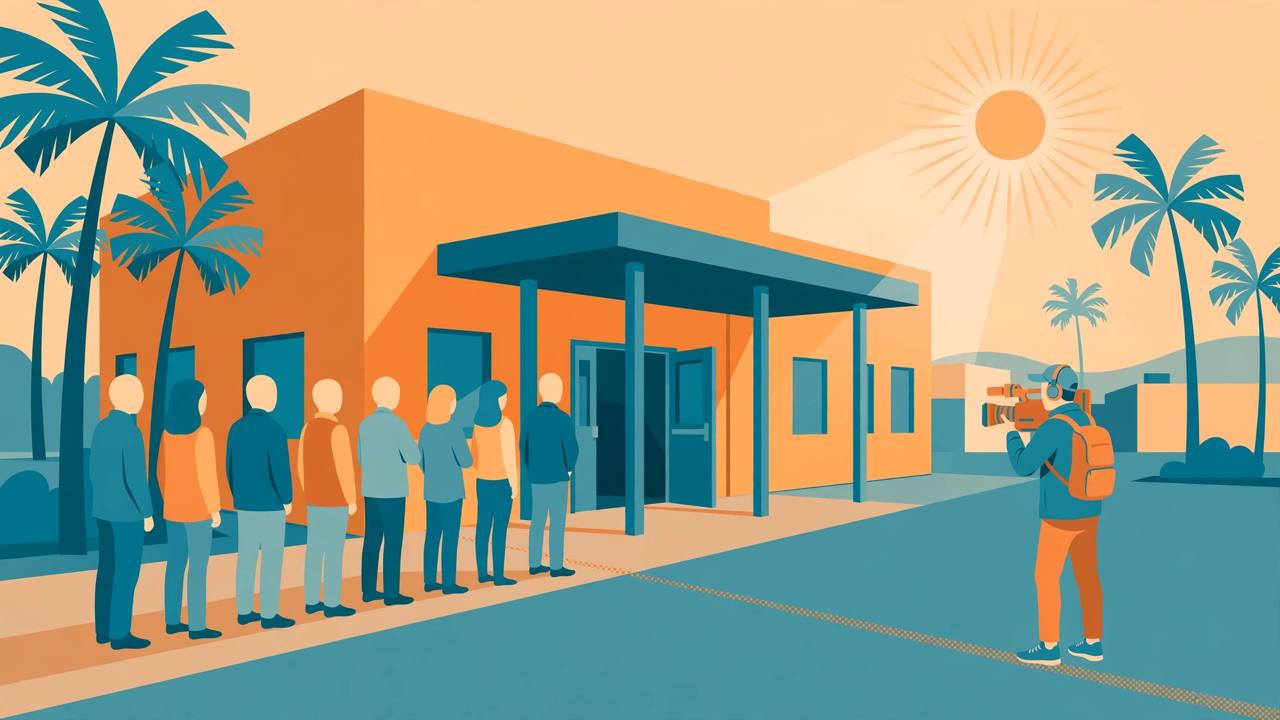
Some of California's most populous counties are going into Election Day with media rules that press-freedom advocates say restrict journalists from documenting voting in ways that go beyond state law and may violate the First Amendment, CalMatters reported on Monday, November 2 — the eve of the November 3 midterm elections.
Source: CalMatters, via The Mariposan
A coalition of media outlets led by CalMatters, together with the First Amendment Coalition, has written to county election officials objecting to the rules. Research by the First Amendment Coalition found at least nine other counties besides Kern — including large ones such as Alameda, Los Angeles and Santa Clara — that repeat the Secretary of State's guidance in their own local rules. Santa Clara County covers San Jose and Alameda County covers Oakland, Fremont and Hayward, both home to large Punjabi and South Asian communities whose members will be voting today.
How it started: Kern County's 100-foot rule
On October 27, the Kern County elections office issued media guidelines prohibiting media personnel from filming within 100 feet of polling sites and ballot drop boxes. That prompted the first of two letters from the media coalition to the county registrar. The coalition argued the rules were unnecessarily restrictive and arrived "at an unprecedented time when the federal government is alleging election fraud and Governor (Gavin) Newsom is sending election attorneys to monitor federal poll watchers."
After the letter, Kern County issued updated guidance on October 30 saying outlets cannot film voters dropping off ballots if a voter "feels intimidated by being filmed," and requiring all media interviews to take place at least 25 feet from a polling place entrance. The coalition replied that no statute requires journalists to stop filming ballot drop-offs simply because a voter reports feeling uncomfortable, and that the 25-foot distance in state law applies to exit polling — not to interviews generally.
What state law actually says
The disputed county rules appear to trace back to Secretary of State notices and poll-worker training materials, which prohibit photographing or recording voters entering, inside or exiting a polling place without their permission, alongside the long-standing ban on electioneering — trying to persuade voters — near polling places. But the statute itself is narrower: Elections Code section 18541 reaches recording a voter within 100 feet of a polling place entrance when it is done "with the intent of dissuading another person from voting." The First Amendment Coalition's field guide for reporters makes the same distinction — there is no general right to photograph inside a polling place, where the ballot is secret under the state constitution, but lawful newsgathering outside should not be restricted. At central counting centers, state law allows up to two representatives per media organization, and counties may cap the total at 10.
Source: First Amendment Coalition reporter's field guide, via SF Patriot
"As long as outlets do not try to influence voters, these restrictions go beyond what state law limits and possibly run afoul of constitutional protections of a free press," said Ginny LaRoe, advocacy director at the First Amendment Coalition. Dedee Verdin, a spokesperson for the Secretary of State's office, told CalMatters on Sunday night that she was seeking clarity from the office's experts and would respond when she had more information. Alameda County's own Election Tool Kit opens by saying "voting, by nature, is a public process," then states that "under no conditions should media capture footage of" voters entering or exiting a vote center without permission; Registrar Cynthia Cornejo had not responded to local reporters at publication time.
Angélica Salceda, an attorney with the ACLU of Northern California — not part of the media coalition — raised a related worry: overly broad filming bans near polling places could also discourage ordinary bystanders from recording federal immigration enforcement activity if it were to occur near a voting site on Election Day.
Why it matters today, not just for journalists
Election Day coverage is how voters see that voting is actually happening — lines, counts and disputes at real polling places. In a year when the federal government has alleged widespread election fraud, sued over California's voter rolls and sent its own poll monitors, the ability of independent reporters to film outside vote centers is one of the public's main windows into whether the process is orderly. For voters in Kern, Alameda, Los Angeles and Santa Clara counties, the practical position today is this: poll workers may apply the county guidance at the door even while its legality is disputed, and a voter's own ballot remains secret — no one may photograph a marked ballot or film inside the voting area.
Practical information for California voters
Polls and vote centers in California close at 8 p.m. Pacific today, Tuesday, November 3. Mailed ballots must be postmarked by Election Day and arrive within seven days to be counted. California also allows same-day registration and voting at a vote center, and voters can check registration and ballot status through the Secretary of State's website. Anyone in line at closing time is entitled to vote.
What happens next
The Secretary of State's office has said it is consulting its legal experts and will clarify the guidance, but no clarification had been issued by the time polls opened. The media coalition's letters leave open the possibility of a legal challenge if counties enforce the broader bans against reporters today. For this Election Day, the disputed rules remain in force at the doors of vote centers across at least ten California counties — including the Central Valley county of Kern, in the heart of the state's Punjabi farming belt around Bakersfield.