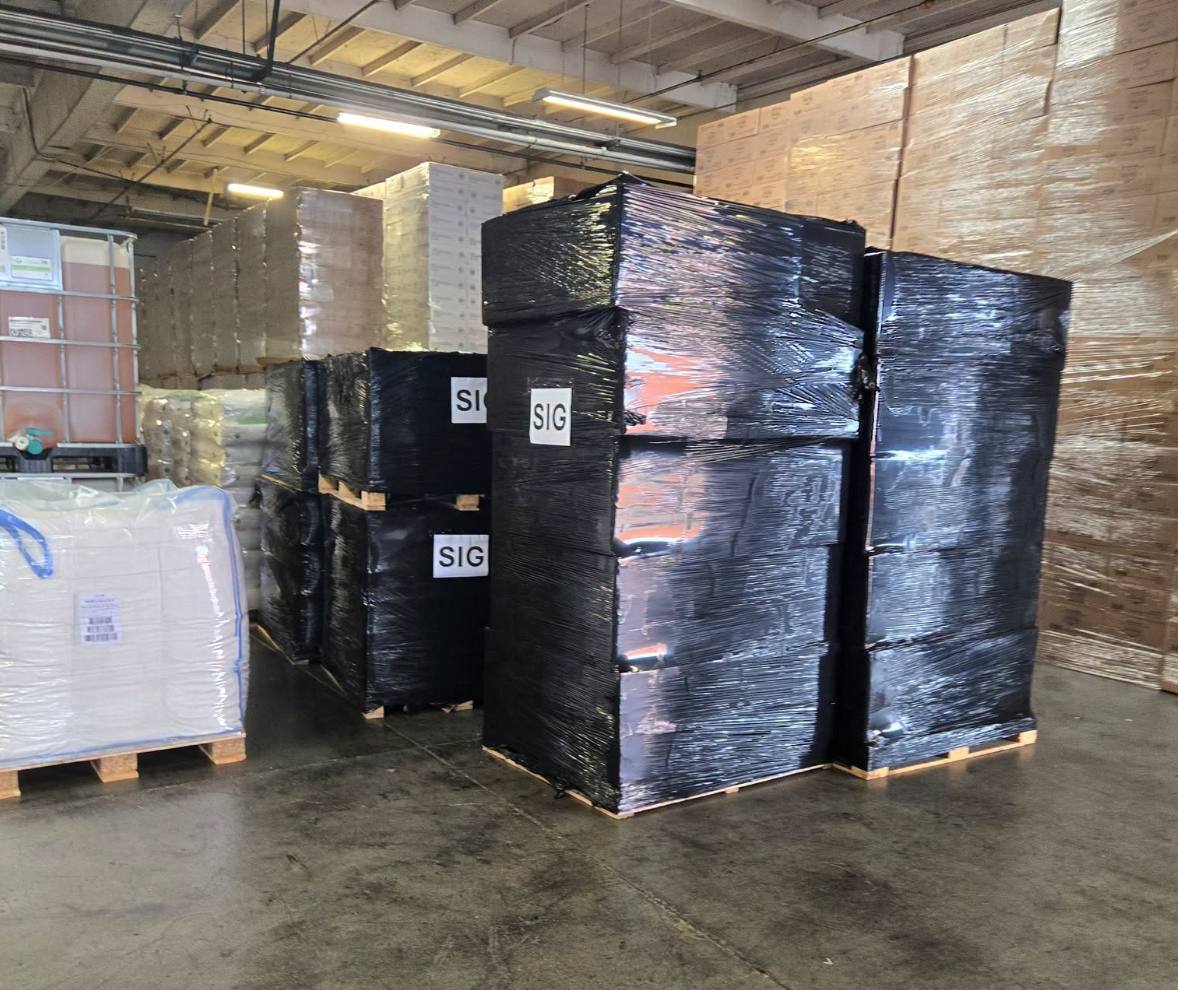
Los Angeles County sheriff's detectives have recovered an entire shipment of SIG Sauer firearm parts and accessories worth approximately $500,000 after it was stolen through a “fictitious pickup” at a warehouse in Torrance, and two Glendale men have been arrested, the Sheriff's Department announced on Tuesday, October 27, 2026. The load was picked up under false pretences from a warehouse near the 4200 block of West 190th Street in Torrance, in the heart of Southern California's port-and-warehouse freight corridor.
Investigators with the Cargo Criminal Apprehension Team (CCATS) of the Sheriff's Major Crimes Bureau first received information about the theft on October 12, 2026. Detectives located the stolen cargo, and the department says all of the merchandise was recovered and returned to its owner. SIG Sauer is a major firearms manufacturer supplying civilian, law enforcement and military markets, which made the cargo — gun parts and accessories — a particularly sensitive load to have circulating outside the legitimate supply chain.
The two arrests
Arman Mnatsakanyan, 26, and Ashot Yesayan, 23, both residents of Glendale, California, were arrested on October 12 — sheriff's booking records confirm both arrests took place that afternoon. Both men were booked on suspicion of grand theft cargo. The arrests are allegations at this stage: investigators say the case will be presented to the Los Angeles County District Attorney's Office for filing consideration, and both men are presumed innocent unless proven guilty in court.
“This investigation highlights the outstanding work by our Major Crimes Bureau investigators,” said Sheriff's Department Chief Jose G. Mendoza. “Thanks to their incredible teamwork and tireless efforts, hundreds of thousands of dollars of stolen gun parts were taken off the streets, reaffirming our commitment to public safety.”
What detectives have not explained
The Sheriff's Department has not explained how the fictitious pickup was carried out — how the people who collected the load convinced the warehouse to release it, what documents or carrier identity were used, who the legitimate transportation provider was, or where and how detectives tracked the cargo down. FreightWaves, the freight-industry publication that reported the recovery in detail, said it contacted both the Sheriff's Department and SIG Sauer for additional information and neither had responded by publication time. Those unanswered questions matter to every warehouse and carrier on the corridor, because the method is the lesson.
A hotspot for exactly this kind of theft
Torrance sits within one of the most active cargo-theft regions in the United States. According to an Overhaul report on cargo-theft trends across Southern California cited by FreightWaves, the surrounding 200-mile area accounted for 37% of reported US cargo-theft incidents, nearly 70% of regional thefts occurred within 50 miles of the city, and deceptive pickups represented 28% of cases in the region. A fictitious pickup is a strategic, paperwork-based theft: criminals arrange or imitate a legitimate collection so the warehouse hands the freight over willingly, and the loss is often discovered only when the real carrier arrives.
FreightWaves notes this is a recurring Southern California pattern, not a one-off. In one earlier case, Montclair police investigated approximately $70,000 in stolen beer shipments involving fraudulent pickup documents at an Anheuser-Busch distribution centre, where detectives found discrepancies involving the trucking company, the driver and the vehicles. In another, a Los Angeles jury convicted two defendants in a $2 million nationwide cargo-theft scheme built on purchased trucking companies — established motor carriers used to secure legitimate shipments.
The unit built for cargo crime
The case was worked by the Cargo Criminal Apprehension Team, a specialised unit inside the Sheriff's Major Crimes Bureau. The Sheriff's Department formed its Organized Retail Crimes Task Force in September 2023; the task force includes CCATS and the Burglary and Robbery Task Force, and works with local agencies, other regional task forces and federal partners on cargo and organised retail theft. The full recovery in this case — the entire shipment, returned to its owner — is the outcome those units exist to produce, and it is not the usual one once stolen freight starts being split and resold.
Why this matters to truckers and warehouse crews
For the Punjabi and South Asian drivers, owner-operators and dispatchers who move freight daily between the Ports of Los Angeles and Long Beach, the South Bay warehouses and the Inland Empire, fictitious pickups are a direct professional risk: a driver can be sent to collect a load that has already been stolen under his company's name, and a carrier's identity can be misused without its knowledge. Freight-industry guidance reported alongside this case stresses verifying the carrier, the driver and the pickup credentials independently before custody of a shipment changes hands — because once freight leaves the dock, the chance to control who took it is gone.
What happens next
The next step is the Los Angeles County District Attorney's filing decision on Mnatsakanyan and Yesayan; no court dates have been announced in the reports so far. The Sheriff's Department asks anyone with information on cargo theft to contact the Major Crimes Bureau through p3tips.com or at 562-946-7270, or to give anonymous tips to L.A. Crime Stoppers at 800-222-TIPS (8477).