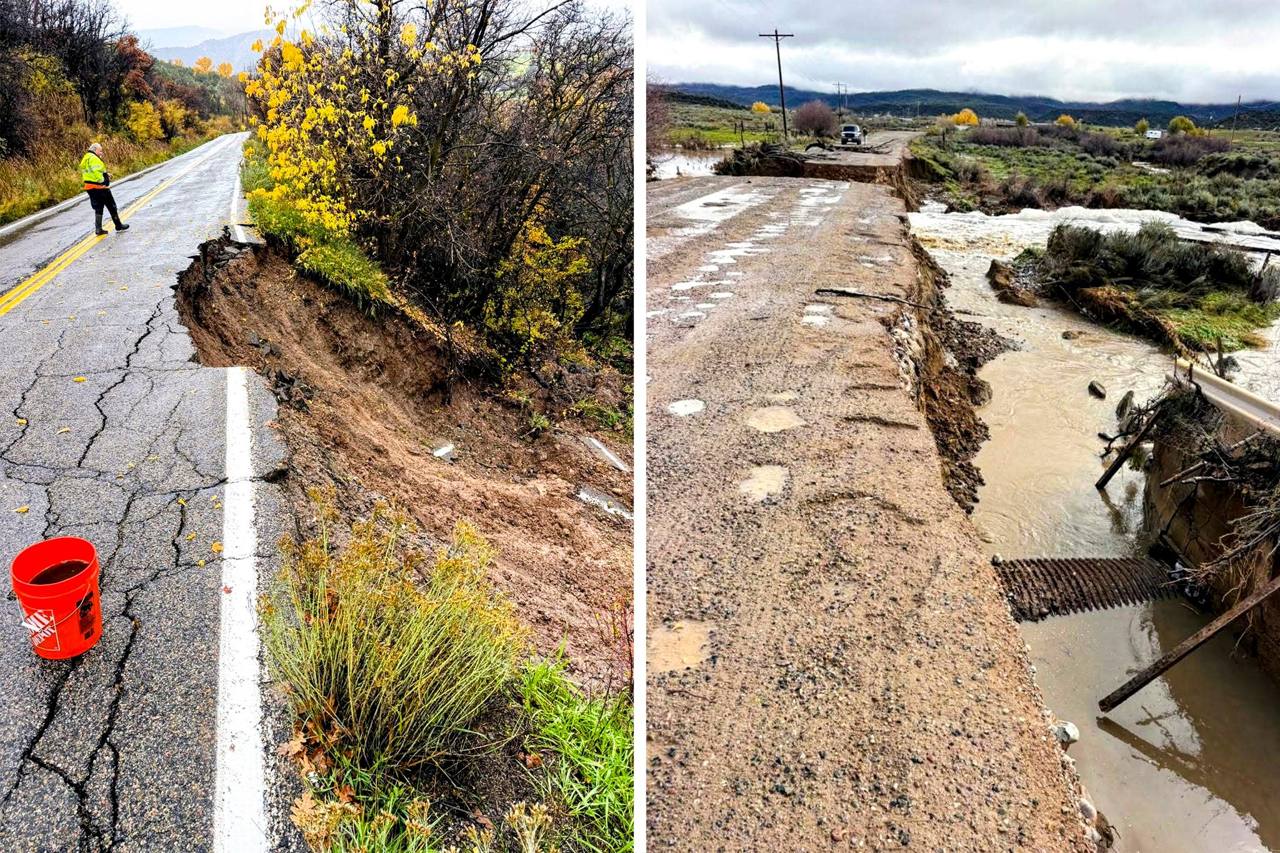
DURANGO, Colorado — Streets turned into rivers across Durango over the weekend as heavy rain sent floodwater rushing through residential neighbourhoods, forced evacuations along Junction Creek and pushed the Animas River to roughly 50 times its normal flow for this time of year, Colorado Public Radio (CPR) reported on Monday, November 2, 2026.
Source: Colorado Public Radio
The Animas River surged through town on Monday morning at 12,900 cubic feet per second, CPR reported, citing river-gauge data. That is about 50 times the river's typical flow for early November, and well above the 11,200 cubic feet per second recorded during the previous storm on October 23 — meaning this second flood in less than two weeks hit harder than the one residents had only just cleaned up from.
Junction Creek: knee-high water through homes northwest of downtown
The hardest-hit part of town was along Junction Creek, just northwest of downtown Durango, according to Bryant Liggett, station manager at KDUR, the community radio station at Fort Lewis College, who lives near Needham Elementary School on the edge of the evacuated neighbourhood. “Yesterday, they evacuated a bunch of houses that run along Junction Creek … maybe a 10-15 block radius that had knee-high water running down the streets,” Liggett told CPR. South of Durango High School, he said, the creek ran down streets through people's houses and into the Animas River.
The creek also runs near several mobile home parks, many of which were damaged. Collin Suchecki, park manager at Junction Creek Mobile Home Park in the floodplain, said residents there were evacuated on Sunday, but access roads were still blocked by law enforcement on Monday, making it difficult to know the full scope of the damage. “Junction Creek is pretty much a river,” Suchecki told CPR. “At this point we need to wait for the water to recede so we can get in there and evaluate.”
A basement rescue on 25th Street: neighbours tore down a wall to free a trapped woman
For Parris Wise, who lives near Junction Creek on 25th Street, the flooding turned frightening within hours on Sunday. By early Sunday afternoon, water was rapidly filling her backyard. She rushed to check on a downstairs neighbour, who was trapped in her basement apartment trying to keep water from coming through the door. “We could only access her home through the window,” Wise told CPR. As the rain intensified, the water rose from ankle-deep to knee-high, then waist-high, and Wise and her roommates scrambled to move their pets and belongings upstairs.
With no safe way for the downstairs neighbour to escape, they made a desperate decision: they tore down a wall that had sealed off an old staircase connecting the two floors. “There was no other escape route,” Wise said. They got everyone out, but by evening floodwater had reached the garage and damaged the home. Wise and her roommates packed what they could and evacuated to a motel, navigating roads blocked by debris along the way.
When they returned on Monday, the damage was overwhelming. “We lost all our food. We don't have water supply. Our power source was shut down,” Wise told CPR. The roommates had moved into the house just two months earlier, pooling their money for a deposit. Now, Wise said, they cannot afford to keep paying for a motel and do not know where they will live next. “Worst case scenario, we might camp out in there,” she said, referring to her roommate's car.
Sandbags, washed-away cars — and no flood insurance in a desert town
About a quarter-mile from another evacuation zone, Bailey Carlson woke Sunday to find rainwater reaching his sidewalk. As runoff poured down from the surrounding hills, he and his neighbours began hauling sandbags and trying to divert the water. His home stayed dry, but some neighbours were not as fortunate: water flooded yards, garages and basements, leaving behind rocks, branches, silt and mud. By Monday, residents were already shovelling sidewalks and clearing debris, but Carlson worried about the financial toll on neighbours whose homes were damaged on nearby Columbine Street, an area where waters rose so high that cars were smashing into one another and washing away.
“Housing prices are insane, and a lot of people in this area don't have flood insurance because we live in a desert and it's never been like this,” Carlson told CPR. He also worried about the cost of rebuilding roads and about supplies reaching the region: “It's not just Durango that's affected. It's New Mexico, it's Arizona, it's all of these places that have just been absolutely devastated.”
Airport halted, schools and City Hall closed, shelters opened
The flooding disrupted the whole city. The airport temporarily suspended operations on Sunday night. Durango schools, including the college, cancelled Monday classes, and the city closed several public facilities, including City Hall, the library and the recreation centre. The La Plata County Fairgrounds, along with a local high school, were designated as evacuation shelters for residents forced from their homes. La Plata County Sheriff Sean Smith lifted a countywide road closure on Monday, CPR reported, but officials warned that many roads remain damaged or impassable and reminded people to check conditions before driving. Some small businesses, including Maria's Bookshop on Main Street, stayed closed to keep streets clear for emergency personnel and to keep employees safe.
Durango Police Chief Brice Current warned residents not to play or wade in the swollen river. “We know this town loves to play. We ask that you don't recreate in the river,” Current said in a video posted to Facebook, noting that some people got sick from sewage in the river last week and that debris hitting bridges is a real danger while the water is this high. Officials also reminded residents that just six inches of fast-moving water can knock an adult off their feet, and that murky floodwater can hide sharp debris and downed power lines and can carry sewage, bacteria and chemicals.
The Associated Press, in its regional report on the Southwest flooding, likewise reported that evacuations were ordered in Durango as the Animas River rose quickly, and that authorities were checking on residents who had ridden out the flooding at home, with many people still stranded.
Source: Associated Press via Fire Engineering
Businesses count the damage, from a flooded liquor-store lot to toppled propane tanks
The damage reaches well beyond homes. Elizabeth Massey, owner of Greenwood StreetWorks, a company that provides year-round exterior property maintenance across southwest Colorado, told CPR she had been contacted by roughly 10 businesses affected by the flooding so far. “Wildcat Canyon Liquors, their parking lot is basically inaccessible,” she said. Elsewhere, propane tanks have been knocked over, leaving property owners waiting for the propane company to assess the situation before cleanup can begin.
At River Bend Ranch, a wedding venue north of Durango along the Animas River, owner Tess Bishop said parts of her property were underwater. “The flood last week didn't come up quite this high. This time there's so much debris coming down it's knocking out our fences,” Bishop told CPR. The ranch's buildings sit above the floodplain and a wedding held there last weekend went ahead, but she worried about neighbours whose homes sit at lower elevations. “The valley itself is going to need a lot of help and community,” she said, adding that she plans to meet with others this week to discuss pooling resources to help affected neighbours.
Why this flood hit so hard — and what happens next
Background: Durango sits in La Plata County in southwest Colorado, where the Animas River runs through town and Junction Creek cuts through neighbourhoods northwest of downtown. The ground was already saturated from the storm of October 23, which had pushed the Animas to 11,200 cubic feet per second and left sewage contamination in the river last week. This weekend's Pacific storm system dropped heavy rain across the Four Corners region — Colorado, New Mexico, Arizona and Utah — on ground that could not absorb more water, which is why a desert city unaccustomed to flooding saw streets become waterways. Many residents, as Carlson noted, carry no flood insurance precisely because flooding on this scale is so unusual here.
What happens next: residents must wait for the water to recede before the full damage at places like Junction Creek Mobile Home Park can even be assessed, and officials are asking people to check road conditions before driving, since many roads remain damaged or impassable despite the countywide closure being lifted. Cleanup had already begun on Monday, with neighbours shovelling sidewalks and clearing debris. For drivers — including truckers who use US Highway 160, the main east-west route through Durango — the practical advice is to expect closures and damage on regional roads, check conditions before setting out, and never drive through floodwater. Wise, meanwhile, pointed to how quickly the community rallied: neighbours helping residents evacuate, the fairgrounds opening as a shelter, and local businesses offering free pet food and drinking water. “I am really proud of this town,” she told CPR. “There are really good people here who will have each other's backs.”