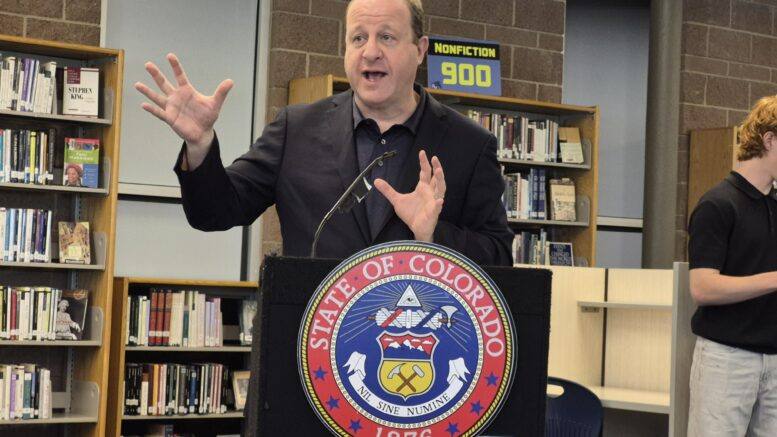
DENVER, Colorado — Governor Jared Polis unveiled his final budget proposal on Monday, November 2, a $51.3 billion plan for the fiscal year that begins in July 2027, The Sum and Substance reported. The plan includes an $18.9 billion general-fund budget, a 2.6% increase from the current fiscal year, and is built to plug an estimated $1.6 billion shortfall next year. It is the last budget of the Democratic governor's career: Polis is term-limited and will leave office in mid-January, so the document is in part a suggestion to his successor — and the starting point for fiscal planning with the legislature's Joint Budget Committee (JBC) as soon as next week.
Source: The Sum and Substance
"I am proud of the progress we have made the last eight years. Our investments have improved the lives of Coloradans and helped everyone thrive," Polis said in a news release, pointing to proposed spending boosts for K-12 education and workforce development. "My final balanced budget proposal builds on all this success, safeguards Colorado's financial future and sets Colorado up for success for years to come."
Medicaid: growth capped at 4.3% instead of 15%
The most debated part of the plan is Medicaid. Polis proposed capping spending growth for the state's Medicaid program at 4.3%, rather than the 15% growth anticipated on current spending and caseload trends. The general-fund portion of the Medicaid budget would still grow by about $250 million, but anticipated spending would fall by $664.6 million — more than $650 million in growth limits. The savings would come from limiting behavioral-health providers' ability to bill standalone support services such as self-help and targeted case management unless they are part of a larger encounter (an anticipated $169.1 million saving), reimposing prior-authorization requirements for outpatient psychotherapy ($64.1 million), reducing incentives and funding for the accountable care collaborative contracts that manage Medicaid patients' care ($28.6 million), and delaying new family health initiatives under the Child Health Plan Plus program for lower-income children — including supplies such as diapers and car seats, expanded home visits and food-pantry support ($9.9 million).
"Medicaid is the single-largest expenditure within the state budget, and it has historically outpaced the growth of state revenue and the (Taxpayer's Bill of Rights) cap," Polis wrote. "The current growth rate of Medicaid spending is unsustainable, and on its current trajectory would crowd out other state government services." Rural hospitals, meanwhile, continue to worry about potential service cuts from Medicaid reimbursement reductions, The Sum and Substance reported.
Casino and tobacco taxes for childcare — decided by voters in 2027
Polis proposed raising taxes on casinos and on tobacco and nicotine sales by a combined $128.9 million annually, through a ballot initiative next year, to boost funding for childcare and preschool programs. For Colorado's $4.2 billion gaming industry, new tax brackets based on each casino's adjusted gross proceeds would raise rates — now capped at 20% to 27.5% for casinos earning $20 million to $100 million a year — to 35% for the four casinos bringing in more than $100 million a year. The budget document estimates that would lift the industry's effective tax rate from 16.1% to 23%, closer to the national average of 26.5%, and raise about $80.2 million a year. The governor's office argues the money could help clear increasingly long waiting lists for childcare assistance, at a time when early childhood education is hard to find in Colorado and among the most expensive in any state.
The Colorado Gaming Association said it is reviewing the proposal and expects to discuss it with Polis's successor next year. "The industry is reviewing the details of the proposal," the association said in a statement. "(Industry leaders) anticipate there will be changes to the budget proposal under the new administration and look forward to working with the new governor on his budget proposal after the election." The candidates to succeed Polis on Tuesday's ballot are Democrat Phil Weiser, Republican Victor Marx and independent Greg Lopez, according to The Sum and Substance.
One more run at Pinnacol Assurance
Polis again proposed letting Pinnacol Assurance — the state-chartered workers' compensation insurer covering 47,500 businesses — free itself from state control and operate as a fully independent mutual insurance company. The company has lost market share because state law bars it from covering workers in other states, a growing problem as companies hire remote workforces nationwide. The state could receive $200 million to $400 million from the conversion; Polis's plan for that money is new — 50% to beef up state reserves, 25% to the State Education Fund and 25% to a new childcare assistance fund. The idea has been presented to legislators in each of the past two budget years and met resistance from some members of both parties. Pinnacol said in a statement that it appreciates the governor's leadership and is working with a broad coalition on 2027 legislation to modernize the company while preserving its member-owned structure and its role as Colorado's insurer of last resort.
Schools, preschool and workforce
On education, Polis proposed spending another $212.1 million on K-12 schools, bringing statewide spending to about $10.4 billion, Chalkbeat Colorado reported. Per-pupil funding would rise to $12,814, about $488 more than this year, and the plan keeps the state's seven-year school funding formula implementation on track, including 45% of the $500 million needed to update the formula that distributes state funding based on the types of students schools teach. He proposed another $7.3 million for universal preschool — one of his signature initiatives — $4.7 million to set up a new Colorado Department of Higher Education and Workforce Development combining the state's siloed higher-education and workforce programs, $1.2 million to extend the Colorado Adult High School Grant Program for adults 21 and older, and $10 million in incentives to support Colorado's bid to host a new Space Academy, part of an anticipated $50 million package over five years.
Source: Chalkbeat Colorado
The plan also eliminates more than $16 million — $16.3 million — in state reimbursements to county governments for business personal property tax exemptions. The change would not affect companies' ability to claim the exemptions themselves; it ends the state's payments to counties that offset them, The Sum and Substance reported. Colorado faces a budget deficit of more than $1 billion for the third year in a row, Chalkbeat noted, which is why every line is contested.
First reactions: discipline, or harm?
Senator Barbara Kirkmeyer, one of two Republicans on the six-member Joint Budget Committee, said the governor's own numbers show legislators must rein in spending, particularly on Medicaid, before it overwhelms the state: "We need spending discipline that is actually enforceable, meaningful oversight and a budget proposal that is actually balanced." Adam Fox, deputy director of the Colorado Consumer Health Initiative, gave the opposite verdict: "Governor Polis' suggested budget cuts put the health of vulnerable Coloradans at risk and exacerbate an already worsening affordability crisis." For Colorado's working families — including its Punjabi truckers on the I-70 and I-76 freight corridors and newcomers juggling childcare costs — the fights over Medicaid, childcare funding and school money are the parts of this budget that will be felt at home, whichever governor signs it.
What happens next
Polis is scheduled to meet JBC members on November 12 to outline the proposals and answer questions. The six-member committee will then assemble the budget, with the goal of passing it through the legislature by late March, ahead of the July 2027 fiscal year. Two wild cards sit between now and then: on Tuesday, November 3, voters elect Polis's successor, who will have their own priorities, and they also decide 14 ballot measures — including Proposition NN and Amendment 87, which would increase state funding for education and alter the budget projections, Chalkbeat reported. State law requires the governor to submit a budget proposal by the beginning of November; what survives of this one is now up to the committee, the legislature and the next governor.