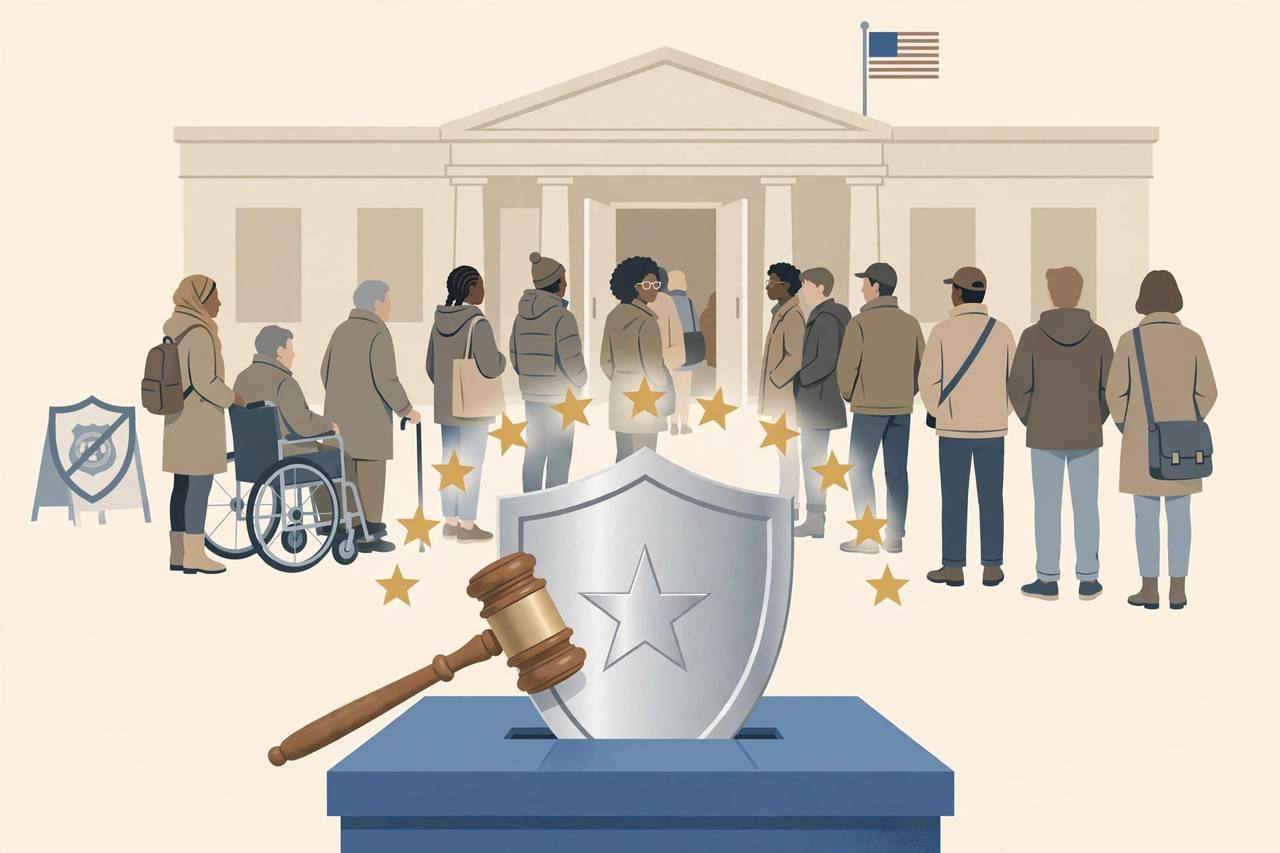
A federal judge in California has put limits on pre-election field operations by the Department of Homeland Security that the agency says are aimed at finding noncitizens who voted illegally, ruling in a 19-page order late Wednesday that the effort used flawed data and likely violated the Voting Rights Act, which bars voter intimidation.
Source: NPR via KVCR
U.S. District Judge Araceli Martínez-Olguín barred DHS officers in nine states from conducting field operations targeting people they know, suspect, or should reasonably know or suspect are U.S. citizens, and from acting wholly on U.S. Citizenship and Immigration Services matching data without further investigation. The nine states are California, Connecticut, Georgia, Missouri, Nevada, New York, Pennsylvania, Washington and Wisconsin.
In recent weeks, armed Homeland Security Investigations officers had visited homes and interviewed people suspected of illegally voting as noncitizens, NPR reported. The targets can include people who became citizens but are accused of voting before they naturalised.
Why the judge acted
The judge referenced a disclosure last month from a USCIS whistleblower alleging rushed efforts to match data to create a target list of potential noncitizens on voter rolls, and that the list includes U.S. citizens. She also pointed to HSI social media posts, including one showing agents handcuffing a California man accused of unlawfully registering to vote.
She wrote that the government's use of unreliable and incomplete data along with highly publicised arrests leads to an objectively reasonable fear of law-enforcement entanglements that intimidates citizens from urging or aiding others to exercise their right to vote. A DHS spokesperson, quoted by the Los Angeles Times, said the agency is laser focused on identifying, prosecuting and removing noncitizens who vote, and has no plans to question or investigate people it believes to be U.S. citizens.
Source: Los Angeles Times via Scoop
This is a preliminary order, not a blanket ban on investigations into suspected noncitizen voting. Reporting on the order's text says it was stayed until 5 p.m. Pacific on October 23, required a $100 bond, and — if in effect — runs until polls close on November 3, unless the court directs otherwise. The government could appeal.
For immigrant and diaspora voters — including Punjabi Americans in California, New York, Pennsylvania and Washington — the ruling is directly practical ahead of the November 3 midterms: it limits door knocks, street stops and field interviews based solely on the disputed matching lists, while leaving ordinary criminal investigations intact.