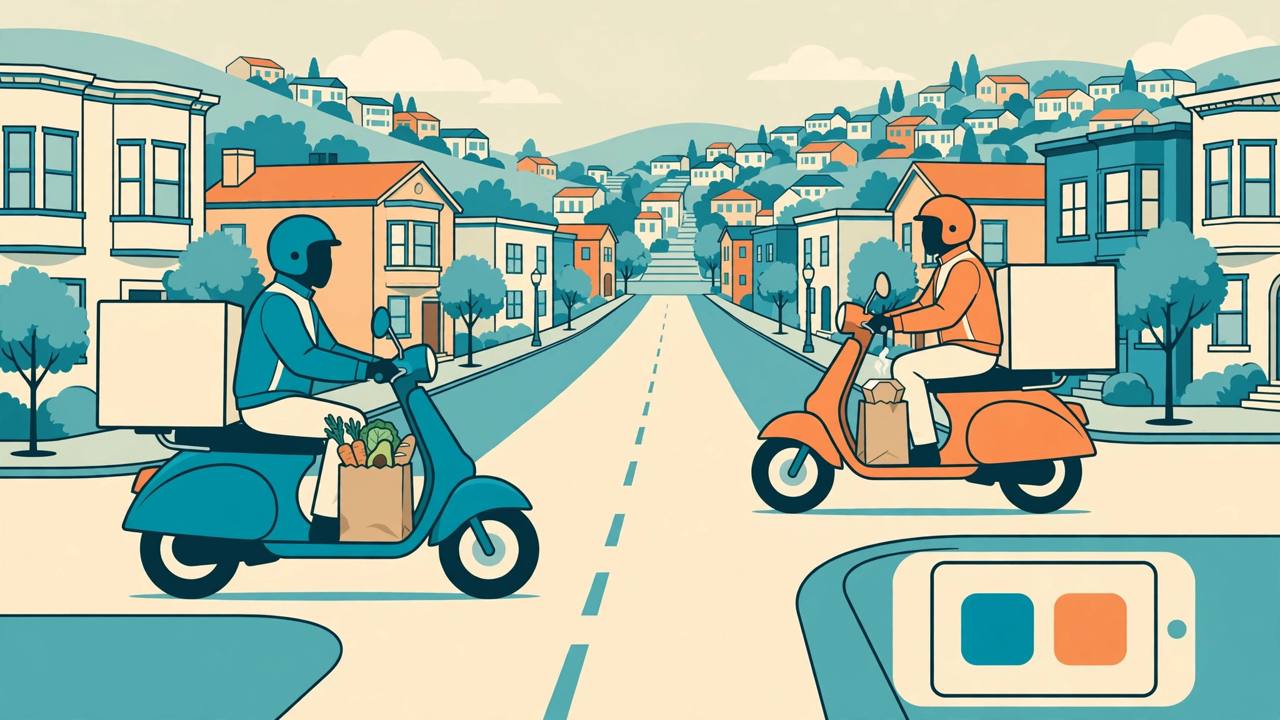
DoorDash said on Thursday, October 29 that it will buy Instacart in a deal valued at about $17 billion, the biggest acquisition in the company's history and one of the largest consolidations the American delivery business has ever seen. The two San Francisco-based companies signed a definitive agreement the same morning both reported third-quarter results, according to Reuters.
Source: Reuters
Under the agreement, DoorDash will pay $65.00 for every share of Maplebear Inc., the company that does business as Instacart. That price is a premium of about 26% over Instacart's closing share price on October 22, the last trading day before reports of sale talks first emerged, the companies said.
Instacart shareholders can choose how they are paid for each share: $65.00 in cash, 0.3372 of a DoorDash share, or a mix of $48.75 in cash plus 0.0843 of a DoorDash share. Stock is capped at 25% of the total consideration, so at least 75% of the price will be paid in cash, and share elections will be scaled back if too many holders choose stock. DoorDash plans to fund the cash portion from its own balance sheet and new debt, including a 364-day senior unsecured bridge loan committed by JPMorgan Chase, and the deal carries no financing condition.
Instacart's board of directors approved the agreement unanimously, and shareholders holding about 19% of its stock have already agreed to vote in favour of it.
What each company brings to the table
DoorDash, founded in San Francisco in 2013, began as a restaurant delivery business and has since expanded into pet food, electronics and other retail categories; it is the largest restaurant-delivery platform in the United States, with a market value of about $73 billion. Instacart, founded in 2012 and taken public in 2023, is the country's leading third-party grocery marketplace, working with more than 2,200 retail banners. Research firm eMarketer estimates Instacart will hold about 65% of the US third-party grocery delivery market this year.
DoorDash said it expects to retain Instacart's brand, its consumer app and its enterprise technology products after the takeover, and the two companies will continue to operate separately until the transaction closes. Instacart's roughly 600,000 shoppers — independent contractors who pick and deliver grocery orders — would be able to keep fulfilling orders as before, DoorDash said. The companies also estimated that combining the DashPass and Instacart+ membership programmes could save customers who pay for both about $100 million a year in membership fees, though that saving depends on the deal actually closing.
Why regulators may push back
The deal is already drawing opposition. The American Economic Liberties Project, an anti-monopoly advocacy group, is pushing regulators to block it, saying the combined company would control nearly 60% of the third-party grocery delivery market, CNN reported. New York City's Department of Consumer and Worker Protection said on Wednesday, before the announcement, that a potential merger continued a 'troubling trend' of corporate consolidation. Analysts at CFRA Research said regulatory approval is the main risk to the deal, and the long closing timeline itself suggests both sides expect an extended antitrust review, according to Reuters.
The competitive backdrop explains the bet. Walmart is America's largest grocer with about 21% of grocery spending, followed by Costco and Amazon at about 8% each, according to Numerator figures cited by the Associated Press. DoorDash co-founder and chief executive Tony Xu said the deal could help local grocers compete with those larger players. Instacart founder Apoorva Mehta, who left the company after its 2023 initial public offering, said he and Xu had explored combining the two companies on and off for years.
The deal needs a vote of Instacart shareholders, clearance under the US Hart-Scott-Rodino antitrust review, and approvals in other countries including Canada and Israel. The companies expect it to close at the end of 2027 or in the first half of 2028. If the deal collapses under certain conditions, Instacart would pay DoorDash a $650 million termination fee, while DoorDash would owe Instacart $1.25 billion. Instacart has also cancelled the earnings call it had scheduled for November 5.
For Awaaz Punjab's readers in the United States, the stakes are everyday ones. Food and grocery delivery is a major source of income for gig workers across the country, including many Punjabi families who drive or shop for these apps, and it is how millions of households now buy their weekly groceries. Nothing changes immediately: both apps keep running separately, orders, shoppers and drivers are unaffected for now, and any change to fees, memberships or how the apps work could only come after the deal closes — if regulators allow it to close at all.