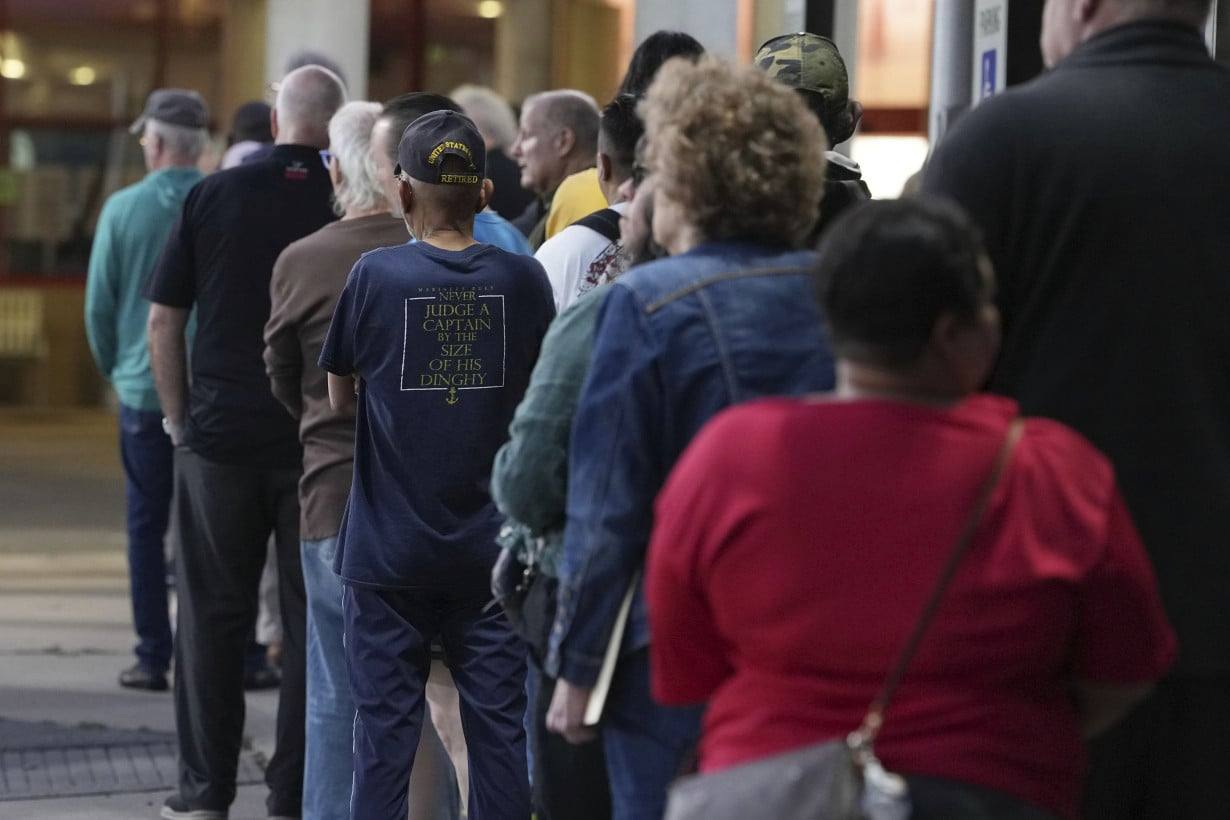
Early voting in the 2026 United States midterm elections has broken the all-time midterm record with days still to spare. The University of Florida Election Lab had recorded 47,922,669 early ballots nationwide by midday on Friday, October 30 — already past the previous midterm record of 45.9 million early votes cast in the whole of the 2022 cycle — and the total was still climbing ahead of Election Day on Tuesday, November 3.
Source: University of Florida Election Lab figures, reported Oct. 30
The record is the latest step in a surge this newsroom has tracked all month: the national early-vote total passed 13 million on October 22, 23 million on October 25 and 34 million on October 28. Friday's milestone is a genuinely new development — the 2026 electorate has now cast more early ballots than the entire 2022 midterm electorate managed before Election Day, in a vote that will decide control of Congress for the final two years of President Donald Trump's second term.
A Texas-sized surge leads the country
The surge is sharpest in Texas, where more than 6.3 million people had voted early as of Wednesday, compared with 4.2 million at the same point four years ago — a 50 percent increase, according to an Associated Press analysis of voting data. In Harris County, which includes Houston, 862,700 people had voted by Wednesday, against 564,500 at the same stage in 2022. Texas's two-week early in-person voting period ended on Friday, October 30.
Source: Associated Press analysis, Oct. 30, 2026
Texas voters are deciding closely watched Senate, House and governor's races. Republican Attorney General Ken Paxton faces Democrat James Talarico for the Senate, while Republican Governor Greg Abbott is seeking re-election against Democrat Gina Hinojosa. Hundreds of millions of dollars have poured into the Texas Senate race, the AP reported, and President Trump visited Texas earlier in the week — his third trip to the state in a month.
Battleground states are up by a third or more
Advance voting has risen more than 30 percent from the same point four years ago in Maine, Michigan, North Carolina and Kansas, all states with competitive Senate races, the AP found. In South Carolina, where voters are choosing a successor to the late Republican Senator Lindsey Graham, early voting is up 83 percent. In Maine, where Republican Senator Susan Collins faces Democratic former state Senate President Troy Jackson, it is up 44 percent. Michigan has recorded roughly 409,000 more early votes than at the same point in 2022, a 32 percent rise — and this is the first midterm in which early in-person voting is available statewide there, after Michigan voters approved it in November 2022. In Kansas, where Republican Senator Roger Marshall faces Democrat Adam Hamilton, early voting is up 34 percent, about 83,000 more ballots than four years ago. North Carolina's election board reported early voting up nearly 37 percent on the same point in 2022, and in Georgia, in-person early voting broke the state's midterm record on Thursday, with women casting 56 percent of ballots to that point.
What the party numbers do — and do not — say
In states that record voters' party affiliation, registered Democrats have accounted for a substantially larger share of early ballots than Republicans — about 44 percent of early voters to 31 percent Republican and 25 percent unaffiliated or minor-party, on Election Lab figures. In the AP's count for party-reporting states, about 6.8 million Democrats and 5.2 million Republicans had cast ballots early. Experts quoted in the coverage warn against reading those figures as a forecast: a voter's party registration does not reveal which candidates they supported, tens of millions more Americans are expected to vote on Tuesday, and Republicans have tended in recent elections to turn out in greater numbers on Election Day itself. Higher early participation also does not automatically mean higher overall turnout — some voters may simply be casting the same ballot sooner.
Republicans are defending a 53-47 Senate majority, and both the House and Senate are in play in an election held two years into President Trump's second term. Election Day is Tuesday, November 3; early and mail voting continue in many states through the weekend.
Why this matters to diaspora readers
Control of Congress shapes the issues Punjabi-American families follow most closely — immigration law and enforcement, small-business and tax policy, and the federal transport funding and trucking rules debated through this campaign. Punjabi-American voters are part of the electorate in several of the states now setting records, from California's Central Valley to New York, New Jersey, Texas and Washington — and in the record early queues, they are quite literally standing in line alongside everyone else.
What happens next
Early-vote totals will keep rising through the weekend as states report new data, and the Election Lab tracker updates again on Saturday morning. The final test comes on Tuesday, November 3, when Election Day turnout will decide whether the Democrats' early-vote edge survives the Republicans' traditional Election Day strength — and with it, who controls Congress.