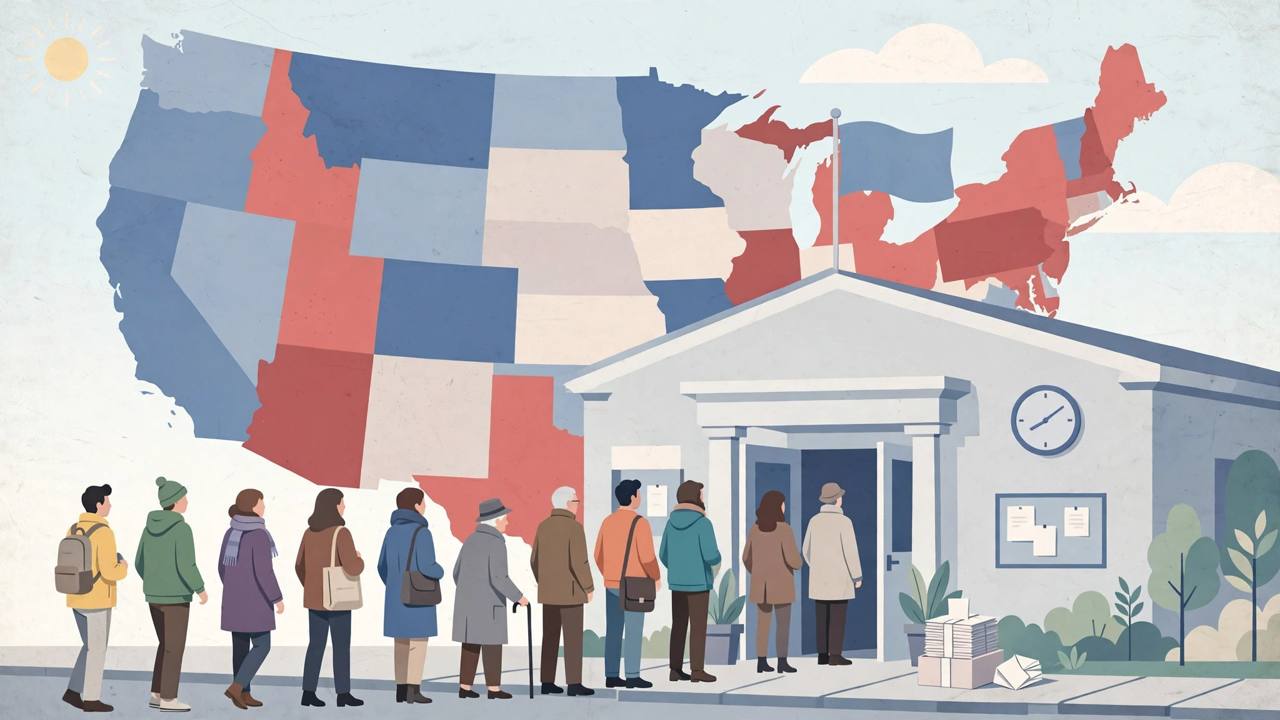
WASHINGTON — Election Day in the 2026 United States midterm elections is Tuesday, November 3, and by Monday night tens of millions of Americans had already voted early or by mail. What remains is the final, largest wave: in-person voting at assigned polling places across all 50 states. Every one of the 435 seats in the U.S. House of Representatives is on the ballot, along with 35 Senate seats and 36 governors' races, according to Ballotpedia — a vote that will decide who controls Congress for the remaining two years of President Donald Trump's term.
Source: Election Day 2026 guide (Ballotpedia, NCSL, Vote.gov sources)
First check: your polling place may have changed
Your polling place is assigned by your home address, and it can change between elections. Vote.gov links to every state's registration and polling-place lookup, and USA.gov's 'Find your polling place' page routes voters to the same state and county offices. You do not need your voter registration card to vote. Go to the right location: if you vote somewhere other than your assigned place, USA.gov warns, 'you may have to cast a provisional ballot, and your vote may not count' in full. Some states also redrew congressional maps this year, including Florida and Tennessee, so your House district may not be the one you voted in last time.
Polling hours: there is no single national schedule
Each state sets its own hours, and some let counties vary them. Among the states with the largest Punjabi and Indian-American populations: New York polls are open 6 a.m. to 9 p.m.; California 7 a.m. to 8 p.m.; New Jersey 6 a.m. to 8 p.m.; Texas 7 a.m. to 7 p.m.; Illinois 6 a.m. to 7 p.m.; Pennsylvania 7 a.m. to 8 p.m.; and Ohio 6:30 a.m. to 7:30 p.m. One rule is the same everywhere in the country: if you are in line when the polls close, you stay in line and you vote.
Source: Ballotpedia poll-hours compilation via Depor
ID rules — and the four changes that apply this year
Thirty-six states ask for or require some form of ID at the polls, according to the National Conference of State Legislatures (NCSL): 24 of them ask for photo ID and 12 also accept non-photo ID, while the other 14 states and Washington, D.C., verify identity in other ways. Several rules changed for 2026: New Hampshire no longer accepts student IDs; Iowa has dropped the option of having another voter vouch for someone without ID; Alabama no longer accepts digital IDs, as of October 1; and West Virginia's photo ID requirement, passed in 2025, applies this year. One much-discussed rule does NOT apply: the federal SAVE America Act's proof-of-citizenship requirement passed the House but failed in the Senate, so it is not in force for this election.
Still holding a mail ballot? Hand-deliver it
The Postal Service's recommended mail-back deadline — October 27, for states that require ballots to arrive by Election Day — has passed, so the safe move now is to deliver a completed mail ballot in person, following your state's and county's drop-off rules. About 35 states require mail ballots to arrive by Election Day; 15 states plus D.C. count later arrivals only if they are postmarked in time. The legal backdrop shifted this year: on June 29, the U.S. Supreme Court ruled 5-4 in Watson v. Republican National Committee that federal election-day laws do not bar a state from counting mail ballots that arrive after Election Day — so a ballot's fate depends on your own state's deadline rule, which your election office publishes.
Federal agents and polling places: what officials have said
The possibility of federal enforcement near polling places has been a live question this cycle. The Department of Homeland Security has said ICE is not planning operations targeting polling locations, while leaving open enforcement in the event of a public safety threat; in September, DHS Secretary Markwayne Mullin confirmed agents could serve warrants at polling places. General Dan Caine, chair of the Joint Chiefs of Staff, said on August 31 that there are no plans to station military personnel or National Guard members at polling sites. Voters who believe their rights are being interfered with can call the nonpartisan Election Protection hotline at 866-OUR-VOTE, run by voting-rights groups.
Source: IBTimes — How to Vote in the 2026 US Midterm Elections
What is at stake — and when answers come
Beyond Congress and the governorships, state legislatures, local offices and ballot questions vary by where you live. Nationally, the results will determine whether Republicans keep control of both chambers of Congress or Democrats win one or both for the final two years of Trump's term. For readers following from India, the first polling places close on Wednesday morning, November 4, Indian time — the earliest closings come at about 5:30 a.m. IST. Election-night numbers are unofficial by definition: counting continues across states, official results can take days or weeks, and close races will take longer. Treat any nationwide tally published while western polls are still open as provisional.
Source: The Indian Express election guide via Nowlivo
1) Confirm your registration and assigned polling place at Vote.gov. 2) Note your state's closing time — and be in line before it. 3) Carry the ID your state asks for; rules changed this year in New Hampshire, Iowa, Alabama and West Virginia. 4) Still holding a mail ballot? Deliver it in person rather than mailing it now. 5) Problems at the polls: call the Election Protection hotline, 866-OUR-VOTE.
Campaign activity is restricted near polling places in every state — usually within 50 to 200 feet — and more than two dozen states ban campaign shirts, buttons or stickers inside, according to the NCSL. For Awaaz Punjab's readers across the diaspora's biggest U.S. hubs — California's Central Valley, New York and New Jersey, Texas, Illinois and Washington — Tuesday is also a workday on the road and in the warehouse for many; employers' time-off rules for voting vary by state, so checking your state's rule tonight, along with your polling place, is the difference between a planned vote and a missed one.