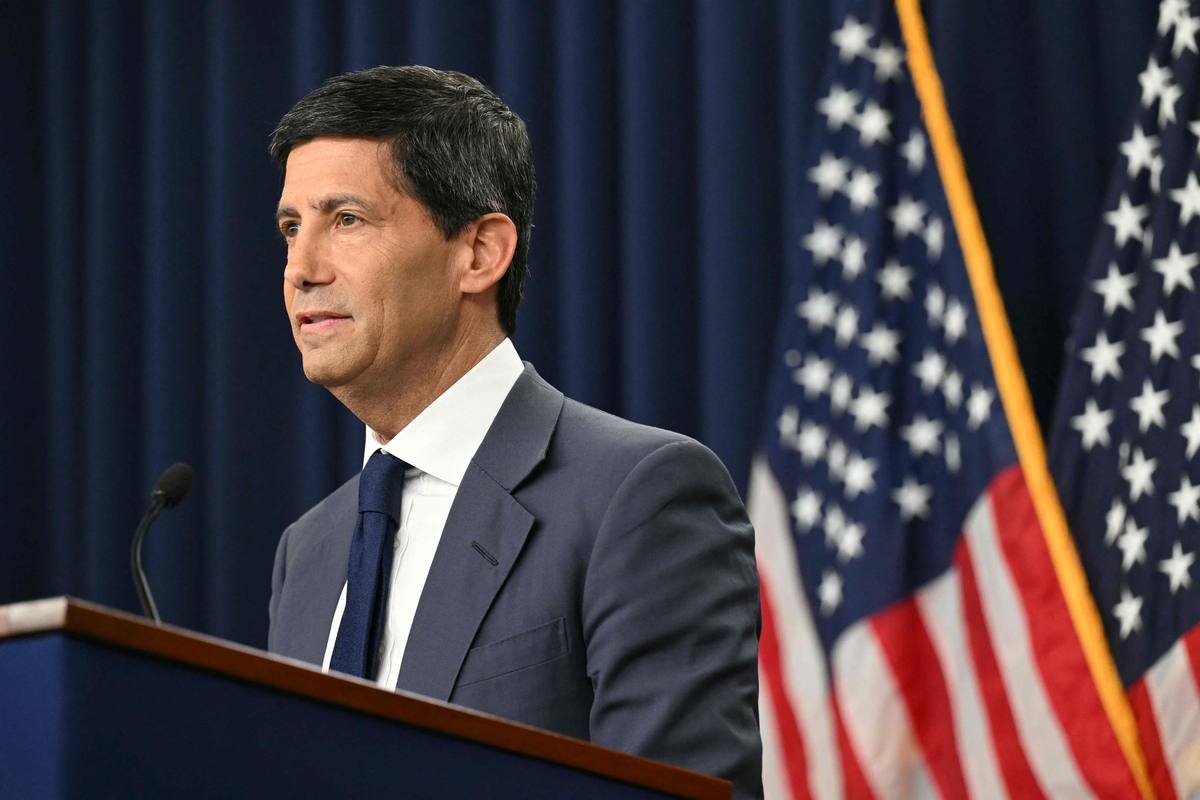
WASHINGTON — The Federal Reserve is about to change the rhythm at which it sets the price of money in the United States. Chair Kevin Warsh announced on Wednesday afternoon, October 28, that the Federal Open Market Committee will still meet eight times a year, but it will no longer vote on interest rates at every meeting: one meeting in the fall of 2027 will be set aside exclusively for broad monetary policy strategy, with no rate vote and no policy statement expected, and in 2028 only six of the eight meetings will decide rates while two are reserved for strategy. The announcement, made at Warsh's press conference after the FOMC held its benchmark rate at 3.75% to 4.00%, is the most significant change to the committee's working calendar in decades.
Source: American Banker
"We think eight FOMC meetings a year is the appropriate number," Warsh said, according to the Seoul Economic Daily's report of the press conference. One of next year's gatherings, he said, will be dedicated solely to broad monetary policy strategy, with no vote on interest rates and no policy statement, while the remaining meetings will be regular policy decision meetings. "In 2028, we will hold two meetings for strategy discussions and six policy decision meetings," he said. Warsh first floated cutting the number of rate-setting meetings at the FOMC's July 28–29 meeting, arguing that longer intervals between decisions would let policymakers gather more economic data before they move.
Why Warsh says the change is needed
Warsh insisted the change is "more than some administrative detail" and said it emerged from a robust discussion among committee members spread over multiple meetings, American Banker reported. "Getting policy right involves assessing near-term developments at timely, regular, and information-rich intervals," he said. "But it's equally important we reserve time and space as an intellectually diverse group for strategic deliberations, for thinking anew about big questions, looking out over longer time horizons — focusing, as I say, on the left side of the decimal." He said it is not yet clear how or when the discussion at a strategy meeting would be shared with the public: at present, minutes of each FOMC meeting are released three weeks later and full transcripts only after five years. "The decision on the new format for the meetings is relatively new," Warsh said. "As we get details of that … we'll share them."
The background matters. The FOMC's cadence of eight regularly scheduled meetings a year has been maintained since the 1980s, the New York Times noted in its report of the announcement. Warsh, who took over as the Fed's chair in May, raised the idea of fewer rate-setting meetings in the committee's closed-door July session, a discussion first reported by the Times and later confirmed in the meeting minutes. In his first month in the job he also convened five task forces — on the FOMC's communications strategy, balance sheet management, its inflation framework, data collection, and its understanding of productivity and the labour market. On Wednesday he said he had held periodic check-ins with the task forces and was impressed with their work, but that none of their recommendations are final; he expects some, but not all, to finish by his year-end deadline, and even then the findings would only begin a longer reform process.
The same day: a 10–2 hold, and "inflation is too high"
The calendar overhaul shared the stage with the day's rate decision. The committee voted 10–2 to hold the target range at 3.75% to 4.00%, with Governor Lisa Cook and Cleveland Fed President Beth Hammack dissenting in favour of a quarter-point increase. Warsh said energy costs mean "inflation is too high," that first-half GDP growth had been revised up to 2.4% from an initial 1.8%, and that the third quarter appeared to have grown faster on solid consumer spending. Financial conditions, he said, have tightened for some businesses and households as expected after September's hike, but he was unwilling to call them restrictive. Asked about a possible December increase, he declined to signal a direction, saying he does not favour forward guidance under normal circumstances and does not prejudge meetings. He also rejected suggestions that next week's midterm elections played any part: "Politics played no role in the decision," he said.
Source: Seoul Economic Daily
Some economists have criticised holding fewer rate-setting meetings, arguing it could make it harder for the Fed to respond quickly to changes in inflation and the labour market, the New York Times reported. The move also fits a pattern in the early months of Warsh's chairmanship toward providing less information to investors and the public — he has ended forward guidance, withheld personal forecasts and shortened policy statements — reversing a decades-long trend toward greater openness. The Fed can still act between scheduled meetings in an emergency, as it did in early 2020 during the COVID-19 pandemic, but routine borrowers would have fewer, more widely spaced decision points.
For the Punjabi diaspora in the United States — homeowners with mortgages, small business owners, and the many Punjabi truckers who finance tractors and trailers — the practical effect is timing. Borrowing costs are set off the path of the federal funds rate, and from 2027 that path will be adjusted at fewer scheduled moments, with longer stretches in which a loan rate, a truck payment or a fuel-card line of credit simply stays where it is — or in which a needed cut, or a feared hike, has to wait for the next policy meeting or an emergency move. September's inflation reading of 3.7%, a September jobs gain of just 29,000 and an unemployment rate of 4.2% are the backdrop against which the December decision will be taken.
What happens next
Nothing changes for the rest of 2026: the committee's next meeting, on December 8–9, remains a full policy-setting meeting, and Warsh said on Wednesday that he is committed to this year's press conferences, which his predecessors had promised. The first strategy-only meeting is expected in the fall of 2027, with the two-strategy-meeting format following in 2028. The Fed still has to explain what, if anything, it will publish after a strategy meeting — minutes, a summary, or nothing — and Warsh said those details are still to come. Between now and then, the task forces' findings, due around year-end, are expected to start a wider argument about how the world's most influential central bank talks, decides and explains itself.