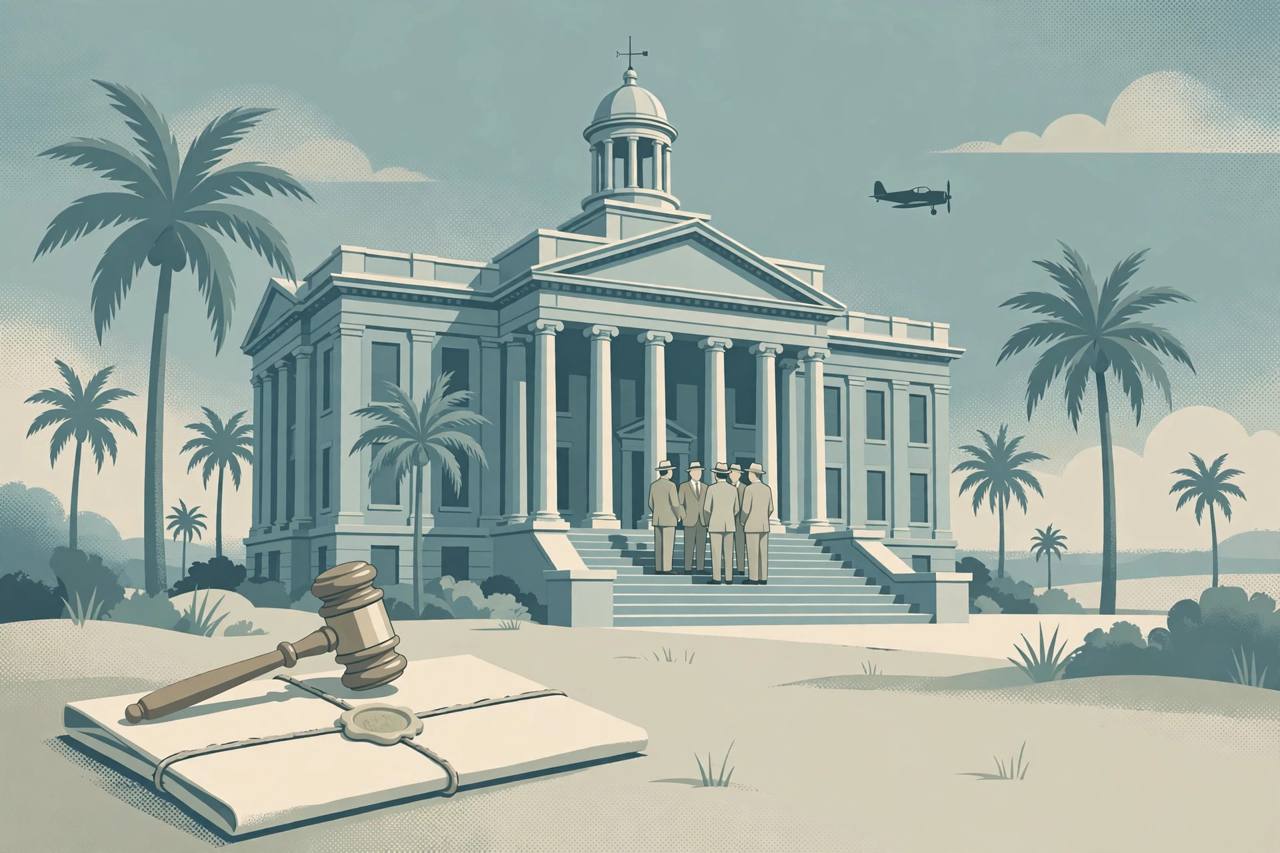
MIAMI — Florida has issued a state arrest warrant for former Cuban leader Raúl Modesto Castro Ruz on one count of conspiracy to commit first-degree murder, Attorney General James Uthmeier announced Monday at a news conference at Florida International University's College of Law. The no-bond warrant was signed by Chief Judge Ariana Fajardo Orshan of the Eleventh Judicial Circuit in Miami-Dade County — the Miami Herald reported she signed it on Friday, October 16 — and was secured by Uthmeier's Office of Statewide Prosecution together with the Florida Department of Law Enforcement (FDLE), according to the FDLE release and reporting by the Associated Press and USA Today.
The charge reaches back to February 24, 1996, when Cuban MiG fighter jets shot down two of three unarmed Cessna aircraft flown by Brothers to the Rescue, a Miami-based exile group that flew over the Florida Straits looking for Cubans fleeing by raft. Four men were killed: Carlos Costa, Pablo Morales, Mario de la Peña and Armando Alejandre Jr. — three U.S. citizens and one lawful permanent resident, according to Florida officials, who say U.S. and U.N. investigations concluded the shootdown happened over international waters. The state affidavit alleges that Castro — then Cuba's minister of the Revolutionary Armed Forces and first vice president — was a final decision-maker who authorized the attack, and that Cuban intelligence agents of the so-called Wasp Network infiltrated the group in Miami and the Florida Keys and fed flight plans to Havana. Those are allegations in a warrant affidavit; they have not been tested in court.
"Raúl Castro ordered the murder of four Floridians in cold blood, and Florida will never stop pursuing accountability for that communist conspiracy," Uthmeier said in the FDLE release. At the news conference he added: "It was not an accident what happened. It was murder. The evidence makes abundantly clear that there was a conspiracy." Castro was Cuba's defense minister at the time of the shootdown and later succeeded his brother Fidel Castro as president; he is 95 and lives in Cuba.
The state warrant runs alongside a federal case: a U.S. indictment unsealed in May charged Castro and five others with murder, destruction of aircraft and conspiracy to kill U.S. nationals, and U.S. Attorney Jason A. Reding Quiñones for the Southern District of Florida said the federal and state investigations would continue in parallel, FIU's Caplin News reported. Uthmeier acknowledged Castro is unlikely to be brought to a Florida courtroom from Cuba, but said the warrant will restrict where he can travel, because countries with extradition agreements with the United States could hand him over: "We stand ready to prosecute the case," he said, according to the AP. Cuba's President Miguel Díaz-Canel has dismissed the charges as having "no legal or practical basis whatsoever" and called them a political move — a response reported as the announcement drew international attention on Tuesday.
The announcement came two weeks before the November 3 general election, in which the Cuban-American vote in South Florida is closely watched — a timing noted by FIU's Caplin News, which reported families of the four men at the announcement saying they had waited 30 years for another step toward accountability. For now, the warrant stands as an open Florida charge: if Castro ever enters a jurisdiction that honours U.S. extradition requests, he could be arrested and sent to Miami-Dade to face the conspiracy charge.
Sources: Associated Press; USA Today; Miami Herald (warrant signing date); Florida Department of Law Enforcement release (Attorney General's announcement); Caplin News, Florida International University; WUSF. The warrant's allegations are unproven; Raúl Castro is not in custody and has not been convicted of these charges.