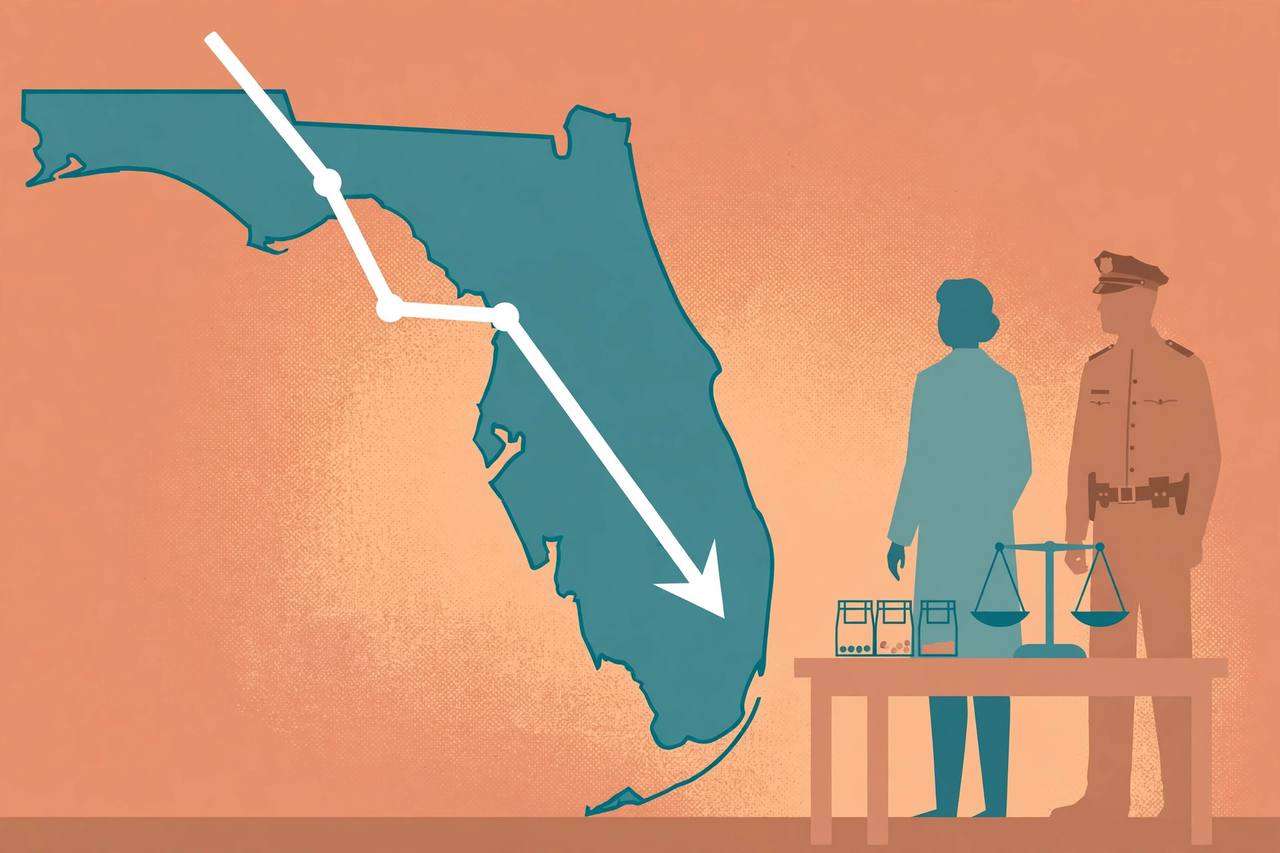
Florida Governor Ron DeSantis announced in Orlando on Tuesday, October 20, that fentanyl-caused deaths in the state have declined by nearly 60% since 2023, according to new data from the Florida Medical Examiners Commission's 2025 Annual Drug Report, his office said. In 2023, fentanyl caused nearly 5,000 deaths in Florida; by 2025 that number had fallen to approximately 2,000 — roughly 3,000 fewer deaths a year. From 2024 to 2025 alone, fentanyl-caused deaths decreased by 37%, and deaths caused by fentanyl analogs fell by more than 50%.
The decline was broader than fentanyl. The report showed total drug-related deaths down 12% from 2024 to 2025, opioid-caused deaths down 33%, cocaine-caused deaths down 16% and methamphetamine-caused deaths down 23%, according to the governor's announcement. The American Quorum, analysing the same release, noted the commission distinguishes between a drug being present in a body and a medical examiner judging that it caused the death, and that an interim report for the first half of 2025 had already found fentanyl present in 1,330 deaths, down 42.1% from the same period of 2024.
DeSantis credited the State Assistance for Fentanyl Eradication (S.A.F.E.) grant programme, established in 2023 to fund large-scale drug investigations by local agencies. "Fentanyl-caused deaths in Florida have declined by nearly 60% since we launched the S.A.F.E. grant program in 2023," DeSantis said. "So far, S.A.F.E. has resulted in almost 3,000 arrests of drug traffickers and dealers, as well as significant seizures of dangerous narcotics." His office said S.A.F.E.-supported investigations have seized more than 600 pounds of fentanyl and over 65,000 fentanyl pills, nearly 800 pounds of cocaine, more than 520 pounds of methamphetamine, nearly 2,600 pounds of marijuana, more than $6.6 million in cash, nearly 1,000 firearms and 90 vehicles. Florida Department of Law Enforcement Commissioner Larry Keefe said agents and partners "are working every day to disrupt the flow of fentanyl and other deadly drugs into our communities."
Recent S.A.F.E.-supported operations cited by the governor's office include Operation Ice Breaker in October, in which FDLE, the Palm Beach County Sheriff's Office, the DEA and statewide prosecutors charged 25 people and seized more than 100 pounds of cocaine along with fentanyl, methamphetamine and 16 firearms, with 19 arrested at the time of the announcement; Operation End of Worlds in September, which dismantled a fentanyl and methamphetamine organisation with 39 arrests and 4.5 pounds of fentanyl seized; and Operation Hall of Fame in July, with nine arrests and 60 kilograms of cocaine seized. The figures describe recorded deaths and enforcement outputs; as The American Quorum noted, they do not by themselves establish why deaths fell — changes in the illicit drug supply, treatment access, naloxone availability and prevention efforts can also affect the counts, and the state release offered no analysis separating those factors. Sources: Office of Governor Ron DeSantis announcement, October 20, 2026 (via EIN Presswire and Alachua Chronicle); The American Quorum analysis of the Medical Examiners Commission 2025 report; WFLA via Florida Politics.