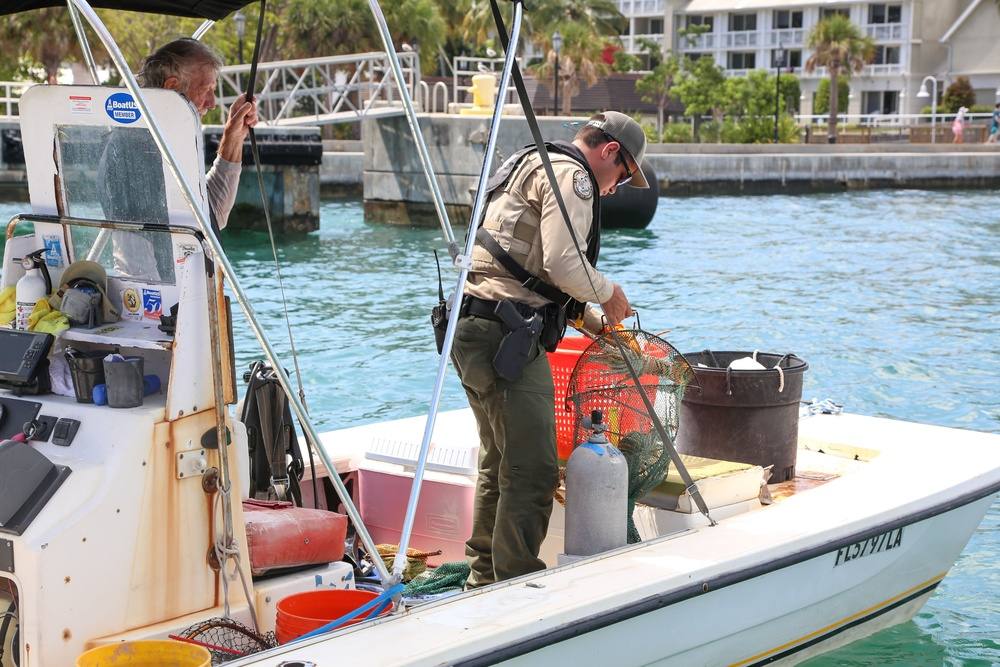
TALLAHASSEE, Florida — A routine fishing citation or a produce inspection can now end in federal immigration detention in Florida and other states, according to a New York Times report published on Saturday. Officers whose everyday work is handing out fishing citations and inspecting produce have been deputized by U.S. Immigration and Customs Enforcement (ICE), and the Times reports that people accused of illegal fishing have ended up in ICE detention.
Source: The New York Times (report, Oct. 24, 2026)
The deputization works through ICE's 287(g) program, under which state and local officers are trained and authorized to perform certain immigration enforcement functions under federal supervision. The practical effect, the Times reports, is that an encounter that might once have produced a ticket or a fine can now become the start of deportation proceedings — separating a worker from family and livelihood while the immigration case moves forward.
Florida enrolled nearly 800 wildlife officers
Florida is the clearest example of the expansion. Governor Ron DeSantis enrolled nearly 800 officers of the Florida Fish and Wildlife Conservation Commission (FWC) in the 287(g) program, according to 404 Media's reporting on public records and the governor's own announcement. Announcing the move, DeSantis said Florida was 'setting the example for states in combating illegal immigration' and that deputizing state officers means 'deportations can be carried out more efficiently.' A spokesperson for the governor's office later told 404 Media that the FWC continues to work with ICE and that all State of Florida law enforcement agencies have a 287(g) agreement.
Source: 404 Media
Public records obtained by 404 Media show what that cooperation looks like in practice: a January Flock camera network audit recorded the FWC police performing 38 searches listed as 'immigration' searches, each reaching more than 5,000 camera networks. ICE does not have its own contract with Flock, the license-plate camera company, but gains access through state and local agencies such as the FWC.
Critics warn of profiling; key numbers still unclear
The American Civil Liberties Union, in a February report on the 287(g) expansion, said Florida 'appears to have devoted more state and local law enforcement resources to immigration enforcement than any other state,' and cited cases of profiling of U.S. citizens and noncitizens alike. Jay Stanley, a senior analyst with the ACLU's Speech, Privacy, and Technology Project, told 404 Media the arrangement shows immigration searches 'can come from really any direction.' The FWC did not respond to 404 Media's requests for comment in that reporting.
Source: 404 Media / ACLU report
What the Times reporting does not establish is scale: it does not say how many fishing or produce officers have been deputized in total, how many people have been detained through such encounters, or what has happened in those individual cases. For immigrant workers in Florida's fishing and farm industries, however, the change is already concrete — the officer writing a citation may now also be authorized to act on immigration status.