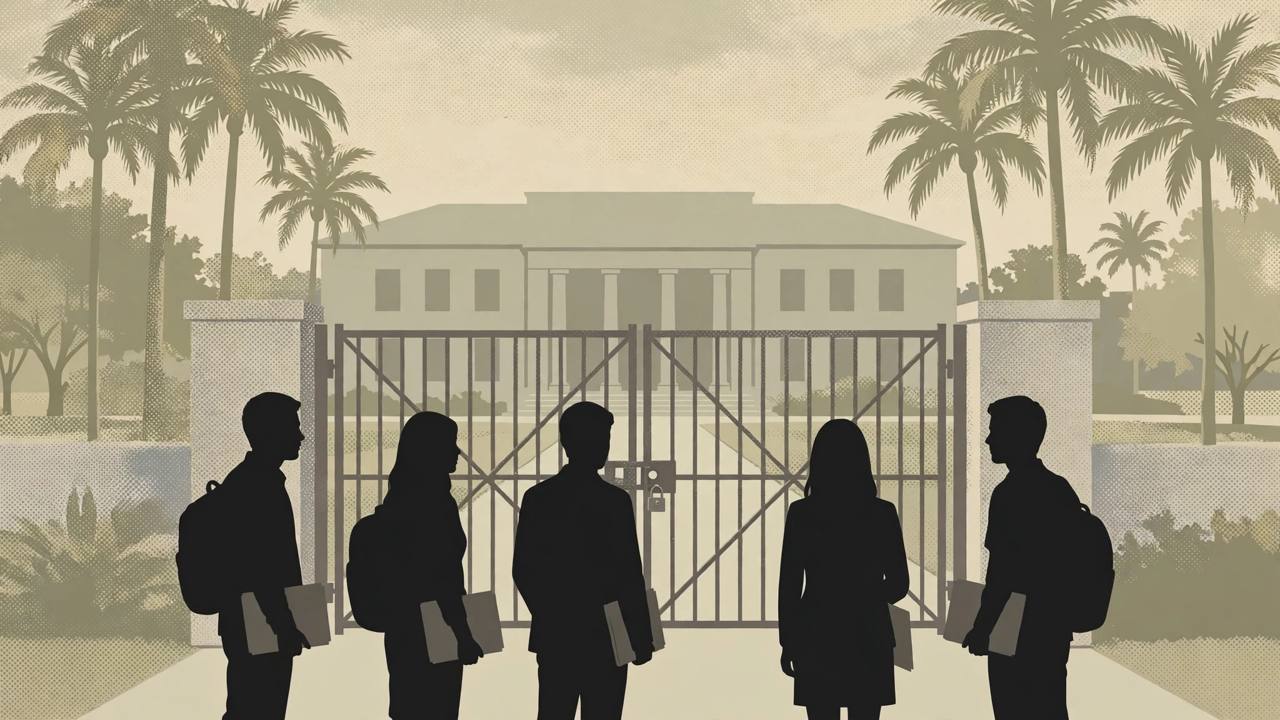
Florida's Board of Governors has voted to bar people who are present in the United States unlawfully from enrolling for the first time at the state's public universities, starting with the 2027–28 academic year, according to reporting on the vote by Liberty Insider and News Ranger.
The board approved a change to Regulation 6.001, the general admissions rule for Florida's twelve public universities, and passed the measure unanimously and without discussion, according to the reporting. The vote follows a similar rule approved earlier by the Florida Board of Education for the state's 28-college system.
Reporting differs on how widely the university rule will bite. One account says it applies only to universities that did not accept every qualified applicant in the past two years — in other words, the state's more selective campuses. Another account describes the language more broadly, as blocking initial enrollment for anyone not lawfully present across the public university system. Both accounts agree on the core point: this is about new admissions, and students already enrolled are not being removed under this rule.
Governor Ron DeSantis and other state leaders say the change protects seats for legal residents and taxpayers. Democratic lawmakers and advocacy groups call the policy cruel, warn it could cost colleges tuition revenue, and say they plan to challenge it, according to the reporting.
For families in the Punjabi and wider immigrant diaspora with children approaching college age in Florida, the practical takeaway is narrow but important: the bar, as reported, targets first-time enrollment from 2027–28, not students already studying. Awaaz Punjab will update this story if the Board publishes the final rule text or a court challenge is filed.