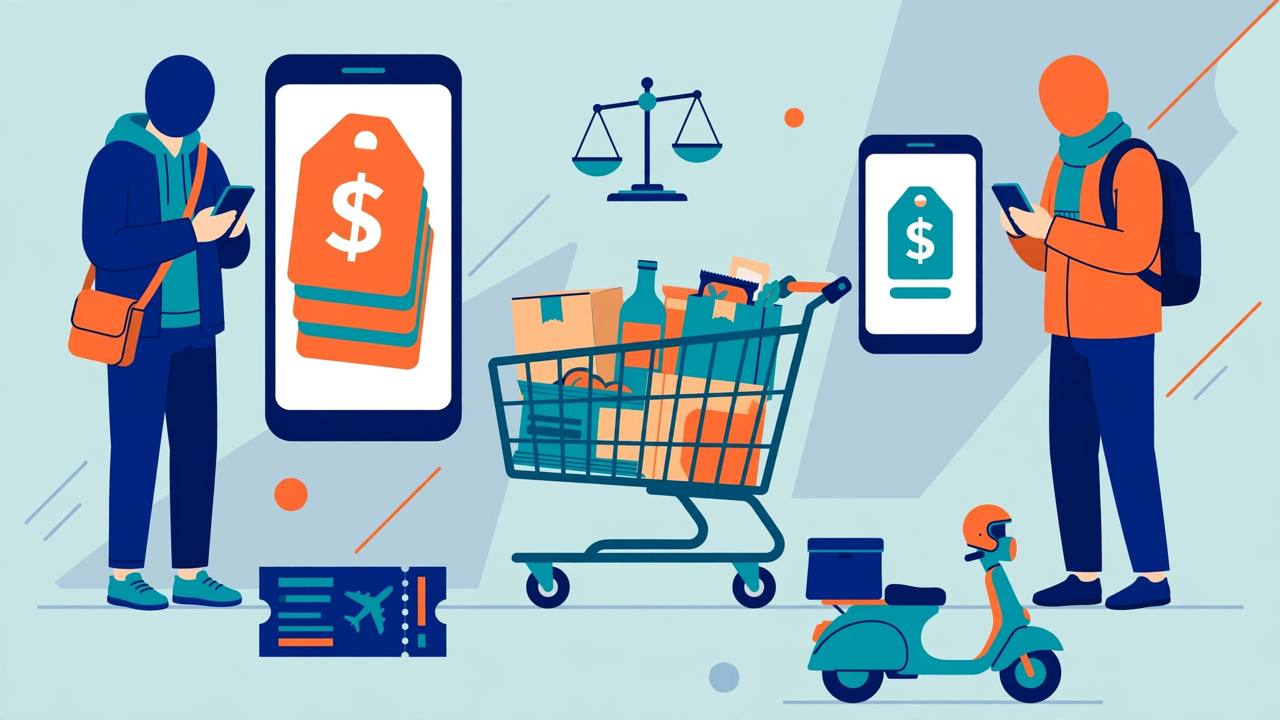
The U.S. Federal Trade Commission (FTC) on Wednesday, October 28, ordered nine of America's biggest airlines, ride-share, delivery and retail companies to hand over detailed information so the agency can study whether they use personal data to set the price each customer pays — and how much each gig worker earns.
Source: FTC — FTC Launches Personalized Pricing and Compensation Inquiry (Oct 28, 2026)
The orders went to Delta Air Lines, United Airlines, JetBlue, Lyft, Uber, DoorDash, Instacart, Target and Walmart under Section 6(b) of the FTC Act. Each company must turn over information that will let the agency assess whether pricing for a ticket, ride share, food delivery or other product or service varies from one person to the next based on factors such as participation in loyalty programs or analysis of personal data by what the FTC calls superintelligence algorithms. If a company fails to turn over the required information, the Commission has the power to compel compliance in federal court.
"We intend to scrutinize the opaque methodology that some companies in these industries may be using to determine how much consumers pay or how much gig workers are paid for the same product or service. Consumers deserve to know whether companies use their web surfing habits or other personal data to estimate the highest price they can charge each consumer. Workers also deserve to know if their compensation is affected by how companies use their personal data."
The gig-worker half of the inquiry
The FTC drew a deliberate contrast in its release. Airlines typically pay employees a transparent salary or fixed hourly wages, the agency said, while ride-sharing and food-delivery companies may pay their workers shifting compensation offers based on opaque formulas. Those companies may engage in personalized compensation based on their drivers' personal data, such as their phone usage or their acceptance history for past offers. The orders ask the companies to document the inputs, tools and procedures used to adjust or set both compensation and pricing.
Reuters, citing a senior FTC official, reported that the data points in question include a person's location, browsing history and income, and that the agency plans to use what it gathers to produce a study meant to guide regulators and lawmakers — not to bring an immediate enforcement case against any one company. The recipients will have 45 days from the date they receive the orders to respond.
What the companies say
Several companies pushed back on the same day. A Delta spokesperson said there is “no fare product Delta has ever used, is testing or plans to use that targets customers with individualized offers based on personal data,” and the airline said it has “zero tolerance for discriminatory or predatory pricing” and fully complies with pricing and advertising laws. JetBlue said it does not use personal information or web-browsing history to set individual prices. Instacart was equally firm: “We do not use personal information to set prices, and we never will.” The other companies had not commented in the first reports.
For Punjabi and other South Asian readers in the United States, this inquiry lands on daily life from both sides of the counter. Diaspora families shop at Walmart and Target, fly Delta, United and JetBlue, and order through Uber, Lyft, DoorDash and Instacart — and a large number also earn their living driving or delivering for those same apps, where an unexplained change in an offer can mean an unexplained change in the week's income. Whether the apps' algorithms merely respond to supply and demand, or quietly price and pay person-by-person, is exactly what the FTC says it now intends to find out.
What happens next
The nine companies have 45 days from receiving their orders to respond, and the FTC can go to federal court to compel any company that refuses. What follows is a study — the agency's stated aim is to give regulators and lawmakers a factual basis for deciding whether algorithmic pricing and pay need new rules. No company has been accused of breaking the law by these orders, and the denials from Delta, JetBlue and Instacart are on the record; the test now is whether the documents the companies hand over match those denials.