A Barrow County Sheriff's Office investigator in Georgia has resigned and been arrested over the alleged misuse of the office's Flock camera system — the automated license-plate reader network whose searches can show where a vehicle has been seen — according to a sheriff's office release reported by WUGA, Georgia Public Broadcasting's Athens station, on October 30.
Source: WUGA / Georgia Public Broadcasting, Oct. 30, 2026
Investigator Stephanie Howard turned herself in at the Barrow County Detention Center, the release said. She is charged with violation of oath by a public officer, and with the Georgia license-plate data offence covering the collection, storage, sharing and destruction of captured license plate data for law enforcement purposes, as the charge was described in the release. Howard was released on $7,500 bail. The charges are allegations: she has not been convicted of anything, and she is presumed innocent unless the state proves its case in court.
Found by the office's own audit
According to the release reported by WUGA, a self-audit by the sheriff's office found several suspicious inquiries conducted by Howard over a six-month span. Sheriff Jud Smith then began an internal investigation. The criminal case has now been turned over to the Georgia Bureau of Investigation (GBI), the state agency that routinely takes over investigations involving local officers, so that the sheriff's office is not investigating its own employee.
What Flock cameras do — and why a search matters
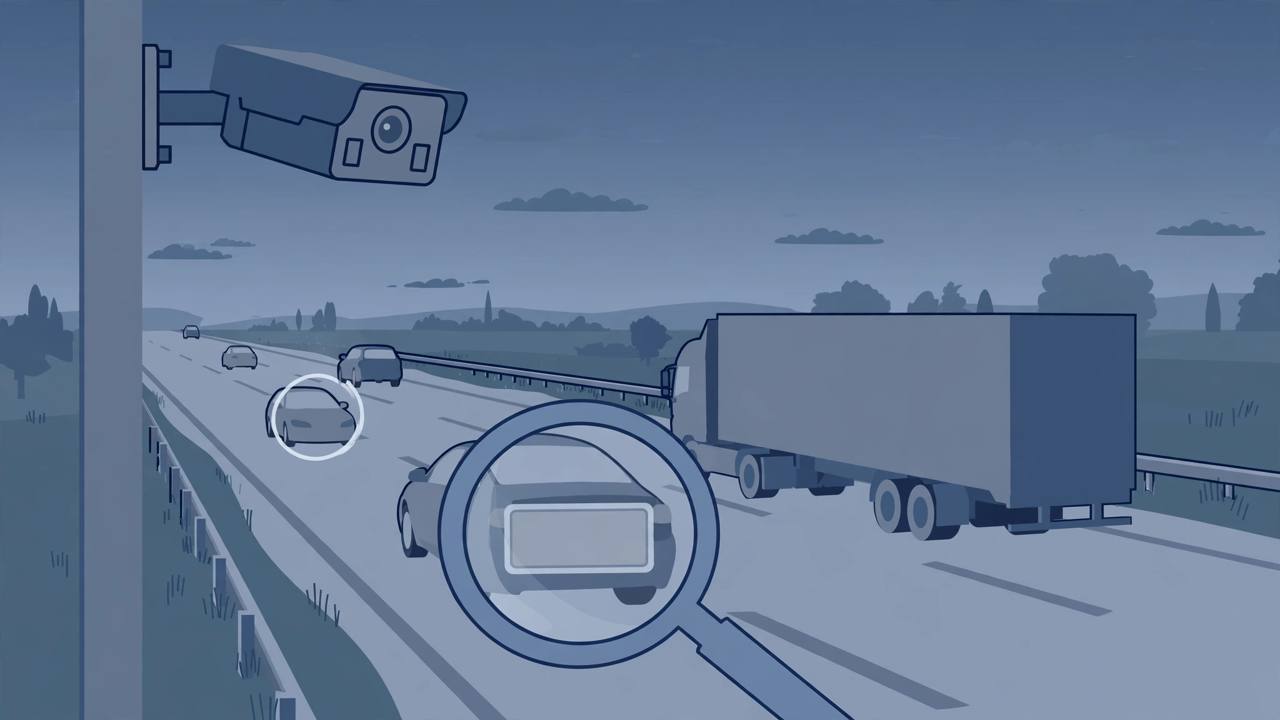
Flock Safety cameras are automated license-plate readers mounted on poles beside roads. They photograph passing vehicles and store plate numbers, vehicle descriptions, and the time and place each vehicle was seen, in a database that authorised officers can search. Police agencies say the system helps find stolen vehicles, missing people and suspects. Privacy advocates — and, in misuse cases, prosecutors — point to the other side of the same database: a search history can reconstruct where a person's car has travelled, which is why Georgia law restricts how captured plate data may be collected, stored, shared and destroyed, and why searching it without a law-enforcement purpose can become a criminal charge rather than only a workplace offence.
For ordinary drivers, and for the truckers who pass plate-reader cameras on Georgia highways and county roads every working day, the Barrow County case is a concrete example of the safeguard that is supposed to sit between the camera network and the public: every search is logged, audits can flag searches that do not fit an investigation, and an employee whose searches fail that audit can lose the job and face a judge.
Not an isolated Georgia case this year
WUGA's report placed the Barrow County arrest in a run of Georgia Flock cases in the last three months. In August, the Athens-Clarke County Police Department fired Criminal Intelligence Analyst Supervisor Nick Barker, a civilian employee accused of repeatedly searching his ex-wife's vehicle's license plate in 2025. In October, former Athens-Clarke officer Tyler Vaughn was terminated for improper use of the Flock system, for searching his ex-girlfriend's license plate several times in 2025. And in September, a University of Georgia employee was suspended without pay for 20 days and demoted for Flock misuse, after an Internal Affairs investigation found the civilian employee did not commit a criminal act — a contrast that shows agencies draw a line between a policy breach handled at work and alleged misuse they send to prosecutors.
Howard's case is at the allegation stage. The release does not say whose plates she is accused of searching, how many searches are involved, or what she is accused of doing with the data — and readers should not fill those gaps with speculation. Those details, if they exist, belong to the GBI investigation and any court filings that follow.
What happens next
The GBI now holds the case. Its investigators will complete their work and pass the file to prosecutors, who decide whether the two charges in the release proceed as filed, change, or are added to. No court date for Howard was reported in the October 30 release. The sheriff's office has not, in the reported release, announced changes to its own audit routine — but its self-audit is what started this case, and whether other Georgia agencies audit their Flock searches as closely is the wider question this arrest leaves behind for every driver whose plate these cameras record.