A Barrow County sheriff's investigator has resigned, surrendered at the county jail and been arrested over alleged misuse of the Flock license-plate camera system — the latest Georgia law-enforcement employee to face criminal charges for searching a database that is supposed to be used only for legitimate investigations, the Barrow County Sheriff's Office said in a release reported by WUGA on Friday, October 30.
Source: WUGA (Georgia Public Broadcasting / NPR), Oct. 30, 2026
Investigator Stephanie Howard resigned from her position and turned herself in at the Barrow County Detention Center, according to the release. She is charged with violation of oath by a public officer, and with collection, storage, sharing, and destruction of captured license plate data for law enforcement purposes — the Georgia offence that governs what officers may and may not do with plate-reader data. Howard was released on $7,500 bail. The charges are allegations; she has not been convicted of anything, and the release does not say whose plates she is accused of searching, or why.
Source: WUGA (Georgia Public Broadcasting / NPR), Oct. 30, 2026
How the case surfaced: an audit, not a complaint
What caught Howard, on the sheriff's account, was the system's own paper trail. A self-audit by the Barrow County Sheriff's Office found several suspicious inquiries conducted by Howard over a six-month time span, the release said. Sheriff Jud Smith then began an internal investigation. When that process finished, the case was turned over to the Georgia Bureau of Investigation (GBI) — the state agency Georgia sheriffs call in when the accused wears their own badge, so that the investigation is not run by the office where the suspect worked. The sheriff's release, as reported, does not give the number of searches, the dates inside the six-month window, or whether any search touched a specific person Howard knew.
Source: WUGA (Georgia Public Broadcasting / NPR), Oct. 30, 2026
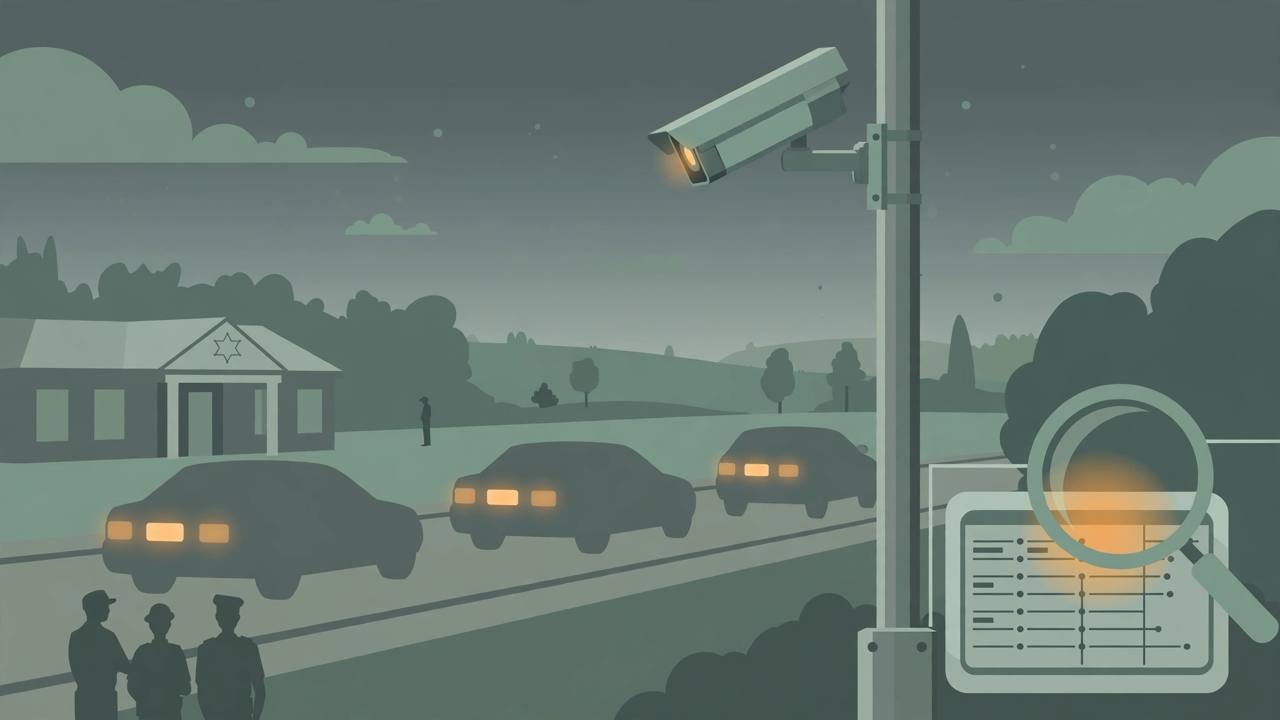
Flock Safety cameras are automated license-plate readers mounted beside roads. Each passing vehicle is logged — plate, vehicle characteristics, time and place — into a searchable network shared by thousands of agencies. That makes a single authorised login a window onto the movements of every driver whose car passes the cameras, which is why Georgia law restricts plate-reader searches to legitimate law-enforcement purposes and why misuse carries criminal charges, not just a workplace reprimand.
Barrow is not an outlier: Georgia's Flock autumn
Howard's arrest lands in the middle of a run of Georgia cases that WUGA catalogued in the same report. In August, the Athens-Clarke County Police Department fired Nick Barker, a civilian criminal intelligence analyst supervisor, who was accused of repeatedly searching his ex-wife's vehicle's license plate in 2025. In October, former Athens-Clarke officer Tyler Vaughn was terminated for improper use of the Flock system after allegedly searching his ex-girlfriend's license plate several times in 2025. And in September, a University of Georgia civilian employee was suspended without pay for 20 days and demoted for Flock misuse, after an internal affairs investigation found the employee did not commit a criminal act — the line, in practice, between a discipline case and a criminal case like Howard's.
Source: WUGA (Georgia Public Broadcasting / NPR), Oct. 30, 2026
One county north of Barrow, the same pattern produced an arrest a month earlier. The GBI announced on September 30 that it had arrested Justin Brown, 42, of Dahlonega, a former Hall County Sheriff's Office investigator, on two counts of misuse of a license plate reader system and two counts of violation of oath of office. Hall County had asked the GBI in on August 18 after its own internal audit of the Flock Safety system indicated Brown had accessed it for non-law-enforcement purposes; he was booked into the Hall County Detention Center, and the completed file was to go to the Piedmont Judicial Circuit District Attorney's Office for prosecution — the same state machinery now holding Howard's case.
Source: Georgia Bureau of Investigation release, Sept. 30, 2026 (Hall County case)
The national picture: logins that outlive the job
A Washington Post investigation published on October 23 found at least 11 cases in which government officials discovered unauthorised users searching Flock databases without permission — sometimes to track romantic partners. Its Georgia centrepiece was Andrae Wright, who left the Effingham County Sheriff's Office in 2021 but kept his Flock login credentials: over the following five years he searched the system more than 60 times, repeatedly looking up a vanity plate bearing his wife's middle name, before a tipster alerted authorities and he was arrested in July and charged with stalking and misuse. Since then, the Post reported, two more former officers — another in Georgia and one in Michigan — have been investigated for running Flock searches after their employment ended.
Source: The Washington Post investigation into Flock misuse, Oct. 23, 2026
The common thread across the cases is not hacking. Nobody broke into Flock. The failures are administrative and human: accounts not closed when employees leave, searches nobody reviewed until an audit, and insiders using a legitimate login for illegitimate reasons. Flock has responded by tightening the system itself — reporting on the Georgia cases notes the company made multi-factor authentication mandatory for users at the start of August 2026, alongside audit assistance and required case codes for searches — and its public position is that abuse of its technology at any level is unacceptable.
Source: The Washington Post investigation into Flock misuse, Oct. 23, 2026
What it means for drivers in Barrow County
Barrow County, whose seat is Winder, sits on the Atlanta-to-Athens corridor in northeast Georgia; its residents — commuters, delivery drivers and the long-haul truckers who cross the county on state highways — pass plate readers as a matter of routine. Every one of those passes creates a record. The Howard case is therefore not only about one investigator: it is a test of whether the safeguards the public was promised — audits, restricted purposes, consequences — actually operate. In this instance, the sheriff's office says its own self-audit is what surfaced the suspicious searches, which is the safeguard working as designed; the open question the GBI investigation must answer is what those searches were.
Source: WUGA (Georgia Public Broadcasting / NPR), Oct. 30, 2026
What happens next
The case now sits with the Georgia Bureau of Investigation. Following the pattern of the Hall County case, the completed GBI file would go to the local circuit district attorney for prosecution decisions on the two charges — violation of oath by a public officer and the license-plate-data offence. Howard, released on $7,500 bail, is presumed innocent unless the state proves the allegations in court. Neither the sheriff's release nor WUGA's report names any person whose plate was allegedly searched, and no court date has been announced.
Source: WUGA (Georgia Public Broadcasting / NPR), Oct. 30, 2026