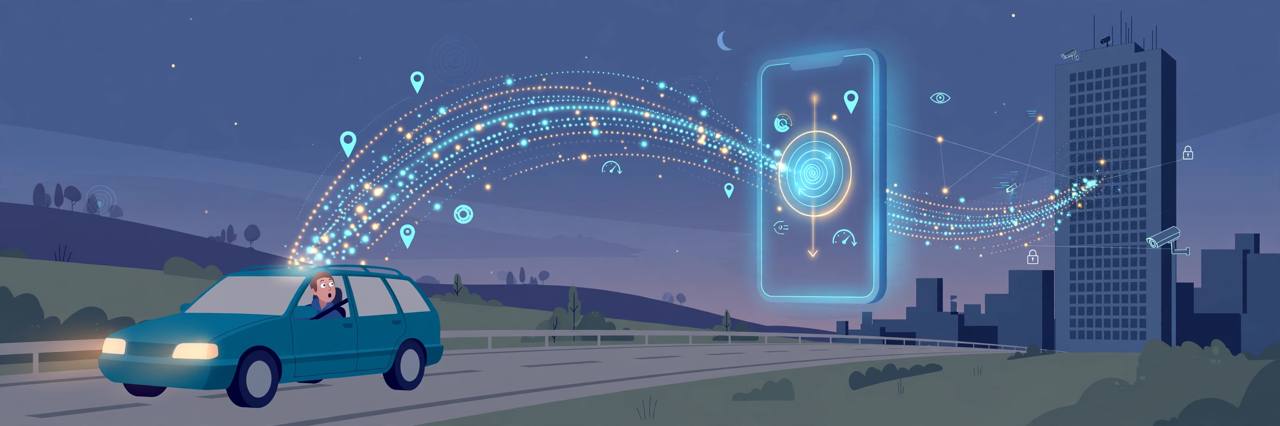
General Motors will pay $220 million to settle allegations by a coalition of 36 state attorneys general that the automaker illegally sold drivers' private behaviour and location data to data brokers, who then sold it to insurance companies that used it, in part, to set and sometimes raise people's premiums. The settlement was announced on Thursday, October 29, 2026, by the offices of the attorneys general who led and joined the case, and was reported the same day by Reuters.
Source: Reuters
At the centre of the case is Smart Driver, a feature of GM's OnStar service that operated from 2016 until it was discontinued in 2024. According to the attorneys general, GM pitched Smart Driver to drivers as a coaching tool that would help them improve their own safety, and it told drivers it would not share their data with insurers without their express consent. Millions of drivers were enrolled in the program over those eight years.
The coalition says that promise was broken. Investigators found that GM sold the information to data brokers under contracts that specified the data was to be used for insurance products, without disclosing that to drivers. The brokers then sold the data to insurance companies. The Washington attorney general's complaint, as summarised in the settlement materials, says GM sold Smart Driver data to Verisk Analytics starting in 2015 and to LexisNexis Risk Solutions from 2019, and that both firms turned it into reports and driver ratings for insurers.
The data was personal — down to each individual trip
The attorneys general stress that what GM sold was not anonymous statistics. It was personal, identifiable and specific: how many times a person drove, the start and end time of each trip, how often they braked or accelerated hard, hard cornering, whether they went over the speed limit, late-night driving and seat-belt use, together with precise location data tied to names, addresses and vehicle identification numbers, according to the complaint.
Arizona Attorney General Kris Mayes' office described one of the most troubling findings: an error in the OnStar app wrongly told more than 370,000 drivers that they were not enrolled in Smart Driver while GM collected and sold their data anyway. GM later quietly unenrolled those drivers without telling them about the mistake — and left their data with the data brokers and insurance companies that already had it.
Oregon Attorney General Dan Rayfield, whose office co-led the case with Washington Attorney General Nick Brown, said: “People bought a car, not a tracking device.” Arizona Attorney General Kris Mayes said: “Drivers were enrolled in data tracking without their knowledge.”
What GM must do now — and where the money goes
Beyond the $220 million, the settlement requires GM to obtain drivers' affirmative, express consent before collecting or disclosing their driving and location data, to limit the driving data it collects, and to run a comprehensive data privacy program with internal and external assessments, dealership oversight and training so customers are not enrolled without consent, and board-level oversight of the program. Washington's consent decree takes effect on November 30, 2026. The money itself goes to the states, not to individual drivers: announced shares include $12.3 million for Washington, more than $10.4 million for Oregon, $8.67 million for Pennsylvania, $5.9 million for Arizona and $4.7 million for Delaware. No claim form or payment to drivers has been announced, and officials' summaries warn drivers to treat any message offering to help them claim a share as suspect unless an attorney general's own site backs it up.
GM did not admit wrongdoing in the settlement. In an emailed statement reported by Reuters, the company said: “This agreement addresses Smart Driver, a product we ended in 2024, and reinforces steps we've taken to strengthen our privacy practices.” The case was co-led by Washington and Oregon, assisted by an executive committee of Colorado, Connecticut, Delaware, Illinois, Kentucky, Maryland, Minnesota, New Jersey, Utah and Vermont, and joined by the attorneys general of the remaining states and the District of Columbia, for a coalition of 36 in total.
Background: how the case built up
The Smart Driver program collapsed in public view in 2024 after New York Times reporting showed insurance companies were using the data to change drivers' rates, sometimes raising premiums for people who had no idea their own car had reported on them. GM discontinued Smart Driver in June 2024. In January 2025, GM agreed with the U.S. Federal Trade Commission not to disclose vehicle geolocation and driver behaviour data to consumer reporting agencies for five years, and Reuters reported GM also previously agreed to pay $12.75 million to settle a California investigation into its alleged sale of driver data to two data brokers.
For readers — including the many Punjabi truckers and long-distance drivers in the United States who spend their working lives in connected vehicles — the case is a reminder that telematics is now standard across the industry. Reuters noted that insurers such as Allstate, Progressive and Berkshire Hathaway's Geico all use telematics programs to monitor driving habits. The difference the attorneys general drew is consent: a driver who knowingly signs up for a discount program is one thing; a driver silently enrolled, and sold, is another.
What happens next
The consent requirements begin with the decree's effective date of November 30, 2026, and GM's new privacy program, assessments and dealer training will be watched by the 36 offices that signed the deal. Drivers who own GM vehicles do not need to file anything to benefit from the new consent rules — but they should check the privacy and OnStar settings in their vehicle apps, and be wary of third-party messages about “claiming” settlement money, which officials have not announced. Awaaz Punjab will follow how the state shares are spent and whether other automakers face similar cases.