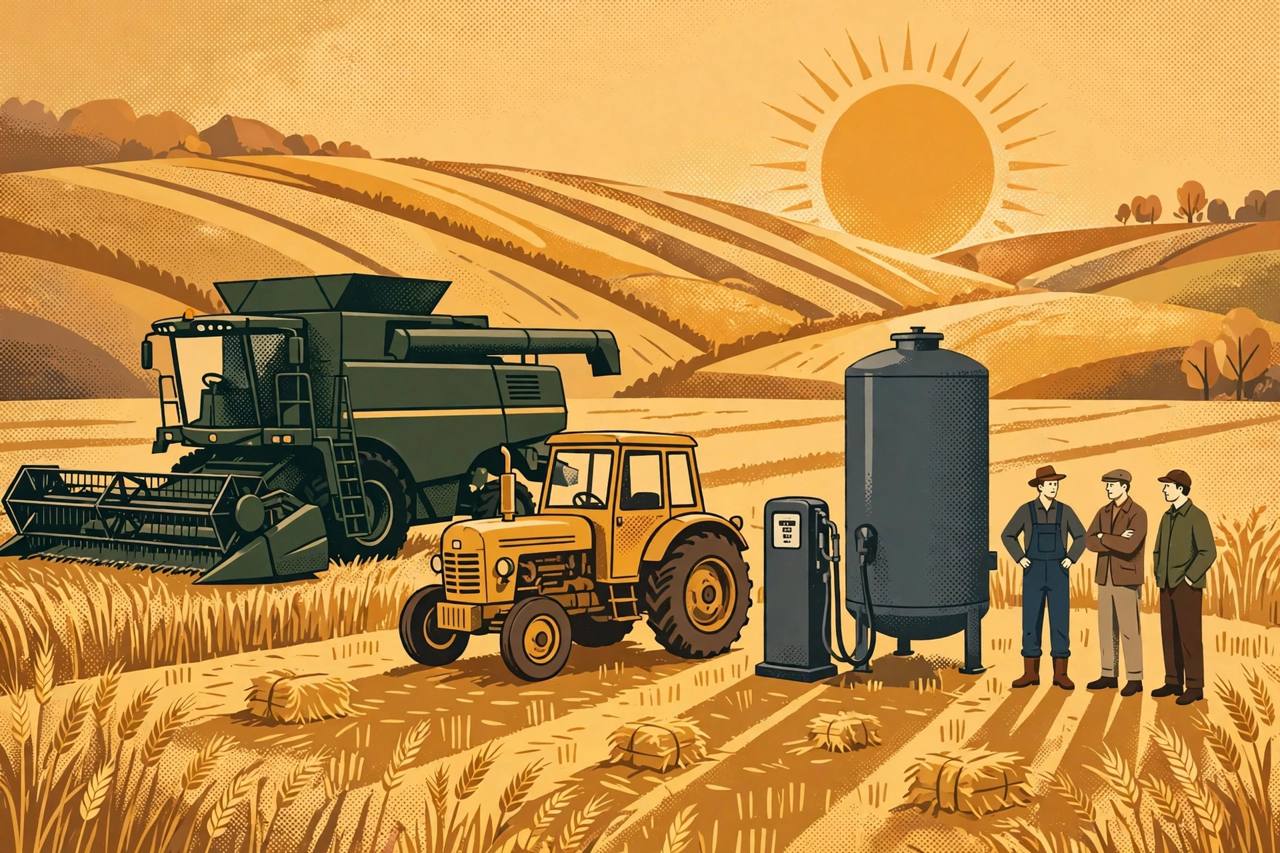
The Trump administration will make $8 billion (yaani 800 crore dollars) available in one-time payments to American farmers this harvest season under a new Harvest Fuel Relief Program, the U.S. Department of Agriculture (USDA) announced on Monday. Agriculture Secretary Brooke Rollins announced the program alongside President Donald Trump at a rally in Kansas, saying, "This $8 billion dollar investment will help bring certainty to our farmers during this harvest so they can continue to feed our nation."
According to USDA, the payments will cover part of the losses producers are expected to face in the 2026 crop year from high diesel and other input costs. The amount for each farm will be worked out with a formula using Farm Service Agency reported planted acres, Economic Research Service cost-of-production estimates, and World Agricultural Supply and Demand Estimates yields and prices. The money comes from Commodity Credit Corporation funding, and no farm insurance linkage will be required to take part, USDA said.
The program is modelled on the earlier Farmer Bridge Assistance program, under which roughly 560,000 farmers received more than $12 billion, according to USDA figures reported by Capital Press. CNN reported that diesel and fertilizer costs have risen sharply this year, with the war involving Iran disrupting fertilizer supply through the Strait of Hormuz, and that diesel — the workhorse fuel for farm machinery and trucks — has hit record levels. U.S. Energy Information Administration data reported this week put the national average diesel price at $6.18 a gallon as of October 12, up about $2.51 from a year earlier.
USDA said commodity-specific payment rates for Title I crops such as corn, soybeans and wheat will be released in November, while rates for other commodities will follow later. Specialty crop growers and fishermen are encouraged to send data on their increased fuel costs to HarvestFuel@usda.gov, and producers are urged to create a Login.gov account linked to USDA ahead of the application period. Sources: USDA announcement via Agri-Pulse and Capital Press; CNN via KION Central Coast.