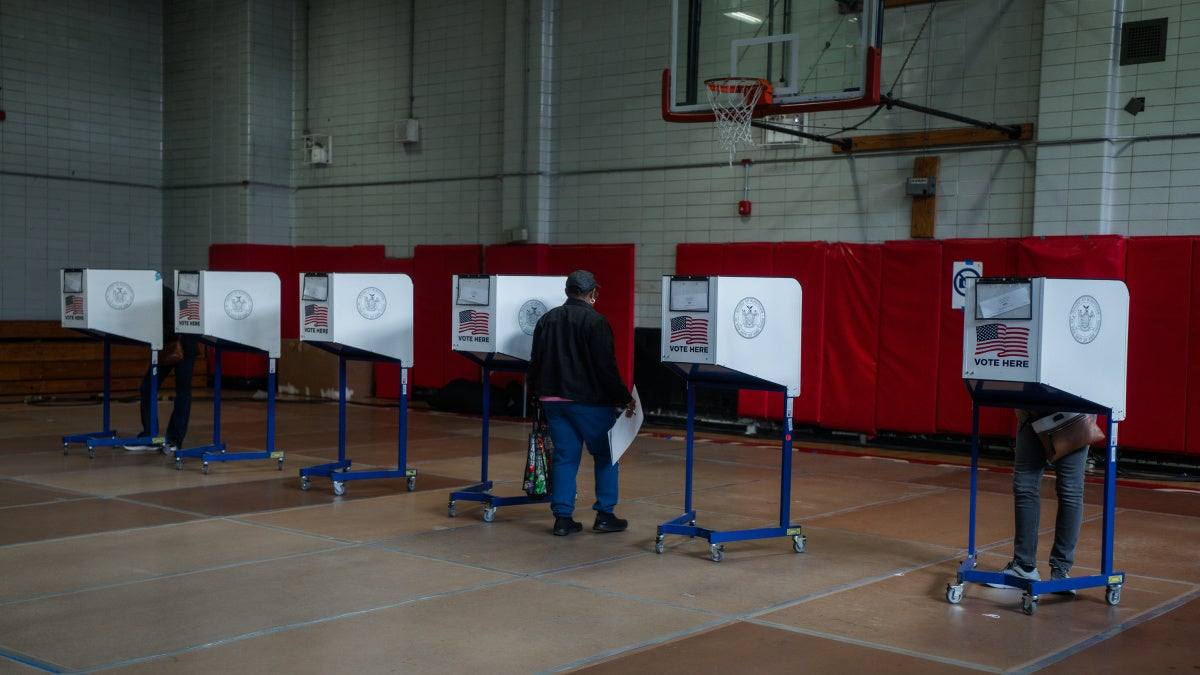
Human Rights Watch on Tuesday (October 20) urged the United States government to order Immigration and Customs Enforcement (ICE) officers not to operate in the vicinity of polling places, early voting locations or ballot drop boxes during the midterm election period, warning that the presence of federal immigration agents could deter people from voting.
"ICE officers' abuses have already seriously affected US citizens who have been stopped, beaten, detained, deported, and even killed," said Philippe Bolopion, executive director at Human Rights Watch. "Voters should not have to fear being caught in an ICE dragnet when they head to the polls."
In-person early voting is already taking place in the majority of states ahead of the November 3 midterms. In a nationwide September poll, 40 percent of respondents said they expect some kind of ICE presence at polls, with even higher percentages among non-white respondents.
Human Rights Watch noted that federal law generally prohibits federal officials from sending "troops or armed men" to voting sites, and that several state laws bar armed officers from acts that could intimidate voters near polling places. Despite this, neither President Donald Trump nor the heads of the Department of Homeland Security (DHS) and the FBI have ruled out federal agents, including ICE, being at places where people vote. DHS Secretary Markwayne Mullin said in early September there were no plans to station ICE agents at polling places, but left the door open for agents serving a warrant or responding to a threat.
Three lawsuits are pending in federal courts to prevent ICE from operating at the polls. Human Rights Watch also cited a ProPublica finding that federal immigration officers have detained at least 500 US citizens since the start of Trump's second term.
For naturalised citizens — including many Punjabi and other South Asian voters in states such as California, New York, New Jersey and Texas — the group said a clear public order is needed: "ICE agents should be publicly ordered to stay away from the polls and anywhere ballots are being cast," Bolopion said.
Sources: Human Rights Watch statement, October 20, 2026; Democrata.es coverage of the HRW demand and early-voting data.