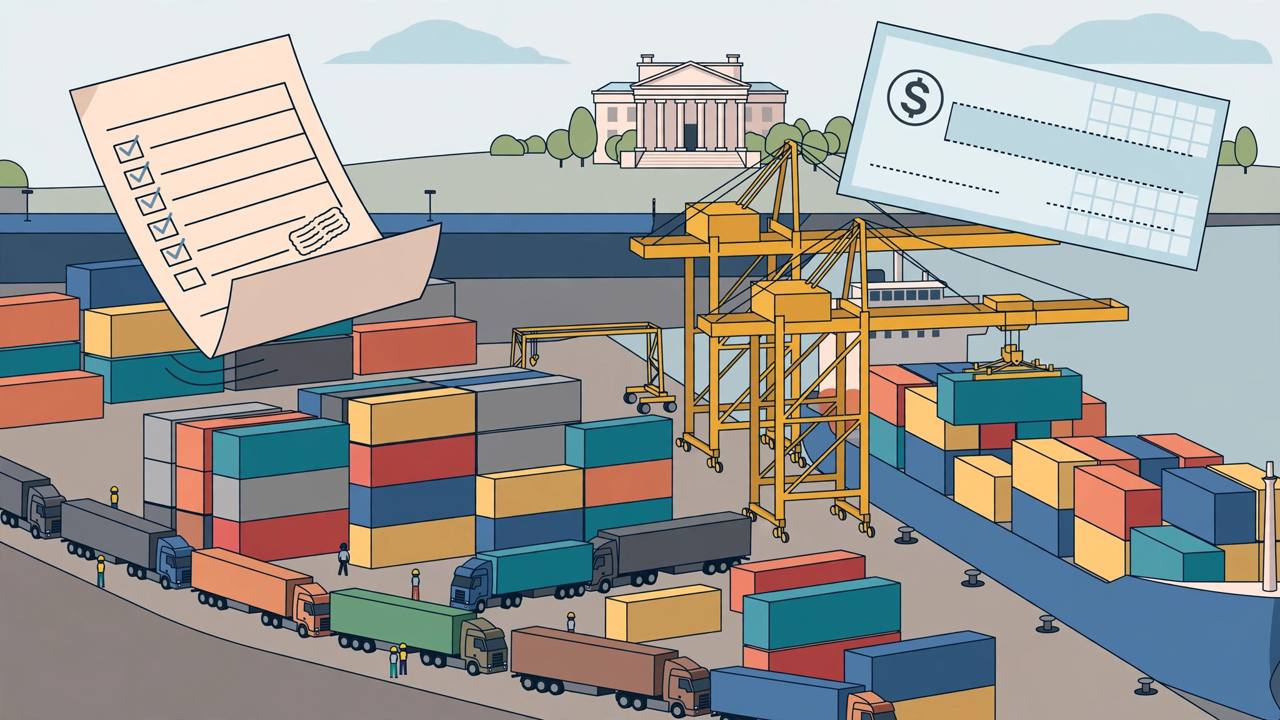
NEW YORK — A federal trade judge has widened the road to refunds for the tariffs the Supreme Court struck down earlier this year. In an order reported on Friday, October 30, Judge Richard Eaton of the U.S. Court of International Trade said all importers who have filed a protest against U.S. Customs and Border Protection are eligible for duty refunds on tariffs paid under the International Emergency Economic Powers Act (IEEPA) — including on entries that have already been finally liquidated, the closed-out category that has blocked many businesses from getting their money back.
Source: MLex
According to MLex's summary of the order, the ruling also opens refunds on final entries to importers whose route in is a protest filed through CBP itself, not only to importers who have their own court case with a court-ordered claim. Finally liquidated entries have been the hardest category in the refund fight: CBP has been processing refunds for importers holding a court order, while businesses that never sued — and whose entries closed before they acted — were told the protest door was shut. Friday's order pries that door open, though the money still has to move through CBP's systems and the litigation is not over.
Source: MLex
The money at stake
Importers paid more than $166 billion in the contested IEEPA tariffs before they were struck down, Bloomberg reported, and the final amount at issue is larger still because refunds include interest that accrued after the duties were collected — interest Eaton has said could run into the billions of dollars. The administration has said the tariffs were paid by about 330,000 importers, from the largest retailers down to single-container small businesses. Customs authorities had already fully processed almost $130 billion in refunds, according to court filings cited by Bloomberg, and Eaton wrote that CBP's automated portal had produced "over $126 billion in actual refunds."
Source: Bloomberg via Moneyweb
How the fight reached this point
The Supreme Court ruled in February that President Donald Trump lacked authority under IEEPA — a 1977 emergency-powers law — to impose the sweeping global tariffs, the first major piece of his agenda to be decided squarely by the court he helped shape. Eaton was then specially assigned by the New York-based Court of International Trade to oversee the refund litigation. Before the class-action dispute arose, he had entered a sweeping order directing refunds for all importers whether or not they sued; the Justice Department is appealing that ruling, arguing the judge lacked authority to issue relief beyond the parties before the court.
Source: Bloomberg via Moneyweb
On October 8, Eaton certified a nationwide class action in Freestyle World Inc. v. Customs and Border Protection (case 26-cv-1088) covering importers who paid the duties but never filed their own lawsuits, appointing the case — brought by a baby-products company — as the vehicle for the wider fight. He wrote that without class status, tens of thousands of importers might never recover money they are owed and the government would keep "billions of dollars of unlawfully collected duties." Attorneys Lawrence Friedman, Elizabeth Cabraser and Nicholas Diamand said the certification was "a vital step toward informing and empowering all importers, not just those with the means to file suit." The Justice Department had argued CBP has no legal authority to recalculate and refund duties on "final" entries unless a judge orders it importer by importer — the very bottleneck Friday's protest order addresses.
Source: Bloomberg via Moneyweb
Many Punjabi-American businesses sit inside this story: importers bringing food, auto parts and building materials through ports on both coasts, and the trucking and warehouse firms that move those goods. The practical change in Friday's order is that a business does not necessarily need its own lawsuit to chase a refund on a closed entry — a protest filed with CBP can now qualify it. Businesses should keep their entry paperwork and protest records; nothing in the order pays anyone automatically.
The government's position
The Trump administration has resisted class-wide and universal relief at every step, arguing that importers with certain claim types must file their own lawsuits and that CBP lacks authority to reopen finally liquidated entries on its own. A Justice Department spokesperson declined to comment on the October certification, Bloomberg reported, and CBP and the White House did not immediately respond to requests for comment at that time. The government has credited its own portal build-out — Eaton himself praised CBP for turning "an otherwise labour-intensive task of formidable proportions into a manageable, automated one" — while contesting how far the courts can order it to go.
Source: Bloomberg via Moneyweb
What happens next
Friday's order is one ruling inside litigation that is still moving on several tracks: the government's appeal of Eaton's earlier universal refund order is pending, a classwide relief order in the Freestyle World case has yet to settle how every category of entry is handled, and CBP continues processing refunds for importers with court-ordered claims. Separately, a three-judge trade court panel has heard arguments on Trump's newer tariffs imposed under Section 301 of the Trade Act of 1974 — a different legal authority — so importers face two refund-and-duty battles at once. For businesses that paid IEEPA duties and filed a protest, the immediate step is documentation: entry summaries, proof of duty payment and the protest filing itself.
Source: MLex