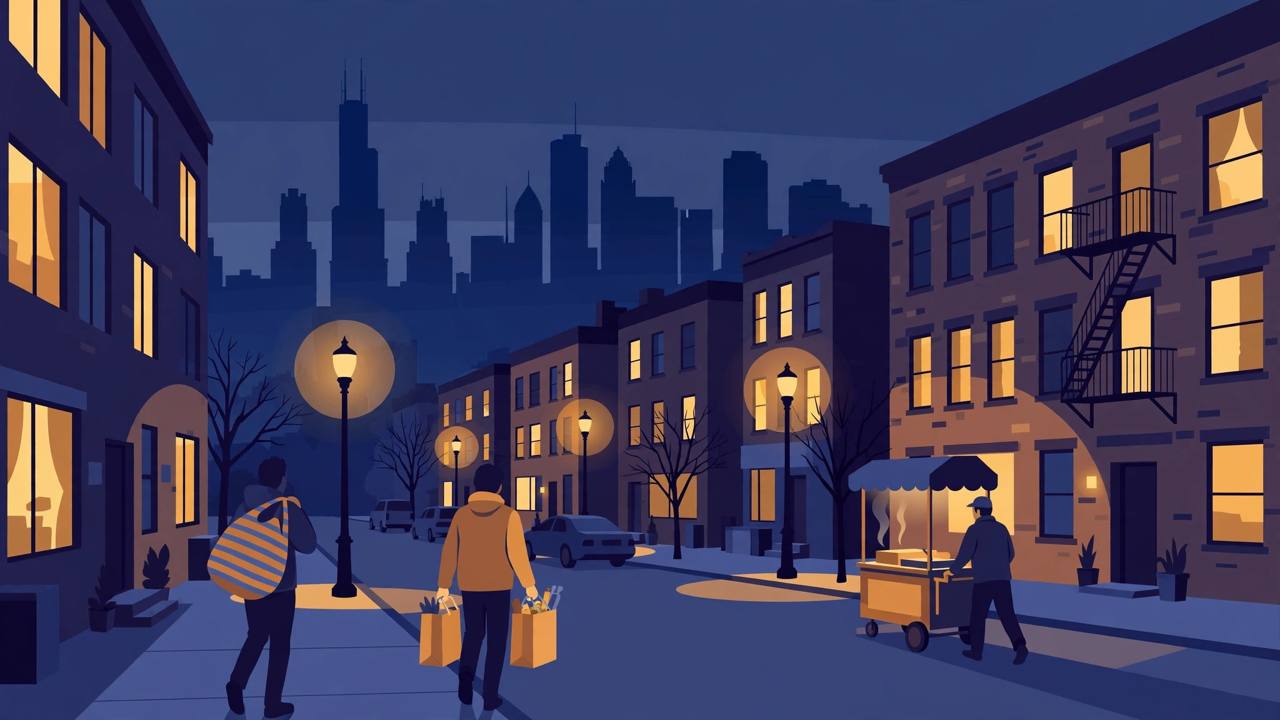
Nearly a year after Operation Midway Blitz officially ended, immigrants in Chicago are still shifting their work, shopping and everyday errands into the hours after dark or before dawn out of fear of being arrested or detained by Immigration and Customs Enforcement (ICE), the Chicago Sun-Times and WBEZ reported on October 21.
Source: Chicago Sun-Times / WBEZ
Gustavo Dominguez, 49, who does not have legal status, and his wife Patricia Dávila, 67, who has work authorisation and sought asylum after fleeing threats in Mexico, now wait until nighttime to do laundry and buy groceries. Dominguez says he prays before leaving home, even for a trip to the laundromat, asking to return home safely. Dávila says many more people now arrive at the laundromat at night, and that fearful parents send their children to shop while checking products with their mothers on video calls.
From the beginning of 2026 through the first week of August, ICE made 1,560 arrests in Cook County, according to a Sun-Times/WBEZ analysis of ICE arrest data obtained by the Deportation Data Project. Legal and community groups have documented encounters at courthouses, schools and grocery stores, saying operations have become less publicised but continue as part of the administration's ongoing deportation campaign.
‘People of the night’
“We're becoming gente de la noche — people of the night,” said Baltazar Enriquez, president of the Little Village Community Council. “We do things at night now.” Enriquez said he knows immigrants who have taken night shifts to reduce the chance of an encounter; one mother told him she gets only two or three hours of sleep before getting her children ready in the morning.
The shift carries real costs. Imelda, a childcare worker without legal status identified by a pseudonym because she fears deportation, now takes only occasional evening babysitting jobs — about twice a month. Street vendor Guillermo Flores, 54, who has sold food from a pushcart for about 16 years, now buys his supplies at 5 a.m., before sunrise, instead of 7 a.m., and stays home — losing income — when enforcement is reported in his neighbourhood.
Health workers see the toll daily. At Cook County Health, psychiatrist Dr. Hugo Solari said patients describe adapting their lives to avoid ICE, requesting telehealth appointments or prescriptions by mail and postponing preventive care. Rosemary Magaña, a therapist and program director at the Coalition for Immigrant Mental Health, said prolonged anxiety and lost sleep can become systemic trauma that reaches beyond those directly detained: “It doesn't have to happen to you for it to traumatize you.”
Dominguez and Dávila say their nighttime routine began after they saw agents detain people near their home last fall; for about a month a friend with legal status drove Dávila to shop while Dominguez paid for Uber rides to his warehouse job, sometimes lying down in the back seat. The couple has set aside about two months of rent in case one of them is detained, and Dávila now orders more online — at higher cost — instead of hunting for deals in person.