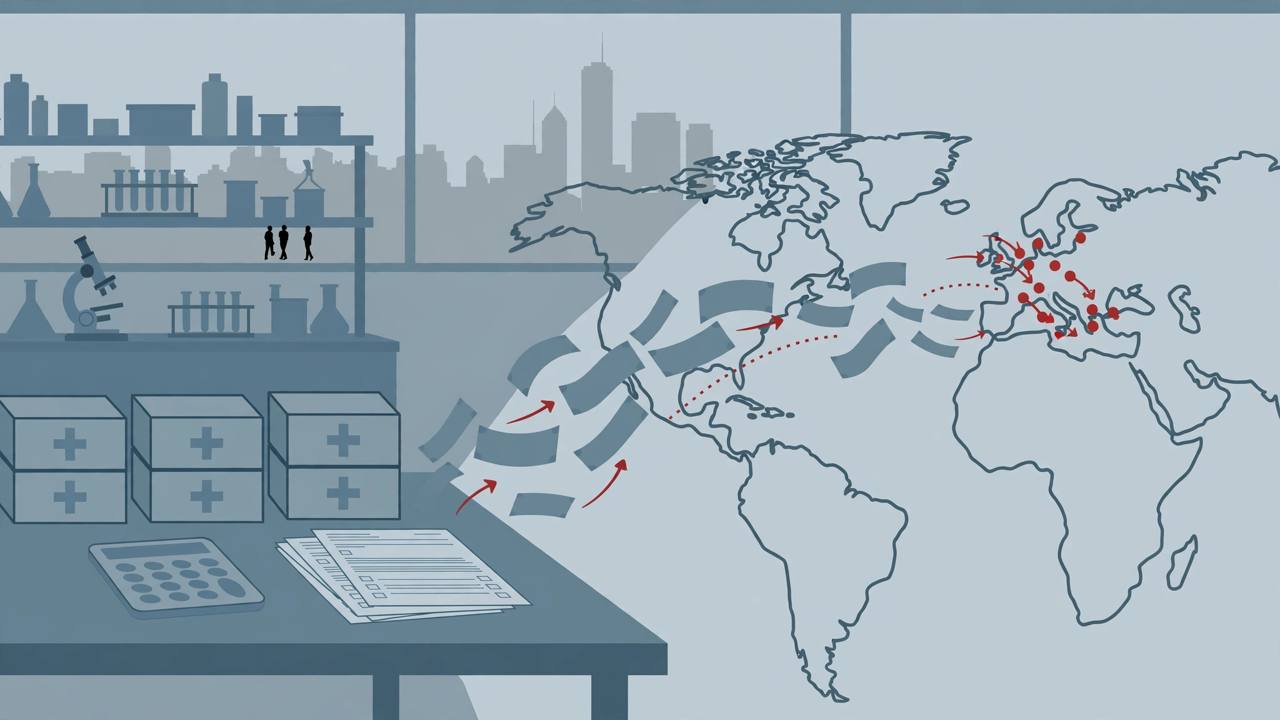
An Indian national living in Des Plaines, Illinois, pleaded guilty in federal court on Friday, October 30, to running a $227 million Medicare fraud built on a simple, chilling trade: he bought the personal details of hundreds of thousands of elderly Americans from a company in Pakistan, then used three Chicago-area laboratories to bill the government for COVID-19 test kits that were never ordered and never sent, the U.S. Department of Justice announced.
Source: U.S. Department of Justice, Office of Public Affairs, Oct. 30, 2026
Syed Murtuza Kablazada, 36, pleaded guilty to two counts of health care fraud, according to court documents and statements made in court and released by the Justice Department's Office of Public Affairs. As part of his plea agreement, he agreed to forfeit more than $46 million in fraud proceeds that law enforcement had already seized from ten bank accounts. He faces a maximum penalty of 20 years in prison when a federal district judge sentences him on a date still to be set.
Source: U.S. Department of Justice, Office of Public Affairs, Oct. 30, 2026
How the scheme worked, step by step
Over the course of six months starting in January 2023, Kablazada and his co-schemers acquired three Chicago-area laboratories — Chicago Care, V Care and Al-Ameer — the Justice Department said. Laboratories matter in this kind of fraud because Medicare pays labs for tests: whoever controls a lab's billing credentials controls a pipeline into the federal health programme that covers Americans aged 65 and over.
Source: U.S. Department of Justice, Office of Public Affairs, Oct. 30, 2026
Kablazada then paid approximately $11 million to a purported telemarketing company based in Pakistan to obtain personally identifiable information for hundreds of thousands of Medicare beneficiaries — names and Medicare details belonging to real patients across the United States, the department said. Using that information, he caused the three laboratories to submit $227 million in false and fraudulent claims for over-the-counter COVID-19 test kits that, in the department's words, he knew were never requested by or shipped to the beneficiaries.
Source: U.S. Department of Justice, Office of Public Affairs, Oct. 30, 2026
Medicare paid approximately $136 million on those claims before the scheme was stopped. To conceal their involvement, Kablazada and his co-schemers paid themselves through overseas money transfers and unlicensed money transmitters, and used part of the proceeds to purchase luxury vehicles, prosecutors said. The Justice Department release does not name the other co-schemers or state how many people in total took part, and it does not describe any test kit ever reaching a patient — because, on the government's account, the kits at the centre of the billing did not exist as deliveries at all.
Source: U.S. Department of Justice, Office of Public Affairs, Oct. 30, 2026
By pleading guilty, Kablazada has admitted the conduct in the two health care fraud counts rather than putting the government to a trial. What remains open is the sentence: the Justice Department says a federal district court judge will decide it after considering the U.S. Sentencing Guidelines and other statutory factors, up to the 20-year maximum. The forfeiture of more than $46 million was agreed as part of the plea itself.
Who announced the plea — and who built the case
The plea was announced by Assistant Attorney General Colin M. McDonald of the Justice Department's National Fraud Enforcement Division; Ryan Whalen, special agent in charge of the FBI's Chicago Field Office; and Thomas Ethridge, special agent in charge of the Department of Health and Human Services Office of Inspector General (HHS-OIG). The FBI's Chicago office and HHS-OIG investigated the case. Deputy Chief Patrick Mott and Trial Attorney Claire Sobczak Pacelli of the Fraud Division's Health Care Fraud Section are prosecuting, and Assistant U.S. Attorney Andres Almendarez of the Northern District of Illinois assisted, the department said.
Source: U.S. Department of Justice, Office of Public Affairs, Oct. 30, 2026
Friday's plea is the second act of a case that began in public in May 2025, when federal prosecutors first charged Kablazada and a co-defendant over the same $227 million test-kit scheme — charges that were allegations at that stage. The October 30 release announcing the guilty plea does not state the current status of any co-defendant's case, and this report does not assume it.
Source: U.S. Department of Justice charging release, May 22, 2025
Why this matters in Des Plaines and the Chicago suburbs
Des Plaines is a suburb in Chicago's Cook County, minutes from O'Hare International Airport, with a large South Asian community — including many Punjabi and other Indian families whose parents and grandparents are exactly the age group Medicare serves. The uncomfortable lesson of this case for those families is not about the accused; it is about the data. On the government's account, the personal details of hundreds of thousands of Medicare beneficiaries were valuable enough to sell across the world for $11 million, because in the wrong hands a name and a Medicare number can be turned into a claim, and a claim into cash.
Source: U.S. Department of Justice, Office of Public Affairs, Oct. 30, 2026
The practical protection is boring but real: Medicare sends beneficiaries statements listing every service billed in their name. A claim for COVID-19 test kits that were never ordered and never arrived is exactly the kind of line item this scheme depended on nobody checking. The Justice Department also places the case inside a much larger enforcement machine: its Health Care Fraud Strike Force Program, nine strike forces across the country, has charged more than 6,200 defendants who collectively billed federal health care programmes and private insurers more than $45 billion since 2007, and the department created a dedicated Fraud Division in April to pursue fraud against federal benefit programmes.
Source: U.S. Department of Justice, Office of Public Affairs, Oct. 30, 2026
What happens next
Kablazada will return to federal court for sentencing on a later date that has not yet been announced. The judge can impose any term up to the 20-year maximum, guided by the federal Sentencing Guidelines, and the agreed forfeiture of more than $46 million from the ten seized accounts stands as part of the plea. The $136 million Medicare actually paid is the figure restitution arguments will revolve around; the Justice Department release does not say how much of it the government expects to recover beyond the forfeited $46 million.
Source: U.S. Department of Justice, Office of Public Affairs, Oct. 30, 2026