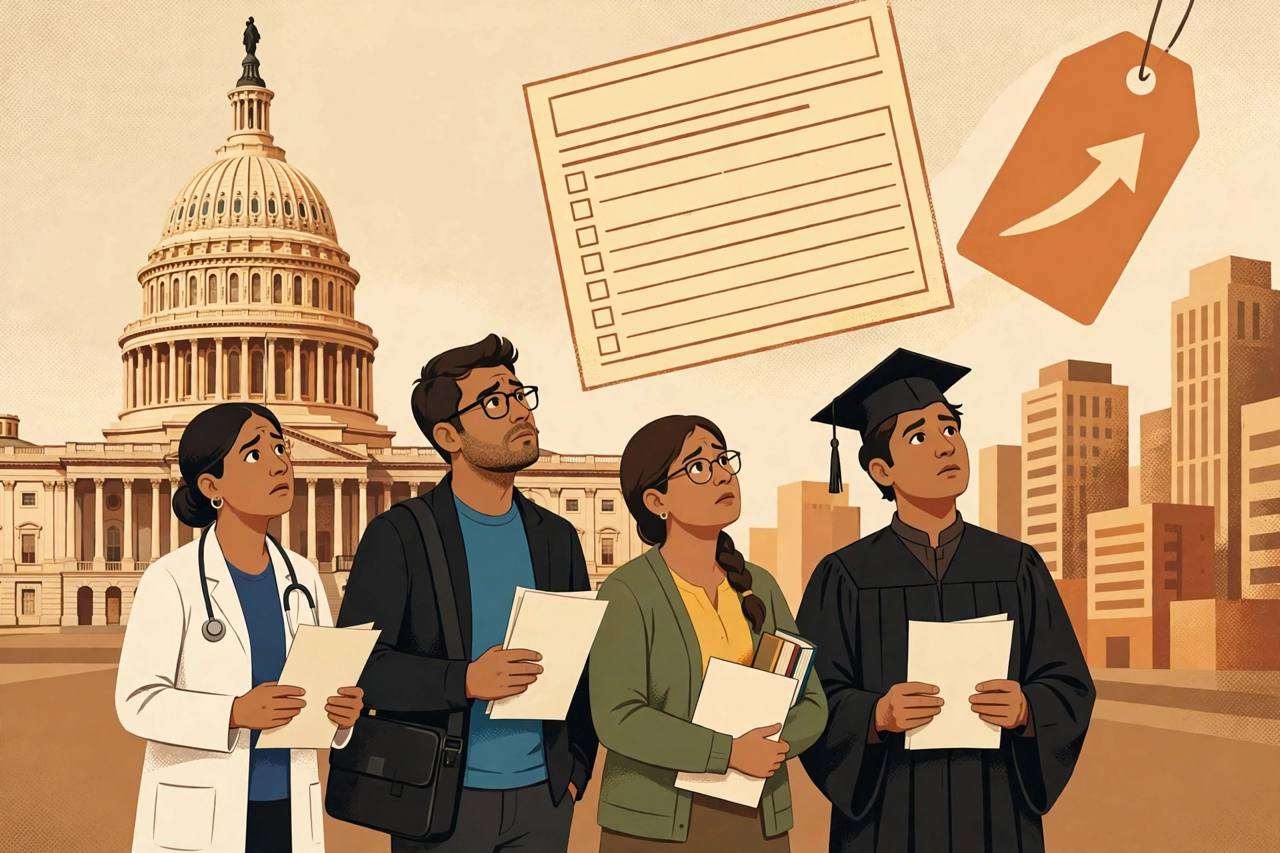
A leading Indian diaspora organisation in the United States has warned that a package of proposed restrictions on the H-1B work visa and related programmes would damage the American economy itself — hitting hospitals, technology companies, universities and small towns that depend on Indian professionals — and has urged political leaders to reject what it called rising anti-Indian rhetoric in the middle of the election season.
Source: The Hindu BusinessLine
The warning came in a statement issued on October 30 by Indiaspora, a non-partisan non-profit that represents the Indian-American community, and was reported on November 1. It lands four days before the November 3 midterm elections, in which all 435 seats in the House of Representatives and 35 of the 100 Senate seats are being contested and immigration has been a central campaign theme.
"H-1B workers from India have helped make America the world's innovation leader, generating billions for the American economy. Driving them away could have very serious consequences for communities nationwide, from major cities to small towns," said Sanjeev Joshipura, Executive Director of Indiaspora, in the statement.
Source: The Hindu BusinessLine
What Indiaspora flagged: fees, selection, spouses and students
At the top of the group's list are proposals for H-1B petition fees exceeding $100,000 for employers in the technology and healthcare sectors. Indiaspora argued that costs at that level would act as a barrier to hiring, especially for hospitals, smaller employers and early-career professionals, rather than as a narrow tool against abuse of the programme.
The group also opposed replacing the randomised H-1B lottery with a wage-weighted selection mechanism, saying a system that favours the highest-paid applicants could disadvantage early-career graduates — the very pipeline, it argued, that has supplied American laboratories, hospitals and engineering teams for decades.
Two further proposals drew the group's concern: scrapping the 60-day grace period that laid-off foreign workers currently get to find a new employer or change status, and freezing work permits (Employment Authorization Documents) for H-4 spouses of H-1B workers. Indiaspora also flagged proposed fees of up to $70,000 on Optional Practical Training (OPT) and STEM extensions, the route most international students use to gain US work experience after graduation.
Why the group says this is not only a tech story
Indiaspora stressed that foreign professionals fill workforce gaps far beyond Silicon Valley. It pointed to rural physicians and teachers in under-resourced areas such as the Mississippi Delta, where, it said, domestic hiring cannot immediately replace doctors and educators recruited from abroad. Curtailing those pipelines, the group argued, would be felt first in communities that already struggle to staff clinics and classrooms.
Source: VisaVerge
The scale of the programme explains the stakes. Indian nationals accounted for 71 per cent of approved H-1B petitions in fiscal 2024, according to USCIS figures compiled by VisaVerge. The largest sponsors that year included Amazon.com Services (10,044 petitions), Infosys (8,137), Tata Consultancy Services (7,566), Microsoft (5,189), Meta (5,123) and Apple (4,202). India's IT industry body Nasscom has estimated that H-1B workers make up less than 1 per cent of the employee base at the top ten Indian and India-centric companies.
Indiaspora's statement groups together measures at different stages — proposals, proclamations and rules — and not all of them are in force in the form the group describes. Readers on work visas should treat the statement as a warning about the direction of policy, and check the current rule for their own category before making decisions.
The politics around the warning
The organisation urged leaders across the political spectrum to reject anti-Indian rhetoric, warning that scapegoating foreign talent for short-term political gains could hurt the US economy and undermine the strategic partnership between the United States and India. In India, senior Congress leader Pawan Khera separately raised concerns about the extension of the $100,000 fee, saying it could affect Indian IT professionals, students and the country's talent pipeline. Nasscom, for its part, said proposed fee increases should be judged against the programme's original purpose: letting employers bring in temporary skills when they face shortages at home.
What happens next
None of the measures Indiaspora flagged becomes law through a statement — they would need formal rulemaking, proclamations or acts of Congress, and the balance of Congress from January 2027 will be decided on November 3. For the hundreds of thousands of Indian and Punjabi families in the United States whose legal status runs through an employer's H-1B petition, a spouse's H-4 work permit or a graduate's OPT, the practical advice from immigration practitioners remains the same: keep documents current, watch the Federal Register for final rules rather than campaign proposals, and take advice on your own case before changing jobs or travel plans.