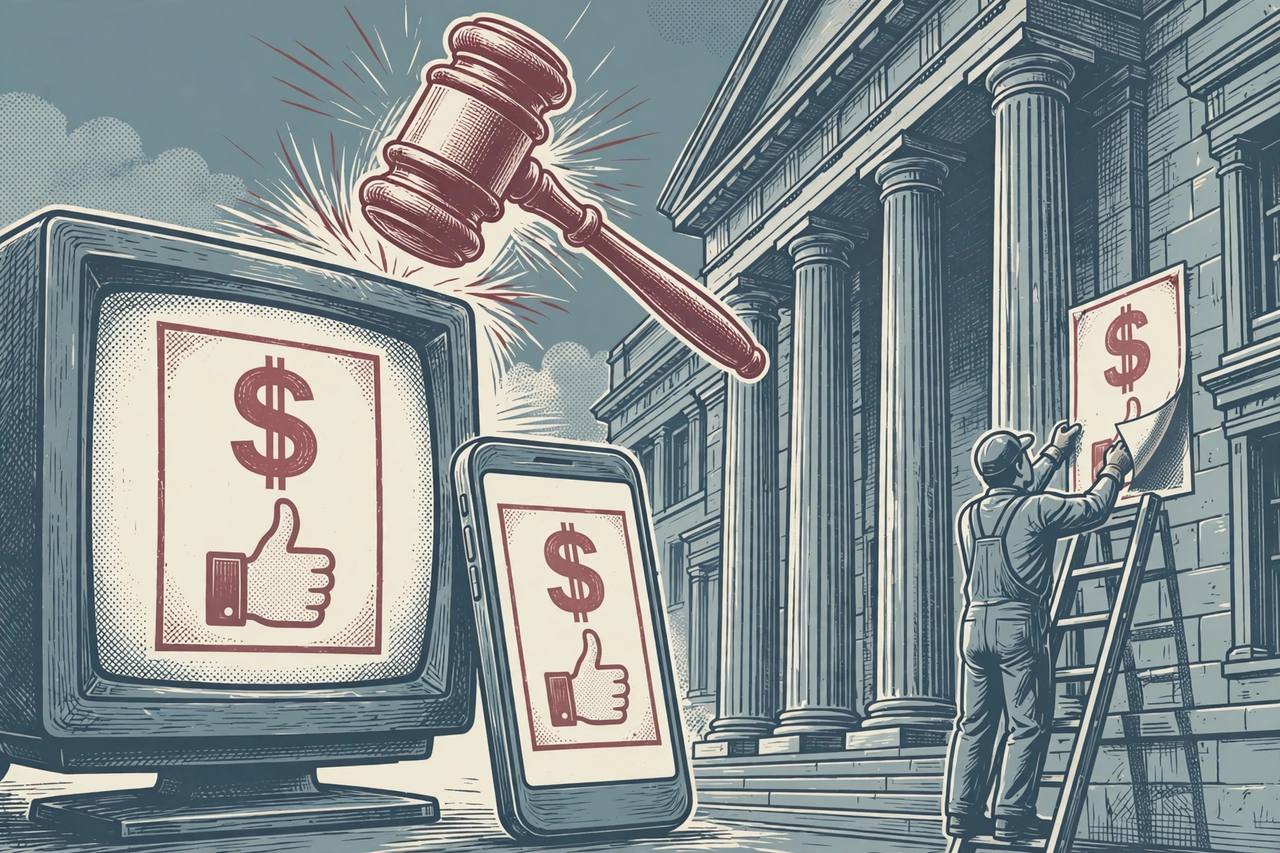
A federal judge in New York on Friday, October 30, ordered the Trump administration to pull three taxpayer-funded advertisements from television, government websites and social media, ruling that the spots appeared to have been made for political or propaganda purposes days before the midterm elections. U.S. District Judge Jennifer L. Rochon sided with a coalition that includes the nonpartisan watchdog Common Cause.
Source: Associated Press (via Bytes Europe)
The three advertisements ordered removed are titled “$5,000 to Americans,” “Every Democrat Voted Against No Tax on Tips” and “Cost of Socialism.” The first promotes President Donald Trump's claim that every American will receive $5,000 if Republicans keep control of Congress in the election on Tuesday, November 3.
Source: Associated Press (via Bytes Europe)
What the order actually requires
Rochon directed officials to remove the three videos from official government websites and social-media accounts, including YouTube and Instagram, and to cancel any slots, placements or arrangements for airing or distributing them through authorized third parties — including President Trump's flagship super PAC, MAGA Inc. Government lawyers sought to exclude the super PAC from the order, and reporting on the ruling says the judge had not yet ruled on that request.
Source: NewsLooks (AP-based report)
The ruling expands a temporary restraining order Rochon issued two weeks earlier, when she barred a series of administration ads that challengers said glorified Trump and echoed his political messaging going into the midterms. She found the challengers were likely to succeed on their claims about these three ads and that irreparable harm could result if the videos stayed up while the case proceeds.
Source: Associated Press (via Bytes Europe)
Who brought the case — and what they argued
According to the Campaign Legal Center Action, which brought the case with co-counsel, the clients include Common Cause, the Service Employees International Union Local 32BJ and a candidate for state House in Alabama. The plaintiffs argued Congress never authorized public money to be spent on advertisements intended to influence an election. Bradley Girard, a lawyer with Democracy Forward working with the coalition, said: “Congress has made clear that partisan ads cannot be funded with taxpayer dollars, and we are proud to work with this coalition to earn today's result.”
Source: NewsLooks (AP-based report)
What the judge did not do
The coalition had sought the removal of at least 13 advertisements. Rochon declined to pull several others, at least for now — drawing a line the court described between an administration explaining and defending its policies, which is permitted, and government-funded messages that cross into partisan electioneering. She also stressed the order is temporary: after hearing more evidence in the coming weeks she could restore the three ads, or ban additional ones.
Source: Associated Press (via Bytes Europe)
After issuing the order on Friday afternoon, Rochon noted that the government would have no excuse to delay taking the ads down immediately. Rochon was nominated to the court by then-President Joe Biden and once served as a law clerk for Trump's sister, the late Maryanne Trump Barry, a longtime federal appeals court judge.
Source: Associated Press (via Bytes Europe)
The White House answer
The White House has defended the advertisements as public service announcements, in line with what past administrations have done. Reporting on the ruling said White House spokeswoman Lauren Bis called the ruling illegal and labelled the judge an activist judge. The administration's position, as the case has developed, is that the spots explain the president's policies rather than campaign for his party.
Source: Particle News summary of AP reporting
Background: the line between governing and campaigning
Federal appropriations law has long barred agencies from spending public money on publicity or propaganda that Congress has not authorized — the principle at the centre of this case. Government departments routinely produce public-service material about programs, benefits and deadlines. What made these three spots different, in the court's preliminary view, was their content: one tying a promised $5,000 payment to one party keeping power, one naming the opposing party's votes, and one titled as an attack on an ideology — published on official channels, with public money, in the final days before a national vote.
Source: Associated Press (via Bytes Europe)
The order landed on the Friday before the Tuesday, November 3 midterm elections. A final judgment on the merits will come long after voting ends — but the temporary order decides what taxpayers' own government channels may show voters in the last four days of the campaign.
What this means for taxpayers, including diaspora voters
Every voter who pays U.S. taxes — including the Punjabi diaspora across California, New York, New Jersey, Texas and other states — funded the production and placement of these advertisements through general tax revenue, whichever party they support. The court's order does not stop the Trump campaign or MAGA Inc. from making or airing their own political ads with their own money; it stops the government itself from distributing these three with public funds and official accounts while the case is decided. That distinction — campaign money versus taxpayer money — is the whole case.
What is solid
- Judge Jennifer L. Rochon on Friday ordered three named taxpayer-funded ads removed from government websites and social media and third-party airings cancelled
- The ruling expands a temporary restraining order she issued two weeks earlier in the same case
- Plaintiffs sought removal of at least 13 ads; the judge pulled three and declined the rest for now
What is only claimed
- Whether the three ads are unlawful partisan propaganda paid for with public money, as the plaintiffs argue and the judge preliminarily found likely, or legitimate public-service announcements, as the White House argues
- Whether MAGA Inc. must be covered by the order — government lawyers asked to exclude the super PAC and that request was still pending in reporting on the ruling
What happens next
The administration must now take the three ads down immediately, as the judge ordered from the bench on Friday afternoon, while the lawsuit continues. Further evidence hearings in the coming weeks will decide whether the three ads stay banned, return, or are joined by others from the plaintiffs' list of at least 13. Whatever the court finally decides on the merits, the immediate effect is fixed: in the last days before November 3, these three spots may not run on the government's own channels.