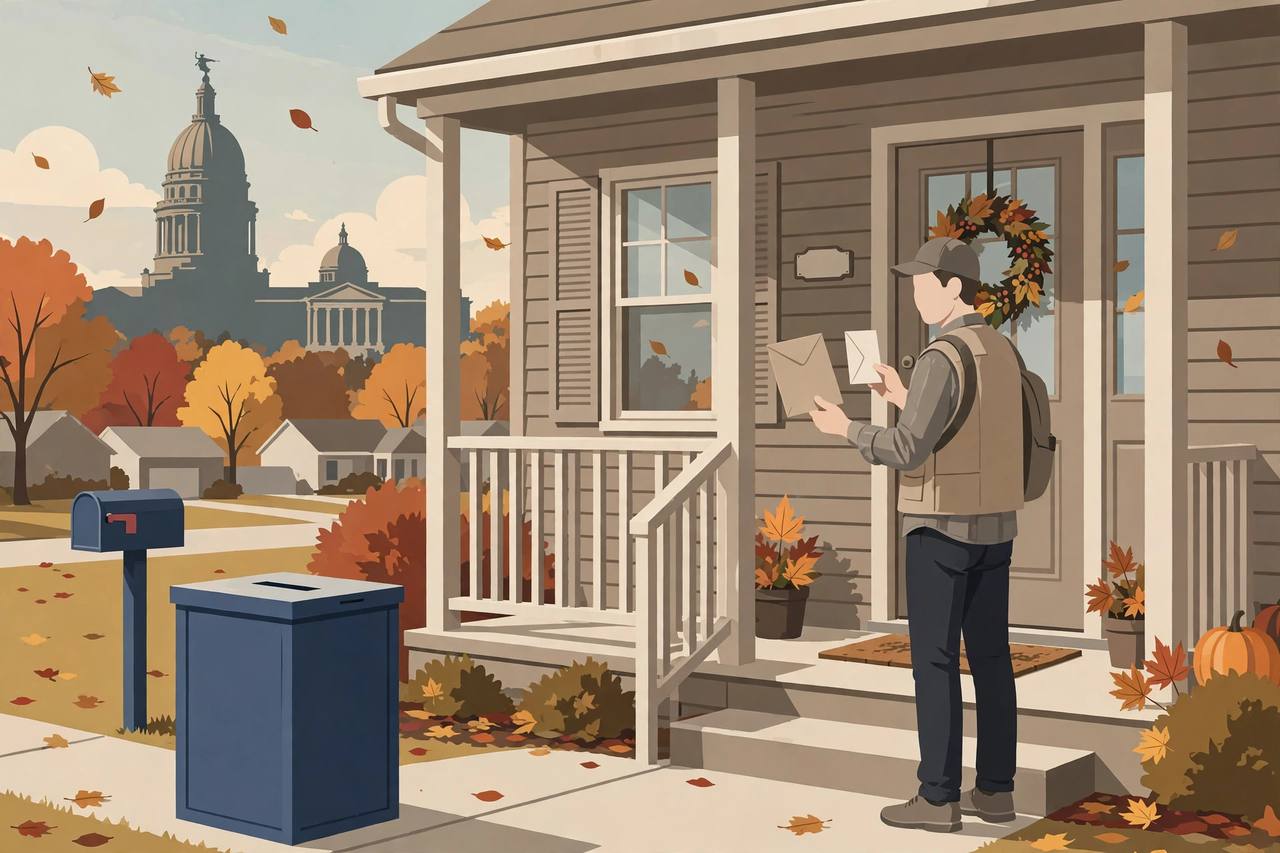
TOPEKA, Kansas — Kansas Attorney General Kris Kobach has ordered a political canvassing group, Bluestem Kansas, to immediately stop offering voters incentives tied to voting in the November 3 general election, in a cease-and-desist letter sent on Saturday, October 31 — three days before Kansans decide their midterm contests, including a closely watched United States Senate race.
Source: Kansas Attorney General press release, Oct 31, 2026
The action followed evidence that the Attorney General's Office says it received on October 31 from a Kansas voter who was offered a $5 gift card. According to the office, the canvasser who offered the monetary incentive identified himself as working with Bluestem Kansas. The office has not said, in its announcement, where in Kansas the offer was made, how many voters may have been approached, or whether the $5 case was a single incident or part of a wider practice — those questions are now at the centre of its investigation.
Stop offering voters incentives tied to voting in the November 3 general election, immediately — and preserve all documents, communications and records tied to the group's canvassing and to any offer of gift cards or other incentives.
The law the Attorney General cites
Under Kansas law, K.S.A. 25-2409, election bribery includes giving, offering or agreeing to give a benefit in exchange for voting at a public election, the Attorney General's Office said. It is a severity level 7, nonperson felony under state law. Federal law, 52 U.S.C. Section 10307(c), separately makes it a crime to pay or offer to pay anyone for voting in an election that includes federal candidates — which the November 3 midterms do, with Congress and the Senate on the ballot across Kansas.
Kobach, in a statement issued with the letter, said: 'As attorney general and before that as secretary of state, I have prosecuted many cases of voter fraud in Kansas, including voting by non-citizens and double voting. But I never thought that a group in Kansas would be so brazen as to go door-to-door three days before a general election offering voters monetary incentives.' He added, as reported from the release: 'As long as I am attorney general, those who violate our election laws will be prosecuted to the fullest extent of the law.' Those are the Attorney General's characterisations of an allegation his office is investigating — no court has made any finding against Bluestem Kansas, and no charges had been announced as of Sunday night.
Records must be preserved — and the public is asked to come forward
The letter directs Bluestem Kansas to preserve all documents, communications and records related to its canvassing efforts and to any offer of gift cards or other incentives to voters. As summarised in reporting on the release, that preservation demand covers emails, text messages, scripts, training materials, payment records and communications with vendors and canvassers — the paper trail that would show who designed any incentive offer, who approved it and how far it reached.
Source: KCTV5 reporting, via WiseVoter
The Attorney General's Office is also asking for the public's help. Any Kansan who was offered a gift card, cash or any other incentive by Bluestem Kansas or its canvassers is asked to contact the office at 785-296-2215. Reporting on the appeal says useful details include the date and location of the contact, what was offered, what the canvasser asked the voter to do, any photos or videos of the exchange, and any written materials the canvasser left behind.
Trump carries the claim to the rally stage — with details the AG's announcement does not contain
President Donald Trump amplified the case on Sunday, November 1, first on Truth Social and then at a rally in Salina, Kansas, where he brought Kobach briefly to the stage. Trump told supporters that Kobach had told him a 'radical left PAC operative' was caught on camera going door to door in Wichita offering gift cards and money to get people to vote, called it 'a criminal offense,' and said, 'We have photographic evidence.' Readers should note the gap between the two accounts: the Attorney General's own announcement does not name Wichita, does not describe Bluestem Kansas as a political action committee, and does not describe photographic evidence — it reports one voter's evidence of a $5 gift-card offer from a canvasser who identified himself with the group. The wider claims remain allegations, not findings.
Source: Salina311, rally report, Nov 2, 2026
At the same Salina rally, Trump urged Kansans to back Republican Senate candidate Roger Marshall — who faces Democrat Adam Hamilton on Tuesday — and Masterson, in the final push of a campaign in which Kansas, a state Trump won by more than 10 points in 2024, has become a genuine battleground. The Kansas Republican Party, in a response reported from the weekend coverage, argued that every vote should be cast freely rather than bought or rewarded with gift cards. Bluestem Kansas had issued no public response in the reporting available for this story, and the group has not been charged with any offence.
Why a $5 card matters — and what it means for Kansas voters
Door-to-door canvassing itself is a normal, legal part of American elections: campaigns and civic groups may urge people to vote, help them find a polling place and remind them of deadlines. What both Kansas and federal law forbid is attaching a benefit to the act of voting itself — paying, or offering to pay, a person for casting a ballot in an election with federal candidates. That is why a card worth only $5 still triggers a felony statute: the law treats the offer, not the amount, as the offence, because elections are meant to turn on persuasion, not payment. For Kansas's immigrant and naturalised voters — including Punjabi and other South Asian families settled along the state's I-70 and I-35 corridors — the practical rule from this case is the same as for every voter: no one may lawfully offer you money, a gift card or anything of value for voting, and if anyone does, the Attorney General's Office is asking to hear about it at the number above, whether or not you accepted.
What happens next
The immediate test is Tuesday, November 3, when Kansas votes — including in the Marshall–Hamilton Senate race that brought the President and the Attorney General onto the same Salina stage. The Attorney General's investigation continues in parallel: Bluestem Kansas is under a formal order to stop any incentive offers and to preserve its canvassing records, voters who were offered incentives are being asked to come forward, and any decision on criminal charges will come after that investigation, not before it. Until a court hears evidence, the $5 gift-card case remains what the documents say it is — a cease-and-desist letter built on one voter's reported offer, now amplified into a national campaign argument in the final 72 hours of the midterms.