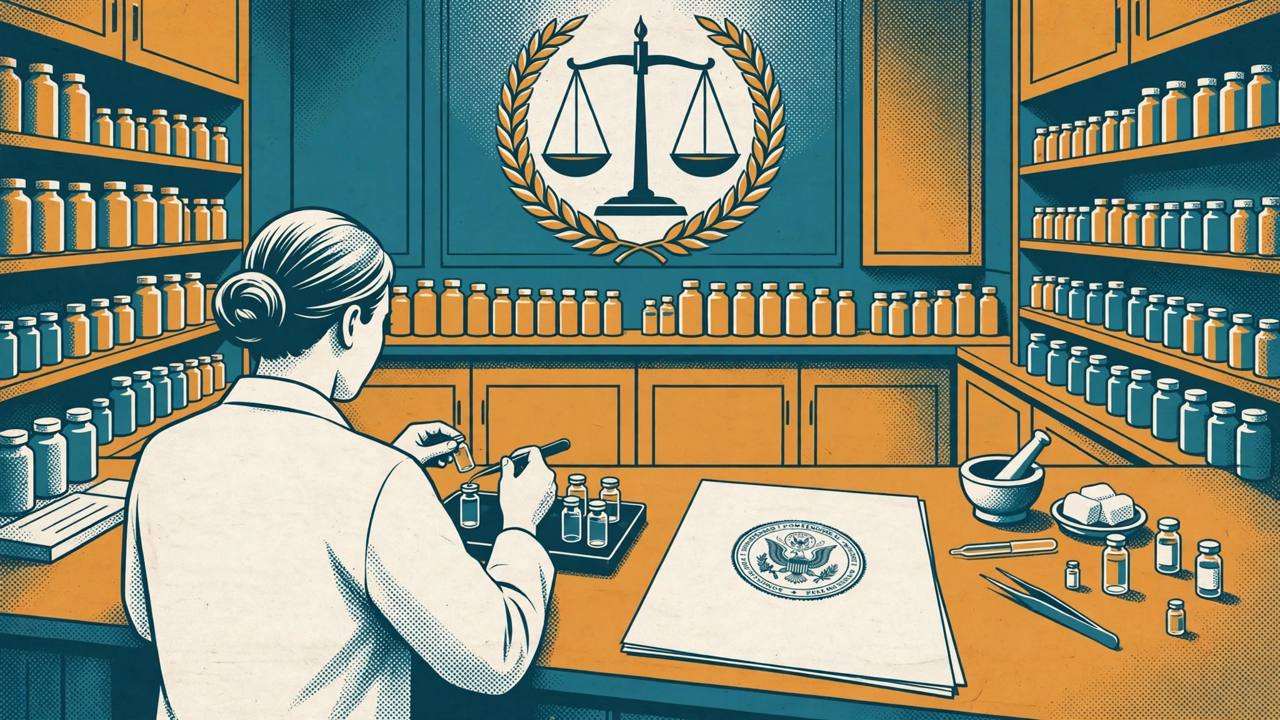
WASHINGTON — The Trump administration on Wednesday, October 28, moved to open access to six unapproved peptide drugs, publishing an "enforcement discretion" policy that directs the Food and Drug Administration not to take action against licensed pharmacies and physicians who compound the substances — even though the FDA's own scientific staff opposed the change and the drugs have never passed the agency's review for safety and effectiveness. The policy, published in the Federal Register by Health Secretary Robert F. Kennedy Jr.'s Department of Health and Human Services, takes effect as an interim step while regulators consider whether to formally permit the peptides in compounded medicines. Public comments will be taken for two weeks before the measure is finalized.
Source: Reuters via SRN News
The six substances are BPC-157 and TB-500 — often taken together in a combination popularly known as the "Wolverine stack" — plus epitalon, promoted for insomnia; KPV, for wound healing and inflammatory conditions; MOTS-c, for obesity and osteoporosis; and Semax, for migraines and chronic pain. Peptides are short chains of amino acids; some occur naturally in the body and trigger hormones needed for growth, metabolism and healing, and drug companies have brought several to market as approved medications, including mainstay treatments for diabetes and weight loss. The six covered by Wednesday's policy have boomed in popularity over the past year, driven by wellness influencers promoting them for anti-aging, muscle recovery and tissue repair — none of those uses has been approved by the FDA.
Source: Associated Press via KCAU 9
What the policy actually does — and the conditions attached
The policy does not approve the peptides, and it does not change the drug-approval law. Instead, HHS says the FDA will not take enforcement action against compounders making the named peptides if they meet requirements on ingredient quality, manufacturing standards, safety reporting, labeling and patient-specific prescriptions, Reuters reported. FDA staff who were eventually asked to provide technical help added guardrails of their own, the Associated Press reported, including requiring pharmacies to use peptide ingredients from FDA-registered factories, to collect information on side effects for safety analysis, and to verify the purity of the peptides they use. Compounded drugs are not FDA-approved: the agency does not review their safety, effectiveness or quality before they are marketed, though it shares some oversight of compounding facilities with state pharmacy boards.
Source: Reuters via SRN News
Two open questions were flagged immediately. Dr. Peter Lurie, a former FDA official who now leads the nonprofit Center for Science in the Public Interest, pointed out that under federal law the FDA does not have the authority to enforce those pharmacy requirements. And the Alliance for Pharmacy Compounding, which represents specialty pharmacies, said several details still need clarification — including when the policy takes effect and how it will intersect with state pharmacy boards, which traditionally regulate pharmacists. Jeff Cohen, co-founder of the American Peptide Association, warned the move could amplify tension between federal and state regulators, since states may not follow Washington's relaxation.
Source: Associated Press via KCAU 9
Inside the decision: FDA staff opposed, an outside panel said yes
The document was primarily written by officials at HHS and faced overwhelming pushback among FDA drug staffers, who warned it could undermine the agency's long-standing mission of keeping unsafe health products off the U.S. market, according to six people familiar with its development who spoke to the Associated Press on condition of anonymity to discuss confidential deliberations. It is extremely rare for HHS to take the lead in drafting policy over the compounding industry, former FDA officials told AP; decisions of this kind have almost always come from the FDA itself, although federal law technically gives HHS authority over drug regulations that it delegates to the FDA.
Source: Associated Press via KCAU 9
The policy is also a step back from HHS's original plan. Officials initially wanted the FDA to draft an official regulation adding BPC-157 and other peptides to the list of substances deemed safe for compounding pharmacies to use. FDA officials warned that the agency's scientific staff had major safety concerns and would not support a regulation deeming the peptides safe, so HHS moved to the enforcement-discretion approach instead. An FDA advisory committee — including several panel members with ties to peptide-selling businesses or clinics — recommended in July that the agency allow all six peptides in compounding; the FDA's own staff had recommended against doing so, and HHS has said all panel members cleared standard ethics checks.
Source: Reuters via SRN News
Background: from a 2023 safety list to a 2026 reversal
In 2023, the FDA added more than a dozen peptides, including BPC-157 and TB-500, to its list of substances that should not be compounded, citing risks of allergic reactions, kidney damage and tumor growth. At a meeting in July this year, FDA staffers reiterated that more than half a dozen peptides brought forward for reconsideration remained unproven in terms of safety and effectiveness — but the outside panel voted to drop restrictions on the six peptides named in Wednesday's document. Compounding safety has been a focus for the FDA since a deadly 2012 outbreak of fungal meningitis was linked to contaminated injections from a Massachusetts compounding pharmacy; what was once a niche business has since grown into a multibillion-dollar industry supplying customized medications to doctors, clinics and hospitals.
Source: Associated Press via KCAU 9
Many Americans who use these peptides today do not get them from a doctor or a pharmacy at all: they order vials online, often from chemical manufacturers based in China, and sellers frequently label the products "for research use only" because the FDA does not regulate research chemicals. Kennedy and HHS argue the new route is the safer one. The policy document says Kennedy determined the change "advances patient choice and freedom" while protecting people from peptides sold online that are made from ingredients of unknown origin and quality. An HHS spokesperson said the agency is "confronting the risks of black-market peptides" by giving Americans "a more controlled alternative through licensed U.S. compounders," and HHS said the policy will discourage the widespread use of research-use-only peptides supplied by foreign manufacturers. Kennedy has called himself a "big fan" of peptides and has previously described using BPC-157 to treat a muscle injury.
Source: Associated Press via KCAU 9
Support and criticism
Lee Rosebush of the American Academy of Peptide Medicine — a group that represents people who prescribe or sell peptides and is not a medical professional society — called the move "a huge step for patient and provider medical freedom" and a "landmark regulatory milestone" that clears the path for clinical innovation and expanded access. Critics were blunt. Robert Steinbrook, director of Public Citizen's Health Research Group, said Kennedy had acted "recklessly and unilaterally," warning the policy could expose patients to contamination, impurities and unknown side effects, and arguing peptide substances should go through the standard FDA approval process first. Lurie noted the FDA has already approved rigorously tested drugs for the conditions the peptides are promoted for — insomnia, anxiety, inflammatory conditions and migraines among them — and warned: "As people are diverted from those drugs toward this stuff, there will be more unnecessary pain and suffering." He also questioned the timing, days before the midterm elections, calling it "a wink and nod to the MAHA faithful in the hope that they'll show up at the polls."
Source: Reuters via SRN News
The policy does not make these peptides FDA-approved medicines, and it is not medical advice. It means licensed U.S. compounding pharmacies may soon supply six named peptides under stated conditions instead of patients relying on unregulated online sellers. Anyone considering such products should talk to their own doctor about the unproven safety and effectiveness record that FDA staff cited.
What happens next
The government will take comments for two weeks before finalizing the measure, and HHS describes the policy as interim while regulators consider whether to formally permit the peptides in compounded medicines. HHS also said it may reconsider if safety signals or product-quality problems emerge. The commercial stakes are large: Wall Street analysts estimate the market could be worth more than $2 billion — Reuters cited estimates of $2 billion to $3 billion if the products are legitimized — and major telehealth providers, including Hims & Hers, have announced plans to offer wellness peptides once government policy changed. Whether state pharmacy boards fall in line with Washington, and whether the FDA's guardrails can be enforced in practice, are the two questions that will decide what Wednesday's announcement means in an actual pharmacy.
Source: Reuters via SRN News