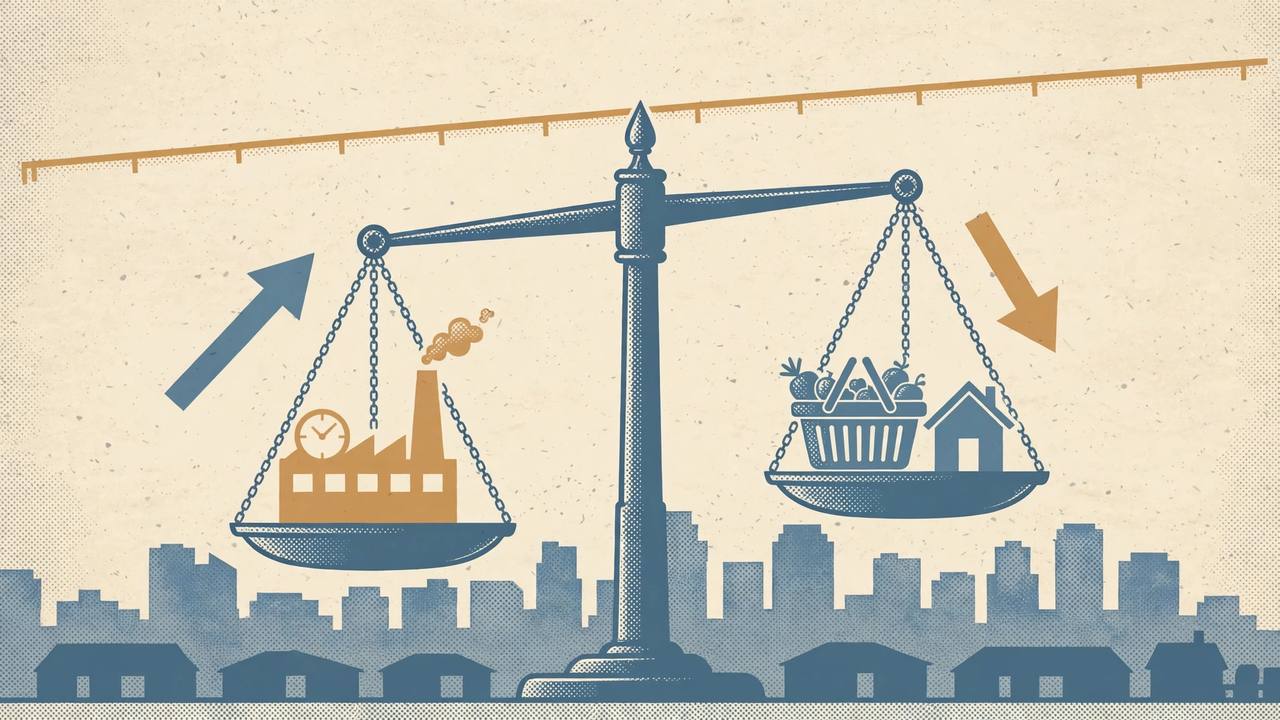
A closely watched signal of where the US economy is heading held steady in September, as stronger factory activity and financial conditions offset a sharp drop in how consumers feel about the future, the Conference Board said on Thursday, October 22.
Source: The Conference Board
The Leading Economic Index (LEI) was unchanged at 99.6 (2016 = 100) in September, following a 0.1% decline in August. Over the six months from March to September the index grew 0.6%, a reversal from the 1.1% decline over the previous six months.
What held the index up — and what dragged it down
"The US LEI was flat in September. However, due to an upward revision to July's data, the Index is at a higher level than last month's report for August," said Justyna Zabinska-La Monica, Senior Manager for Business Cycle Indicators at the Conference Board. Five of the ten LEI components made positive contributions, led by the interest-rate spread and average weekly hours in manufacturing. Those gains were offset by a large decline in consumer expectations and much smaller negative contributions from stock prices, new orders for capital goods and building permits.
CFO Dive reported that persistent inflation — fuelled largely by rising energy costs — has eroded real household incomes and soured the consumer mood in recent months, even as the broader economy keeps expanding.
Current conditions improved, and the forecast went up
The Coincident Economic Index, which tracks where the economy is right now, rose 0.3% in September to 115.3, with all four of its components — payroll employment, personal income, manufacturing and trade sales, and industrial production — contributing positively. It rose 0.9% over the six months to September, up from 0.2% growth in the prior six months.
"The LEI's six-month growth rate increased slightly, which suggests the economy is still growing and will continue to grow, but is becoming less dependent on consumer spending and more dependent on business investment," Zabinska-La Monica said. The Conference Board now expects real GDP to grow at a 2.2% annualised rate in 2026, with its outlook for 2027 at 2.0% — both higher than previously forecast.
What is solid
- The Conference Board reported on October 22, 2026 that the LEI was unchanged in September at 99.6 after a 0.1% decline in August, and grew 0.6% over March–September 2026.
- Five of ten LEI components contributed positively, led by the interest-rate spread and manufacturing hours; consumer expectations fell sharply and offset the gains.
- The Coincident Economic Index rose 0.3% in September to 115.3 with all four components positive.
What is only claimed
- The 2.2% GDP growth expectation for 2026 and 2.0% for 2027 are the Conference Board's forecasts, not outcomes — other forecasters may differ.
- Whether weakening consumer expectations will eventually pull actual spending down is unresolved; the Board itself describes an economy shifting from consumer spending toward business investment.