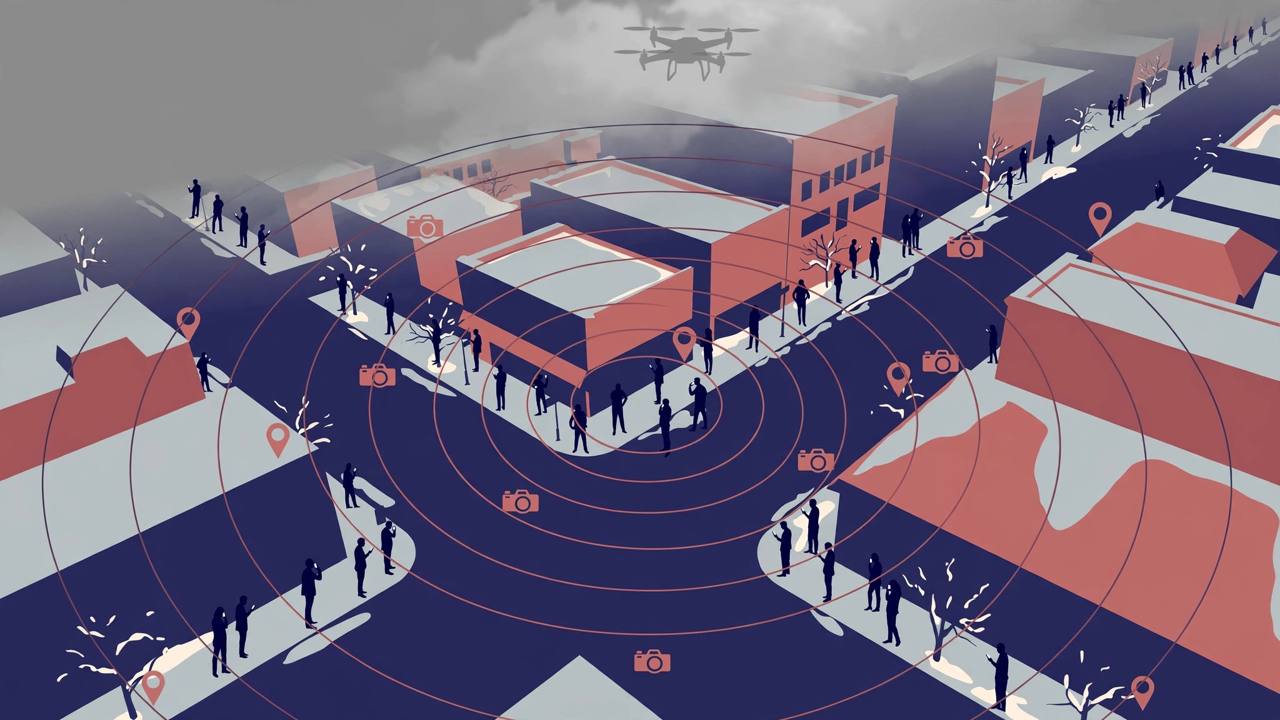
MINNEAPOLIS, Minnesota — One of the largest domestic surveillance investigations in recent US history was not aimed at a cartel or a terror cell. According to court records obtained by defence lawyers and reported by WIRED on October 28, ICE's investigative arm, Homeland Security Investigations (HSI), assigned 119 agents — including at least 11 undercover operatives — to a single case against 15 Minnesota residents who had organised to track ICE vehicles and alert their neighbours during the administration's immigration crackdown in the state.
Source: WIRED (Oct 28, 2026)
The 15 defendants face federal conspiracy charges. Prosecutors contend, according to the reporting, that their activities amounted to a conspiracy to obstruct immigration enforcement, stalk federal agents and commit assaults. Their lawyers argue the case criminalises protected community activity — during Operation Metro Surge, the December 2025 enforcement push in Minnesota, activists built encrypted messaging groups, databases and dispatch systems to monitor federal agents and warn communities where raids were happening. The surveillance records surfaced through duelling court motions over discovery of the government's surveillance programme.
Two investigations, bankrolled by a fund built for cartels and predators
Court filings described in the coverage name two related investigations: Operation Puppet Master, opened on January 28, and Project Whipple Shield, launched roughly two weeks later. The money came from Operation Keyhole, HSI's undercover funding programme, which dates back to 2008 and has historically paid for narcotics, child sexual abuse and financial-crime investigations. As of June 2026, Keyhole was underwriting about half a dozen active undercover investigations in the Minneapolis–Saint Paul area alone.
Source: Geek Slop, summarising court filings
The filings describe undercover activity far beyond the 15 defendants: operatives attended activist meetings, trainings and marches and gathered information at churches, libraries, parks, schools, restaurants and union halls, alongside photographs, audio recordings, licence-plate data and database searches. Defence lawyers allege that undercover operatives infiltrated churches in apparent violation of a court order — an allegation the government has not publicly answered in the reporting. Investigators also pursued financial records connected to organisations including the Service Employees International Union (SEIU), the Communications Workers of America and the Sunrise Movement; one court account says some of those records were sought without an identified criminal predicate.
15 terabytes of chats, payment records — and journalists' phone records
The data operation was as large as the manpower. Investigators combined about 15 terabytes of infiltrated Signal chats with scrutiny of wire transfers and PayPal reimbursements, forensic analysis of website traffic and records bought from commercial data brokers. In one example detailed in the filings, agents investigated an online licence-plate search tool that an activist had shared in a Signal chat: they reviewed the site's DNS queries and Stripe payment information, obtained server access logs, connection records, a sign-up IP address and a payment-card identifier from a data broker, then combined those with state motor-vehicle records and commercial databases to assemble identities, home addresses, phone numbers, property records and vehicle registrations.
Source: IT Magazine, reporting the WIRED investigation (Oct 28, 2026)
In March 2026, investigators also sought financial information on 29 people through the Treasury Department's 314(a) information-sharing programme — a Patriot Act mechanism created to track finances in terrorism and money-laundering investigations — and emails indicate some of the resulting records, including information concerning the SEIU, were shared among agents. Most strikingly for press freedom, the filings indicate investigators obtained phone records for journalists who had reported on Operation Metro Surge, using an administrative summons process normally associated with customs and tax matters rather than warrants or grand-jury subpoenas. Reaper drones were also deployed, according to the reporting.
"This is the new COINTELPRO" — the defence case, and the experts
Defence attorney Kevin Riach put the defence position in one line: "This is the new COINTELPRO" — a reference to the FBI programme that surveilled, infiltrated and disrupted civil-rights and anti-war movements from the 1950s to the early 1970s. Retired FBI agent Mike German, who himself worked undercover domestic-terrorism cases, told WIRED the Minnesota investigation echoes that history but at a larger scale: court records show 119 HSI agents on this one case, compared with the 42 officers assigned at the peak of the CIA's Vietnam-era Operation MH/CHAOS against the anti-war movement, as recorded in a 2011 book by former CIA officer Frank Rafalko. "Broad monitoring of social media, communications, and financial transactions are used to link an ever increasing number of people as potential subjects of investigation and prosecution," German said.
Three former law-enforcement officials who reviewed the filings told WIRED the Minnesota case is almost certainly part of a wider intelligence-gathering operation that began long before the December 2025 Minnesota enforcement surge. Spencer Reynolds, a former Department of Homeland Security attorney, said the surveillance apparatus appears to run in parallel with immigration enforcement operations in other parts of the country — the reporting describes monitoring connected to gatherings in Chicago, Seattle and New York as well. The full scope of the investigations the programme authorises remains unknown.
For immigrant communities across the United States — including Punjabi and Sikh families in states such as California, New York, New Jersey and Washington, where community volunteers run similar sighting-alert networks during ICE operations — the case matters because it tests where lawful community monitoring ends and a federal conspiracy begins. Defence lawyers say the tools used here were designed for terrorism financing and organised crime; prosecutors say following and obstructing officers is a crime whatever the motive. Both positions are now before a federal court.
The fight is currently over discovery: defence motions are pressing the government to disclose the full surveillance programme behind the prosecution of the 15 Minnesotans, and the court's rulings on those motions will decide how much of the Keyhole-funded operation becomes public. Watch for the government's response to the church-infiltration allegation, any ruling on the journalists' phone records, and whether similar filings surface in other states — former officials told WIRED they believe the Minnesota case is one piece of a national apparatus, not the whole of it.