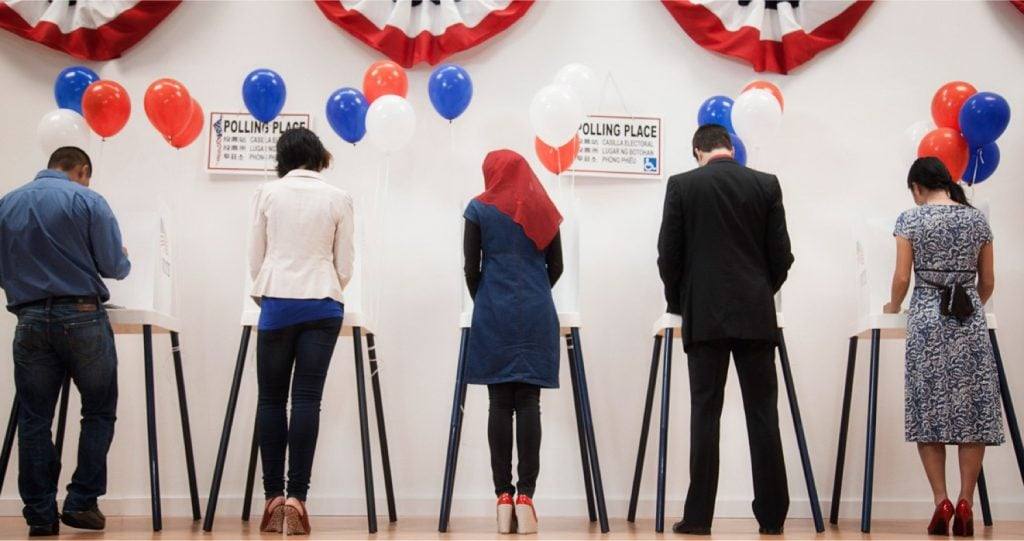
The NAACP asked a federal court on Sunday to bar the Justice Department from assigning personnel from federal law-enforcement agencies as election monitors at polling places across the country on Tuesday, and U.S. District Judge Reggie Walton ordered a hearing on the request for Monday at 1:30 p.m. Eastern — hours before Election Day, Democracy Docket reported. The group is seeking a temporary restraining order in the fight over the department's plan to deploy at least 1,000 election monitors for the November 3 midterms.
Source: Democracy Docket
Specifically, the NAACP asked Walton to prohibit the Trump administration from assigning agents, officers or personnel from federal law-enforcement agencies to the monitoring programme. In the alternative, it asked the judge to at least bar monitors from carrying firearms, badges or camera equipment, or from conducting any law-enforcement activity while serving as monitors. Walton, who was nominated by former President George H.W. Bush, set the Monday hearing after the Sunday filing.
How the monitors fight reached this point — the October 28 declaration
This filing follows the development this site reported last week: in a sworn declaration filed late Wednesday, October 28, in the NAACP's lawsuit, Eric Neff, acting chief of the Civil Rights Division's Voting Section, said no FBI or Immigration and Customs Enforcement employees will serve as monitors, Reuters reported. The same declaration said the monitors will instead include employees of the Federal Bureau of Prisons, the Bureau of Alcohol, Tobacco, Firearms and Explosives (ATF) and the Drug Enforcement Administration (DEA). The department told the court monitors will not be acting as law-enforcement personnel while monitoring, may not carry firearms, and are trained mainly to observe polling places, take notes and follow state and local rules.
Justice Department spokesperson Kiersten Pells confirmed the position to The Center Square: “We are not sending federal law enforcement to the polls.” Under the rules described in the filings, monitors must wear business-casual clothing with no agency insignia and may speak to voters only outside a polling place, only after those voters have cast their ballots, and only if the voters are willing. One Customs and Border Protection employee assigned to the Justice Department is also expected to take part, on behalf of the Civil Rights Division rather than the Department of Homeland Security, according to reporting on the declaration.
The NAACP argues the plan still amounts to putting federal agents at the polls. In its Sunday filing, the group said deploying any federal law-enforcement agent, investigator or personnel for the November 3 general election “constitutes unlawful voter intimidation” under the Voting Rights Act, and called the programme a “whole cloth change” from past practice. It noted that, by the Justice Department's own reporting this year, almost all Bureau of Prisons employees are credentialed law-enforcement officers — so prison-staff monitors would in practice be law-enforcement officials. The group also told the court the department's account changed within a day: at an October 27 hearing, department counsel said monitors would be only professional staff and attorneys, but after the NAACP said it knew of an ATF employee on the roster, the next day's declaration named the ATF, the DEA and the Bureau of Prisons.
Background: what election monitoring used to look like
The Justice Department has sent election monitors for decades to make sure voters have the access federal voting laws require. In past elections those monitors were civil attorneys and legal support staff from the Voting Section — not prosecutors or law-enforcement agents, Democracy Docket reported. This year the department already departed from that pattern by sending criminal prosecutors to monitor primaries, and documents obtained by the group Democracy Forward indicated the department deployed at least one FBI agent as a monitor during Arizona's July primary in Maricopa County, although the agent was detailed to the Justice Department at the time. The NAACP sued on October 2 over the roughly 1,000-monitor plan and the department's refusal to say where the monitors will go or who they will be; in the records fight, the department says more than 25,000 potentially responsive records cannot be processed before November 3 and has asked to report back in 14 days, while the NAACP has asked the court to order daily releases through Election Day.
Civil-rights groups say they remain on alert even after the no-ICE, no-FBI assurance. The Center Square reported that many groups in Illinois still worry about in-person federal interference at the polls on Tuesday. ACLU of Illinois spokesman Ed Yohnka offered a more measured read, saying that trained federal election observers sent strictly to observe an election is not as out of the ordinary as sending ICE or FBI agents would have been. Separately, Arlington County and Denver have also sued over the prospect of federal agents at polling places, according to reporting tracking the litigation.
Observe and take notes. No firearms, no agency insignia, no law-enforcement action while monitoring, and no speaking to voters before they vote — conversations are allowed only outside, after a ballot is cast, and only with willing voters.
For immigrant voters — including Punjabi diaspora voters in California, New York, New Jersey and other states with large South Asian populations — the central reassurance and the central worry sit side by side. The sworn declaration rules ICE and FBI personnel out of the monitor programme itself, which addresses the fear that immigration agents would be inside voting sites. The NAACP's case is that personnel from other federal law-enforcement agencies should not be there in any capacity, and that the department still has not disclosed where its monitors will be sent.
What happens next
Judge Walton's hearing at 1:30 p.m. Eastern on Monday is the immediate decision point: he can grant the restraining order, grant the narrower alternative limits, or refuse and let the deployment proceed as planned when polls open on Tuesday, November 3. Early voting runs through Monday in the states that offer it. Whatever the court decides, the records dispute continues after Election Day, and state and local officials — who run the polling places — will decide on the ground how any federal monitors present themselves at individual sites.