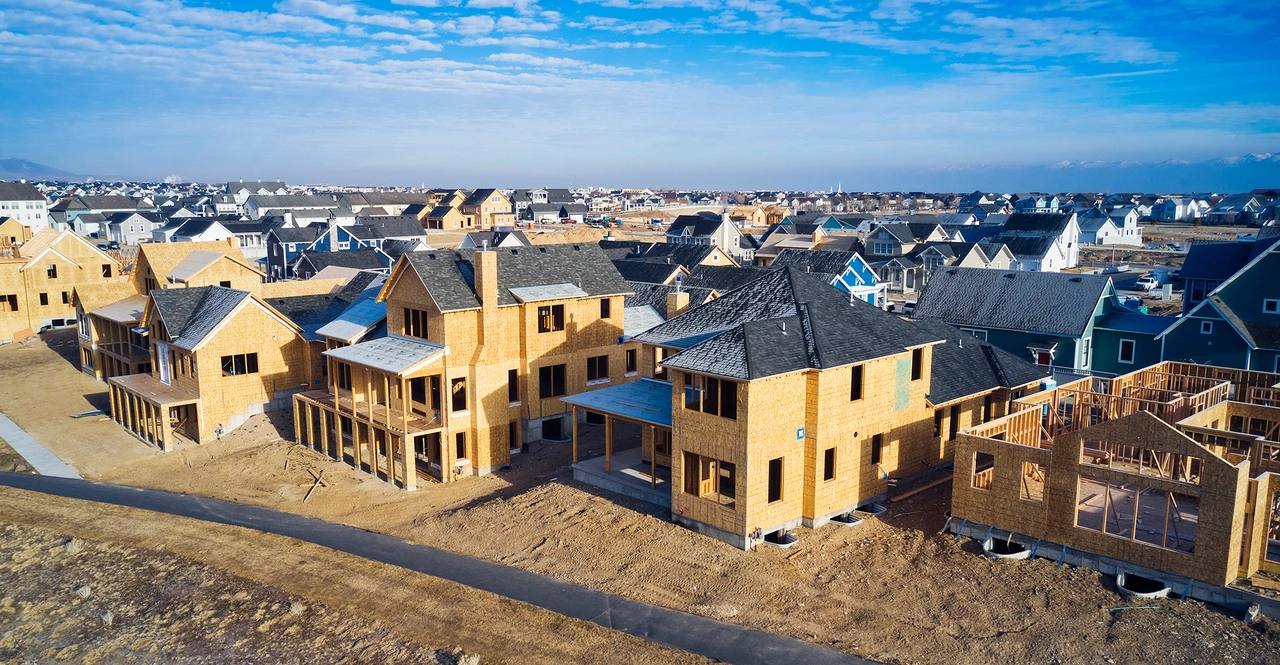
Sales of new single-family homes in the United States slipped in September, partially reversing the previous month's jump, as mortgage rates above 7 percent kept the country's affordability crisis at the centre of the housing market. The figures, released jointly on Tuesday, October 27, by the U.S. Census Bureau and the Department of Housing and Urban Development (HUD), show new home sales at a seasonally adjusted annual rate of 676,000 units in September.
Source: Reuters
The September pace was down 0.6 percent from August, whose rate was revised lower to 680,000 units from the 684,000 originally reported, and down 5.3 percent from the 714,000 rate recorded in September 2025. The result was still stronger than Wall Street expected: economists polled by Reuters had forecast sales would fall to a rate of 650,000 units. New home sales are counted when a sales contract is signed, which makes them the most timely indicator of housing demand, although they account for only a small share of all U.S. home sales.
Source: Reuters
Prices: the median new home is cheaper than a year ago
The median price of a new home sold in September was $400,400 — up 3.9 percent from August's $385,400, but down 3.9 percent from the $416,800 median of a year earlier. The average sales price was $472,800. Reuters reported that the year-on-year fall in the median likely reflected a combination of weak demand and developers cutting prices, and that most of the homes sold in September were priced below $499,999.
Source: U.S. Census Bureau / HUD via Mortgage Professional
A split map: Northeast and West jump, Midwest and South fall
The national figure hid sharply different regional markets. Sales in the Northeast soared 28.0 percent to an annual rate of 32,000, and sales in the West jumped 21.4 percent to 142,000. The Midwest fell 7.3 percent to 89,000, while the South — by far the largest region for new construction — tumbled 6.6 percent to 413,000, according to the Commerce Department figures reported by dpa-AFX.
Source: dpa-AFX via TradingView
Mortgage rates above 7 percent are doing the damage
The average rate on a 30-year fixed-rate mortgage averaged 7.32 percent last week, according to data from mortgage finance firm Freddie Mac cited by Reuters. Reuters reported that the rate has surged by more than 130 basis points since the United States and Israel attacked Iran at the end of February, and that higher borrowing costs have helped fuel what economists describe as an affordability crisis — a theme that has dominated campaign messaging ahead of next Tuesday's midterm elections.
Source: Reuters
Builders are cutting prices and offering incentives to hold sales up
"Affordability remains a significant hurdle for prospective home buyers," said Bill Owens, chairman of the National Association of Home Builders (NAHB) and a home builder and remodeler from Worthington, Ohio. "Builders continue to offer incentives and adjust pricing to attract buyers, but elevated mortgage rates and high home prices are limiting the number of households that can afford to purchase a home." Danushka Nanayakkara-Skillington, the NAHB's assistant vice president for forecasting and analysis, said the decline was consistent with softer builder sentiment and showed how sensitive housing demand remains to financing costs.
Source: National Association of Home Builders
Odeta Kushi, deputy chief economist at First American, made the same point from the buyer's side: "New-home sales were essentially unchanged in September, holding up better than expected even as mortgage rates rose. Builders are meeting buyers' budgets with price cuts, financing incentives and smaller, more affordable homes. That is helping sustain sales, but it also shows how hard builders are working to keep buyers engaged." A separate NAHB survey last week showed builders' expectations for home sales over the next six months tumbled to their lowest level since April 2012, excluding the plunge early in the COVID-19 pandemic, Reuters reported.
Source: Mortgage Professional
Inventory is still high — 8.4 months of supply
Builders are still sitting on a large stock of unsold homes. The seasonally adjusted estimate of new houses for sale at the end of September was 476,000 units, down 1.0 percent from August's 481,000 and down 2.3 percent from the 487,000 of a year earlier. At the current sales pace that is an 8.4-month supply — down slightly from 8.5 months in August, up from 8.2 months a year ago, and well above the roughly 4-to-6-month range considered normal. Of the inventory, 111,000 homes were completed and ready to occupy, the NAHB said.
Source: U.S. Census Bureau / HUD via Calculated Risk
Existing-home prices tell a slower story
Price growth in the much larger resale market is also cooling. The S&P Cotality Case-Shiller 20-city index rose 0.3 percent in August on a seasonally adjusted basis and was up 2.7 percent from a year earlier — still below inflation running above 3 percent. Chicago led the 20 cities with a 6.7 percent annual gain, followed by New York at 6.2 percent and Cleveland at 4.3 percent, while prices fell in Seattle, Las Vegas and Denver. Home prices have now declined in real, inflation-adjusted terms for 15 straight months, Rebecca Kaufman of S&P Dow Jones Indices noted.
Source: Connect Money Evening Brief
For Punjabi and other immigrant families saving for a first home in hubs such as California's Central Valley, New York, New Jersey and Texas, the September data cuts both ways: builders are discounting and offering rate buydowns, and the median new-home price is lower than a year ago — but a 7.32 percent mortgage rate still makes monthly payments far heavier than they were a few years ago, and the stock of finished, ready-to-move-in homes remains limited.
What happens next
The housing market's next tests come quickly: weekly Freddie Mac mortgage-rate data, the next NAHB builder-sentiment survey, and the Federal Reserve's policy decision, which shapes borrowing costs across the economy. Analysts say sustained improvement in mortgage rates and affordability — not one month of steadier sales — is what would be needed to lift demand in a lasting way.