Edison Township — one of New Jersey's largest Indian and Punjabi diaspora communities — is arguing over surveillance cameras. At the Township Council's combined meeting on October 14, 2026, more than a dozen residents urged the council to cancel or re-vote a Flock Safety license-plate reader contract worth roughly $589,000 over three years, The Central Jerseyan reported. (Yaani: $589,000 is about 5.9 lakh dollars, roughly Rs 5 crore.)
The council had approved the purchase 6-1 on September 23 under a resolution titled only 'authorizing the purchase of security equipment and services' — the title did not mention Flock or cameras, and listed no dollar amount, though the text named Flock Group Inc. as the vendor. Business Administrator Sonia Alves-Viveiros said the flat fee is paid from asset forfeiture funds, not taxpayer money. Councilman Richard Brescher cast the only no vote, calling the system invasive in his personal view. One speaker said the deal raises Edison's camera total from 22 to 114; Council President Joseph Coyle put the current total at about 97 and said he disagreed with cancelling, but would consider a three-member committee to hear more from residents.
Residents pressed on privacy and consent. Gabriel Franco told the council he was distressed by spending nearly $600,000 on about 90 more cameras 'without our consent or the public's vote', saying the cameras normalise mass surveillance. Patrice Swarbrick, quoted in My Central Jersey's reporting, said the question belonged on the ballot and asked the council to 'pause the plan'. A military veteran who said he served in Syria told the council he had used similar camera networks against threats overseas and opposed using them on American citizens. Several speakers asked how long data is stored, who can access it, and whether federal immigration agents could see Edison's data.
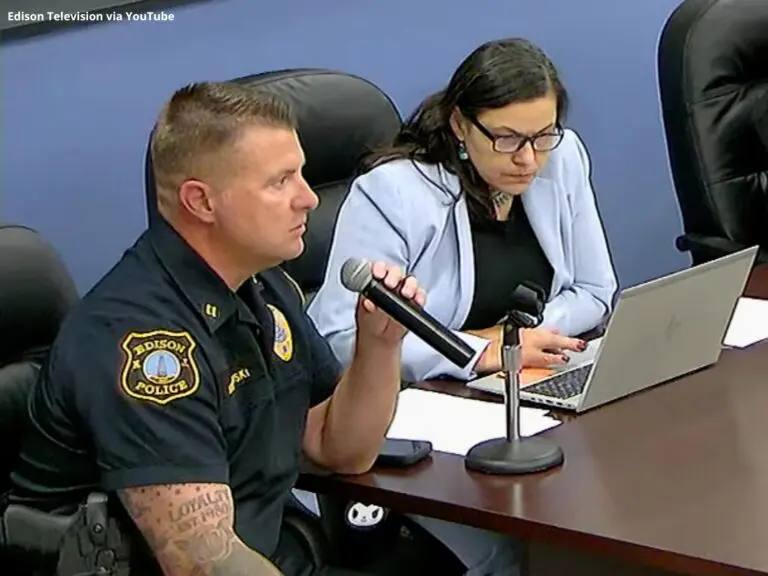
Edison Police Captain Brian Mieczkowski, the department's field operations commander, told the meeting police use the cameras to investigate crimes, share data with investigators in other towns when cases overlap, such as task-force work, and do not make arrests based on Flock alerts alone; he said he could not speak to who owns the data or what Flock does with it. Police have also said the cameras do not use facial recognition and that data is stored for seven days. The Central Jerseyan noted Flock cut its default retention from 30 days to seven after an August Washington Post investigation found at least 50 officers nationwide charged or accused of misusing plate-reader systems, and that New Jersey agencies work under a 2022 Attorney General directive requiring annual audits and limiting retention. No decision to cancel was taken — the council said it would get back to residents on unanswered questions. (Sources: The Central Jerseyan, October 15, 2026; My Central Jersey reporting, summarised by Jersey Newsroom, October 20, 2026.)