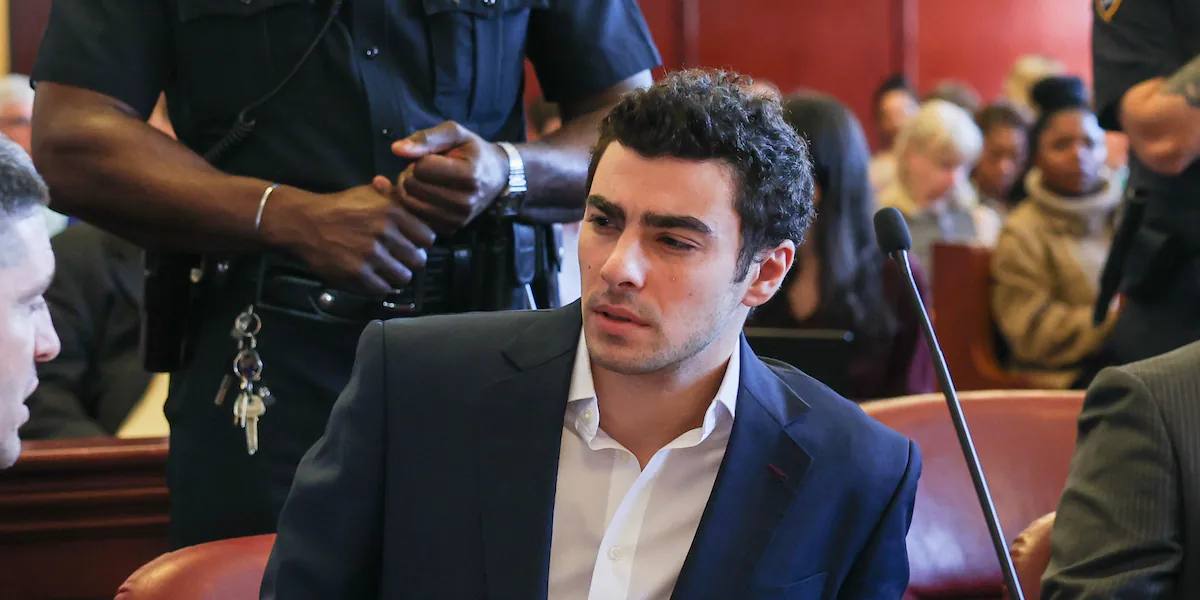
Luigi Mangione's lawyers have filed a fresh request asking a New York judge to throw out his state murder case, arguing that his guilty plea in federal court bars Manhattan prosecutors from putting him on trial a second time for the same killing. The renewed dismissal motion, filed on Friday, October 30, revives the double-jeopardy argument Mangione's team first made within about an hour of his federal guilty plea on August 14 — and it sets up a December courtroom fight over whether the state case can proceed at all.
Source: The Guardian, via ENM News
Mangione, 28, is accused of fatally shooting Brian Thompson, the chief executive of UnitedHealthcare, outside the Midtown Hilton hotel in Manhattan on December 4, 2024. The killing triggered a multi-day manhunt that ended with Mangione's arrest in Pennsylvania, and it intensified public anger at the American health insurance industry, which has long faced criticism from patients and advocates over costs and denied care. In the federal case, Mangione pleaded guilty on August 14 to two stalking charges, admitting in court that he travelled to New York with the intent to kill Thompson and shot him. That plea came less than a month before his state trial on second-degree murder and weapons charges had been scheduled to begin, on September 8.
The defence argument: same victim, same gun, same act
The defence filing argues that the federal and state cases rest on identical conduct. 'The core misconduct of the federal and state prosecutions is the same: the intent to kill and the killing of Brian Thompson,' Mangione's lawyers wrote. 'Yes, stalking can also, in some circumstances, apply to conduct different and less extreme than intending to kill someone. But this has nothing to do with whether it also applies to intentional killing.' Defence attorney Karen Agnifilo wrote that there is no precedent for a state prosecution following a federal one on the identical facts: 'There are no cases where the identical conduct — the same victim, the same gun, the same actions by the defendant, the same place and the same time — that was prosecuted by federal authorities was then also prosecuted by state authorities.'
The legal hinge is the difference between federal and New York law. Under the U.S. Constitution, federal double-jeopardy protection does not by itself bar a state from prosecuting the same conduct, and vice versa — the two are treated as separate sovereigns. New York's statute goes further: it says a person may not be twice prosecuted for the same offence, and may not be separately prosecuted for two offences based on the same act or criminal transaction. Mangione's team says the broader federal stalking statute, as charged in his case, covers conduct involving an intent to kill and a resulting death — so, they argue, he has already been prosecuted for the killing itself.
The prosecution response: different offences, an exception, and a fallback request
Manhattan prosecutors oppose dismissal. In papers filed on October 9, they argued that the state case can continue under an exception in New York's double-jeopardy provisions, and that the federal stalking charges and the state murder charges do not overlap in a way that triggers the state statute. Law360 summarised the prosecution position this way: the second-degree murder charge is meant to prevent a different kind of 'harm or evil' than the stalking charges. Prosecutors have also argued that 'statutory double jeopardy applies only when a defendant has been separately prosecuted for the same misconduct, and dismissed federal charges do not constitute a separate prosecution.' On the weapons charges specifically, prosecutors say they should proceed because U.S. District Judge Margaret Garnett had already dismissed the firearms count from the federal indictment before Mangione's plea, meaning he was never prosecuted federally for that conduct. The district attorney's office has further asked that if Judge Carro does dismiss any charges, he do so without prejudice — leaving prosecutors free to re-indict if Mangione's federal conviction is later overturned on appeal.
Background: two cases running on two tracks since 2024
Since the December 2024 killing, Mangione has faced parallel prosecutions: a federal case built around interstate stalking charges connected to Thompson's death, and a New York state case charging second-degree murder and weapons offences. State Judge Gregory Carro delayed the state proceedings after the unexpected federal plea in August, and the September 8 state trial date fell away while the dismissal fight plays out. Mangione faces a maximum sentence of life in prison on the federal charges. His federal sentencing is scheduled for eight days after the December 10 state hearing — a sequencing that means the state judge's ruling and the federal sentence will land in the same December window.
The ruling will test how far New York's unusually strong double-jeopardy statute reaches when federal prosecutors move first. If Judge Carro agrees with the defence, a defendant who pleads guilty federally to conduct that includes a killing could block a state murder trial entirely. If he agrees with prosecutors, parallel federal-then-state prosecutions remain available in New York even where the underlying act, victim and evidence are the same. Either outcome is likely to be appealed, and lawyers in other dual-track cases will be watching closely.
What happens next
Judge Carro is scheduled to hear the case again on December 10, when oral argument on the dismissal motion is expected, and he will then decide whether the state murder indictment survives. Mangione's federal sentencing follows in the same month. Whatever Carro decides, the losing side can appeal — so Friday's filing is best understood as the opening move of the next phase of the case, not its end. Awaaz Punjab will report the December ruling when it is delivered.