A New York safety inspector who fabricated hundreds of gas pipeline test results has been sentenced to 30 months in federal prison, after a scheme that left a regulated utility with more than $64 million in remediation costs and left New Yorkers relying on safety checks that never happened.
Source: U.S. Department of Justice, Southern District of New York
Michael Vasconcellos, 45, of Mahopac, New York, was sentenced on Thursday, October 29, by U.S. District Judge Cathy Seibel, who also took his guilty plea on April 21, 2026, to a superseding information charging one count of conspiring to commit wire fraud. Alongside the prison term, Judge Seibel imposed three years of supervised release and ordered him to pay more than $64 million in restitution.
30 months in prison, 3 years of supervised release and restitution of more than $64 million. Vasconcellos pleaded guilty in April 2026 to conspiring to commit wire fraud.
What the inspectors were supposed to do
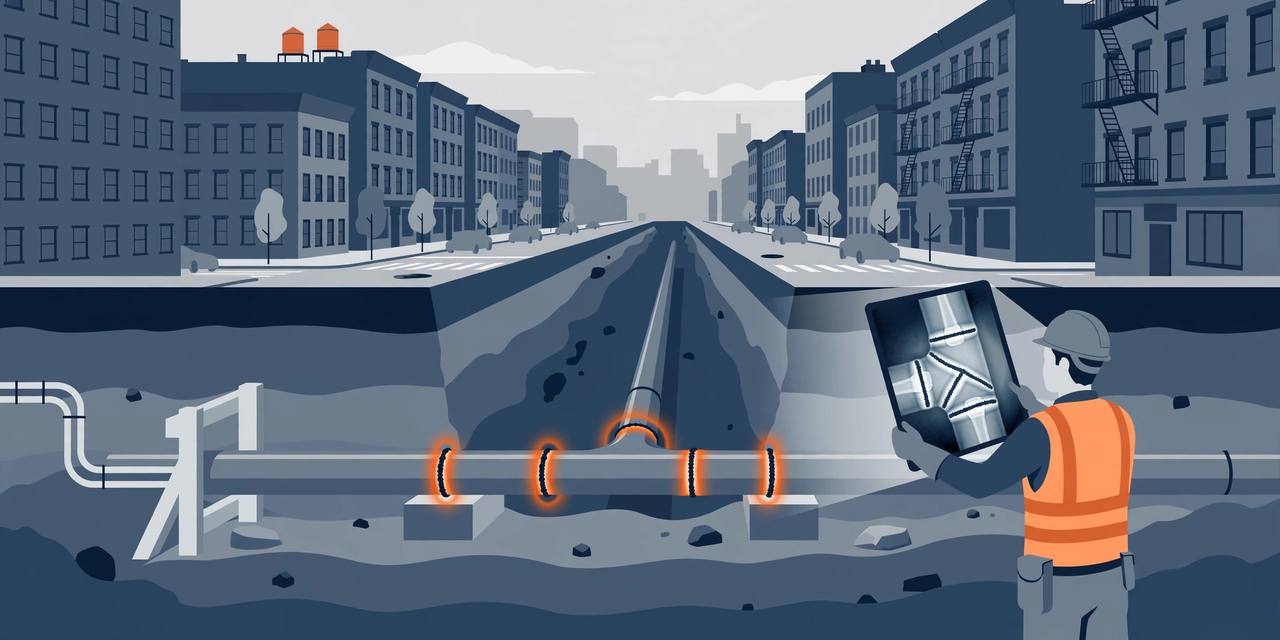
When a utility installs natural gas pipelines, the pipe is laid in segments that are welded together. Before any line can be put into service, every weld must be inspected for defects, because a flawed weld can fail in service and cause a gas leak or an explosion. One standard method is radiographic testing — a form of non-destructive testing in which each weld is effectively x-rayed and the films are examined for defects. A defective weld must be repaired before the pipeline can carry gas.
Prosecutors say Vasconcellos and his co-conspirator Liam Treibert repeatedly used a practice the testing industry calls 'radaring': radiographing the same weld twice and passing off one set of films as if it came from a second weld that was never inspected at all. The second weld went into the ground, and into service, with its safety check invented rather than performed.
Seven years of sham inspections
According to the indictment, the superseding information and other public court filings cited by the U.S. Attorney's Office, the fraud ran from at least about 2016 to 2023. Hundreds of welds across the utility's pipelines installed throughout New York City — including the Bronx — and Westchester County were affected. The utility, identified in the release only as 'Utility-1,' paid invoices for hundreds of inspections that were never carried out and was deceived into believing its pipelines had passed critical safety tests that had never been performed.
Source: U.S. Department of Justice, Southern District of New York
'Michael Vasconcellos fabricated gas pipeline test results designed to prevent gas leaks and explosions, putting the lives of New Yorkers at risk,' said U.S. Attorney Jamie McDonald. 'Today, the defendant faces the consequences of this fraud, having been sentenced to 30 months in prison. Instead of doing his job, the defendant left New Yorkers relying on critical safety checks that never happened, and cost a utility company more than $64 million in remediation.'
The bill: more than $64 million to make safe
Because the inspection records could not be trusted, the utility has had to remediate the effects of the fraud — work the Justice Department says has cost it more than $64 million to date. That remediation is the practical price of the scheme: welds whose films were faked have to be located, re-examined and, where necessary, repaired or replaced, so that the company and regulators can be confident the lines in the ground are safe.
The case was investigated by the Office of the New York State Inspector General, the Office of Inspector General of the U.S. Department of Transportation, and special agents of the U.S. Attorney's Office, and was prosecuted by Assistant U.S. Attorneys David A. Markewitz and Jay McMahon of the office's White Plains Division. When the charges were first brought, New York State Inspector General Lucy Lang said the inspectors had put entire Bronx and Westchester communities at risk and must face consequences — a warning Thursday's sentence now carries out for one of the two men.
Source: New York State Inspector General
What happens next
Vasconcellos will serve his 30-month term followed by three years of supervised release, and the restitution order of more than $64 million stands against him. Treibert was charged alongside him in the original indictment; readers should treat the allegations against any defendant who has not pleaded guilty or been convicted as allegations only. For the large Punjabi and wider South Asian community living across New York City and Westchester — much of it in the Bronx and Queens — the case is a reminder that the safety of the gas lines under their streets depends on inspection paperwork being honest, and that when it is not, the cost lands on the utility and, ultimately, its customers.