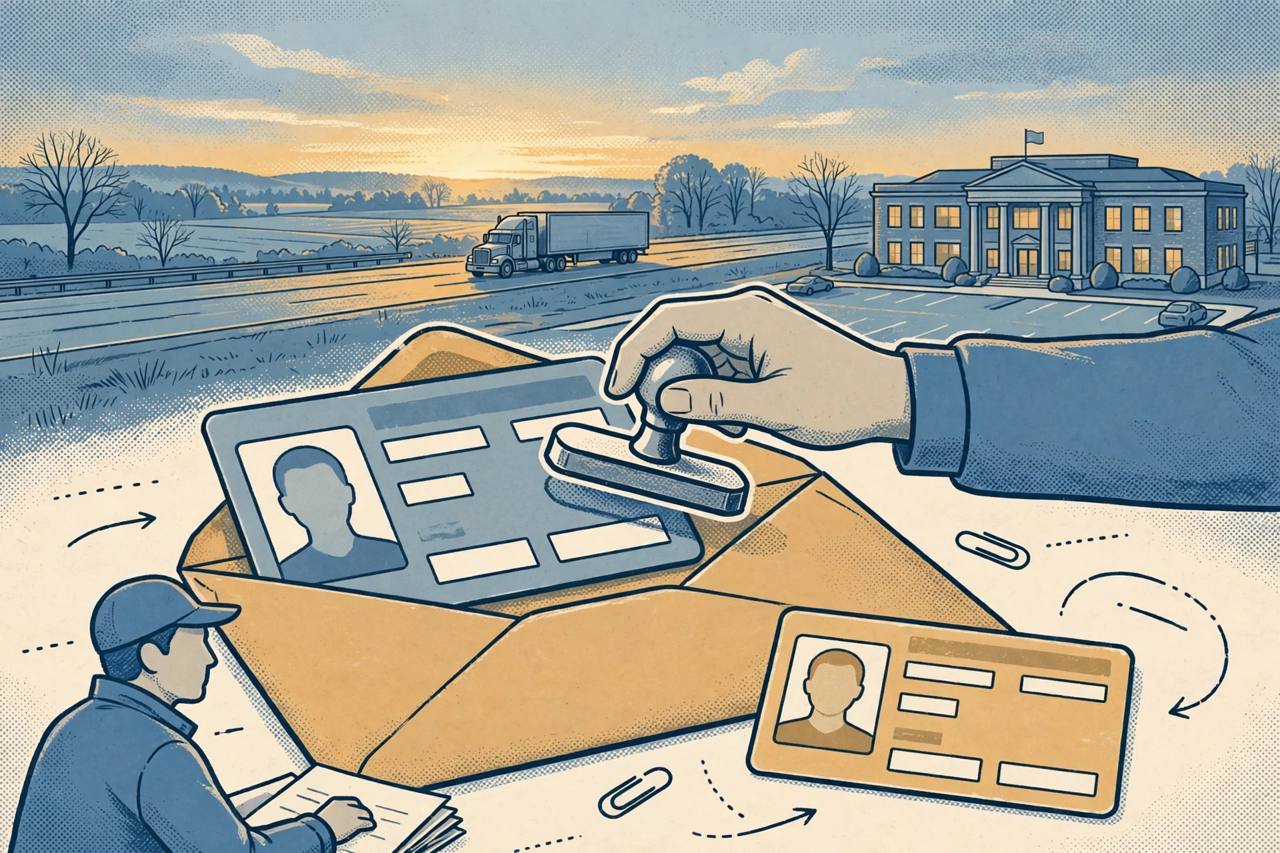
Ohio is ending its non-domiciled commercial driver's licence (CDL) program altogether, and every remaining holder of one of those licences in the state will be downgraded to a standard driver's licence, the Ohio Bureau of Motor Vehicles (BMV) has announced — a decision that lands directly on immigrant truck drivers, including newcomers from Punjab who built their US livelihoods behind the wheel.
Source: Ohio Bureau of Motor Vehicles (via EIN Presswire)
BMV Registrar Charlie Norman announced the decision on October 23, 2026. The bureau said the move follows its review of the credentials of approximately 5,000 non-domiciled CDL holders in Ohio, checking each file against the updated eligibility requirements issued by the Federal Motor Carrier Safety Administration (FMCSA), the federal agency that regulates commercial driving in the United States.
The review has already changed thousands of lives. Since May, the BMV says, it has downgraded around 2,000 non-domiciled CDLs to standard driver's licences after finding those holders ineligible under the new federal rules. The October decision goes further: instead of letting the remaining licences run until they expire, Ohio will now downgrade all of them and will not operate the program at all.
How the downgrade will work
The BMV said it will send a letter to every remaining non-domiciled CDL holder notifying them of the downgrade, and the downgrade takes effect 30 days from the date of that letter. A standard Ohio licence lets a person drive a car; it does not allow them to drive a commercial truck for work, so for a working truck driver the letter is effectively the end of their legal ability to do their job in the United States unless they can restore eligibility.
There is one safeguard, and the BMV flagged it in its own announcement: in compliance with state and federal law, individuals may request a hearing with the BMV to dispute the downgrade. Trucking-industry coverage of Ohio's earlier notices explained that drivers who believe their documents do meet the updated federal standards can use that hearing route and submit additional documentation — the acceptable documents under the federal regulations include an unexpired Employment Authorization Document (EAD) issued by US Citizenship and Immigration Services that was valid on the driver's most recent CDL issuance date.
The federal rule behind Ohio's decision
Ohio's program did not end in isolation. The FMCSA updated its non-domiciled CDL requirements in September 2025, and Ohio says it has not issued or renewed a single non-domiciled CDL since then. A federal final rule that followed narrowed eligibility for non-domiciled commercial licences and learner's permits to a limited set of employment-based immigration categories — transport and logistics analysts at C.H. Robinson summarised the eligible categories as H-2A temporary agricultural workers, H-2B temporary non-agricultural workers and E-2 treaty investors — and required documentary proof of lawful status at every issuance, renewal, transfer or upgrade.
The same federal analysis estimated that roughly 194,000 existing CDLs across the United States could be affected over five years as the tighter rules work through renewals and state audits. Ohio is one of several states to shut its program down entirely: Transport Topics has reported that Oregon also ended its program this year, Rhode Island does not anticipate issuing non-domiciled CDLs again, Utah has kept a moratorium in place, and Nevada stopped issuing after a 2025 audit. Texas, the largest trucking state, has separately downgraded thousands of non-domiciled licences this year.
What it means for immigrant and Punjabi truckers
For the Punjabi diaspora, this is not an abstract licensing story. Trucking is one of the first industries many Punjabi newcomers enter in North America, and a non-domiciled CDL is often the credential held by a driver who is legally authorised to work in the US but is not a citizen or permanent resident and is not domiciled in the state that issued the licence. Losing it means losing the route, the pay cheque and, for owner-operators, the ability to service the loan on the truck itself — while immigration status questions follow the driver into every other part of life.
Watch for the BMV letter — the 30-day clock runs from the date on the letter, not from when you hear about the program ending. If your work-authorisation documents meet the updated federal rules, the BMV's own announcement confirms you may request a hearing to dispute the downgrade. Keep your EAD and every past CDL document together and get immigration or licensing advice before the deadline, not after it.
What happens next
The downgrade letters are the next step, followed by hearings for drivers who dispute their files. Ohio officials have signalled this is permanent, not a pause: a spokesman for the Ohio Department of Public Safety, Bret Crow, told Transport Topics the state does not intend to resume issuing new non-domiciled CDLs in the future, nor to renew the existing revalidated licences after they expire. Drivers licensed in Ohio who still qualify under the narrowed federal categories will have to establish that eligibility through the hearing process or in another state whose program remains open — and carriers who employ non-domiciled drivers in Ohio now have to plan around a workforce that is about to shrink again.