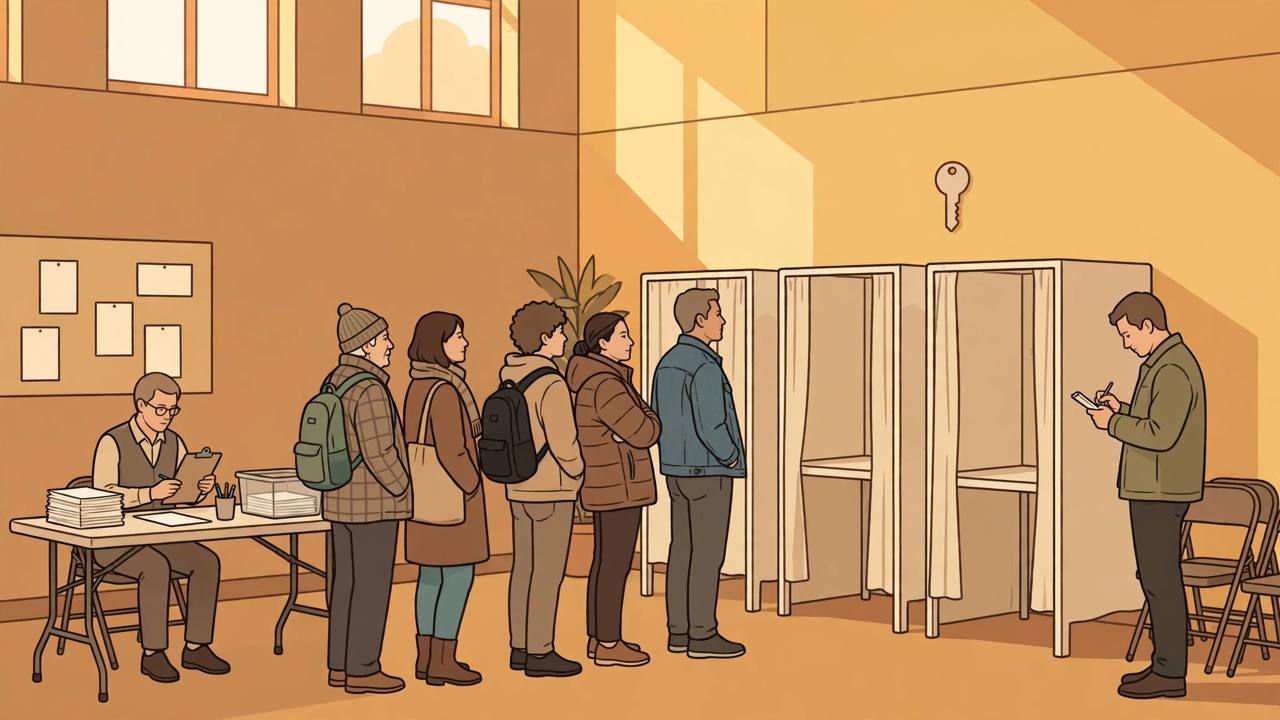
HARRISBURG, Pennsylvania — Federal election monitors from the U.S. Department of Justice will be present at polling places in four Pennsylvania counties on Election Day, Tuesday, November 3, and the state's top election official used a public address on Tuesday, October 27, to set the ground rules in advance: the monitors may watch and take notes, but they have no greater access to a polling place than any member of the public, and they may not police the voters themselves.
Source: 90.5 WESA
The Justice Department notified Pennsylvania last week, in a letter to Secretary of the Commonwealth Al Schmidt, that monitors from its Civil Rights Division will be deployed in Allegheny, Lehigh, Luzerne and Philadelphia counties. The deployment is part of a nationwide plan to send more than 1,000 election monitors across all 50 states for the midterm elections, in which control of Congress will be decided.
Source: PhillyVoice
What the monitors can and cannot do
In the letter, DOJ Civil Rights Division trial attorney James Catania wrote that the monitors will only observe and take notes. "Our monitors only observe and take notes," the letter states. "They do not intrude or interfere in any way in the voting process." The monitors will be dressed in business-casual or plain clothes, without identifying pins, will introduce themselves to poll managers and present government identification, and are not permitted to speak with voters inside polling stations or to carry weapons. If a monitor observes an election issue, the monitor notifies a team leader for the jurisdiction, who may then contact the local election officials.
The monitors' stated task is to check compliance with federal voting laws, including the Voting Rights Act, the National Voter Registration Act, the Civil Rights Act and the Americans with Disabilities Act, covering voter registration, absentee voting, polling-place accessibility and minority-language provisions. Election monitoring itself is not new in Pennsylvania: Allegheny, Luzerne and Philadelphia counties were also visited by federal monitors in the 2024 election, under the administration of President Joe Biden, and the Biden administration sent fewer than 400 monitors nationwide in the 2022 midterms, compared with more than 1,000 planned this year.
Schmidt: 'They are not entitled to any greater access'
Schmidt, Pennsylvania's secretary of state and chief election official, addressed the deployment directly on Tuesday. The state, he said, "expects everyone observing polling places to follow all state and federal laws." He added: "DOJ monitors are not legally entitled to any greater access to polling places than any member of the public. We encourage them to coordinate with county election offices to ensure that their activities on Election Day do not disrupt the voting process in any way." Schmidt also reminded listeners that state and federal laws strictly limit military and law-enforcement presence at polling places, and he asked voters to be patient with election workers, whom he described as "our neighbors who have offered their time so others in their community can exercise their right to vote."
Source: 90.5 WESA
Governor Josh Shapiro told WESA this past weekend that his administration has spent more than a year preparing for a wide range of possible federal actions around the election. Shapiro said he was "deeply concerned" about potential federal action, and pledged that "we will protect people's access to the polling places."
Counties prepare, civil-rights groups warn voters and officials
In Luzerne County, officials said federal observers have been there before and would be handled under state law. "We have nothing to hide. We will follow state law, which means they will be able to monitor but not go into the polling places," County Manager Romilda Crocamo said during a Monday election discussion hosted by the nonpartisan group Keep Our Republic. Former U.S. District Judge John E. Jones III, now president of Dickinson College, told the same panel that the single role of DOJ monitors is to observe and report back: they cannot interfere and have no power to stop or impede the conduct of an election, and action outside that role could trigger legal action. Luzerne County Election Director Emily Cook has also set up a new complaint form on the county election website for voters to report any problem they believe warrants review, and Crocamo urged voters to cast their ballots with confidence and to report any problem at their polling place to the poll workers on site or to the county election bureau.
Source: The Dallas Post
A week earlier, on October 20, the American Civil Liberties Union, its Pennsylvania chapter and the Public Interest Law Center wrote to election officials in all of Pennsylvania's 67 counties urging vigilance. The letter noted that DOJ's monitoring program has existed for many years and that monitors have long been deployed without incident, but warned that this year's expanded program could include monitors who are poorly trained or lack a legal background. "No matter what federal actors say on Election Day, you run your elections," the letter told county officials. "And you are responsible for ensuring that no one — including federal officials — interferes with the right to vote in your county."
Nothing about how you vote changes. Monitors may observe and take notes, but under the DOJ's own letter they may not speak to voters inside the polling station, may not question a voter about eligibility, and have no power to stop anyone from voting. If you face a problem — a challenged ballot, a long delay, or anyone interfering — tell the poll workers at your polling place first, or contact your county election office, which runs the election under state law.
Background: why this deployment is drawing unusual scrutiny
Federal election observation is a long-standing practice used by administrations of both parties to document compliance with civil-rights and ballot-access laws. This year's deployment is drawing closer attention because of its scale — more than 1,000 monitors, against fewer than 400 in 2022 — and because of the wider dispute between the Trump administration and state election officials. President Donald Trump has routinely accused U.S. elections of being fraudulent since losing the 2020 election. In recent days, his administration has also filed legal action connected to a U.S. Senate race in Alaska and a court fight in California over demands that election officials there help remove people the administration says are not eligible from the voter rolls. Pennsylvania officials and voting-rights groups say their caution is meant to protect voters from being discouraged from casting a ballot, not to obstruct lawful observation.
What happens next
The monitors will deploy on Election Day, Tuesday, November 3, in the four named counties, while all 67 Pennsylvania counties conduct the midterm vote. County election offices remain in charge of their own polling places, poll workers will handle any problem reported on site, and both the state and civil-rights groups say they will be watching how the expanded federal presence works in practice. Any voter who believes their right to vote was interfered with can report it to their county election bureau, and the Luzerne County bureau has added a dedicated complaint form for exactly that purpose.