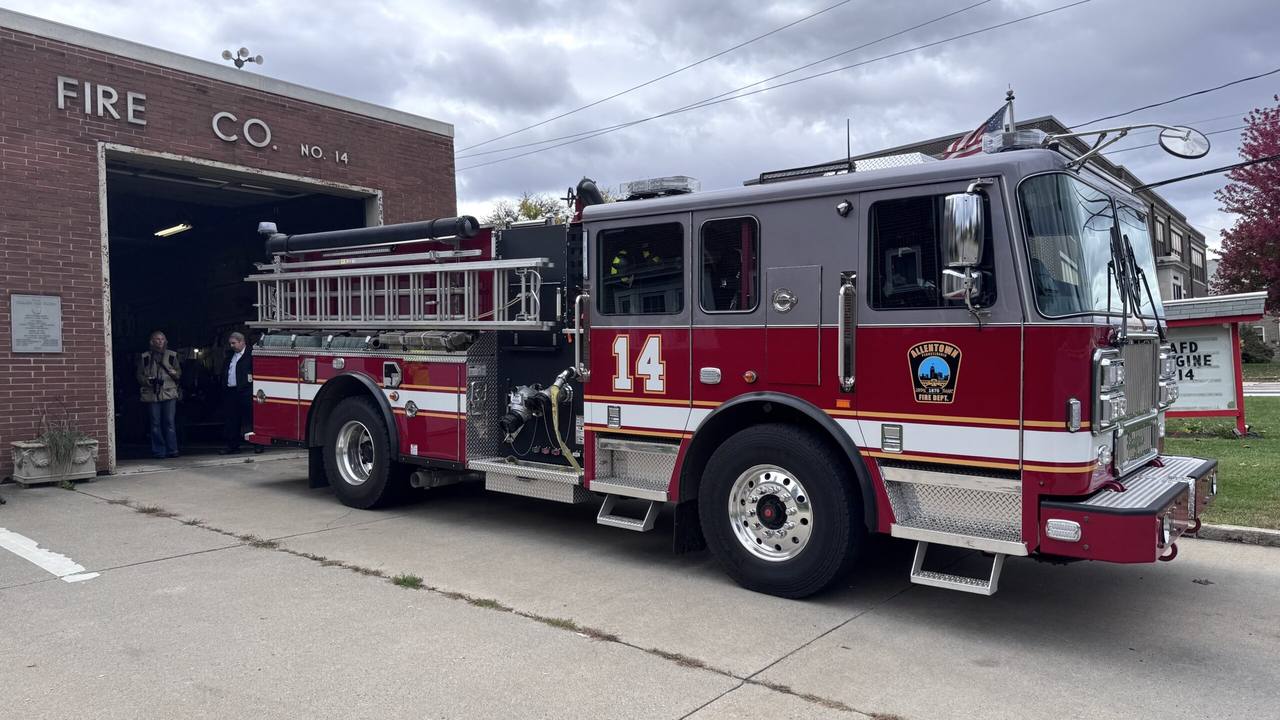
Pennsylvania Governor Josh Shapiro has signed a new state law that will phase out firefighting foam made with PFAS — the man-made substances known as “forever chemicals” — banning its sale in the state from July 1, 2027 and barring fire departments from using it from January 1, 2028. Shapiro signed the measure on Thursday, October 22, in Harrisburg. The law is Act 98 of 2026, and the foam rules were carried in Senate Bill 804.
Source: The Allegheny Front
The ban covers Class B firefighting foam — the kind used on flammable-liquid fires — when PFAS have been intentionally added to it. From July 1, 2027, that foam may no longer be manufactured, sold or distributed in Pennsylvania, and from January 1, 2028, it may no longer be used in firefighting in the state, according to the Allegheny Front and Lehigh Daily reports of the signed law.
Source: Lehigh Daily
Why firefighters are at the centre of this law
State Senator Gene Yaw, a Republican from Lycoming County and a sponsor of the foam provisions, said firefighters can face significantly higher PFAS exposure than other emergency responders. “It will undoubtedly protect firefighters moving forward, while also safeguarding our ground and surface water from contamination,” Yaw said in a joint release posted by Senator Lisa Boscola's office. Senator Nick Miller, a Lehigh Valley Democrat and co-sponsor, put it more simply: “We have a responsibility to protect those who protect us.”
That exposure is not occasional. Adam Perreault, a firefighter and the political and legislative director of International Association of Fire Fighters Local 302 in Allentown, told the legislature in testimony in 2023 that the water-repellent qualities of PFAS are applied both to firefighters' protective equipment and to extinguishing agents. “Basically, we are in direct, prolonged contact with PFAS daily,” he testified, as reported by the Allegheny Front.
“Forever chemicals” in Pennsylvania's water
PFAS — per- and polyfluoroalkyl substances — are thousands of man-made chemicals used in products from food packaging and stain-resistant carpets to non-stick cookware. The U.S. Environmental Protection Agency calls them “forever chemicals” because they do not break down in the environment or in the human body, and they have been linked to cancer and other health problems. Stephanie Wein, clean water and conservation advocate at the PennEnvironment Research and Policy Center, which advocated for the law, said firefighting foam is “a major historic source” of that contamination: “That's why you see big contamination sites near airports and military bases and firefighting training centers or even places where you have one big fire one time, and then you have contamination in the groundwater for decades to come.”
Source: The Allegheny Front
The Pennsylvania record behind the law is long. A recent PennEnvironment report found PFAS in 96% of the rivers and streams tested across the commonwealth, and high levels were found in the Montour Run watershed near Pittsburgh International Airport, which has a firefighting training centre. PFAS linked to foam have been found in drinking water from Willow Grove in southeastern Pennsylvania and Emmaus in the Lehigh Valley to Moon Township in Allegheny County. PennEnvironment's statement on the signing also recalled Sellersville, in Bucks County, where foam used on a single tire fire in 1986 left local wells contaminated for decades. A 2023 U.S. Geological Survey study, cited in Bucks County reporting, found PFAS contamination in more than three-quarters of the state's waterways tested, and Bucks County officials sued PFAS manufacturers in 2022 alleging their products contaminated local water and soil.
What is exempt — and what breaking the law costs
The ban does not apply everywhere. It does not apply where federal law requires PFAS in foam, including under airport rules, and it exempts airports, chemical plants, oil refineries, fuel terminals and storage sites, and power plants that run mainly on natural gas, Lehigh Daily reported. Everywhere else in Pennsylvania, the phase-out dates apply in full.
Enforcement sits with two state offices. The Pennsylvania Department of Environmental Protection will investigate complaints, and the attorney general can seek civil penalties of up to $5,000 for a first violation and $10,000 for each violation after that.
Source: Lehigh Daily
Help to switch — and what the law does not do
Fire companies will not be left to pay for the change alone, but the help has limits. State fire company grants will be able to pay to dispose of old foam and buy PFAS-free replacements, the state fire commissioner must help departments make the switch, and the safe disposal of PFAS foam will be overseen by the fire commissioner and the Department of Environmental Protection. The cap on state equipment loans to fire companies rises from $25,000 to $100,000. However, the law sets no specific grant amount, and it sets up no programme to test for or clean up PFAS that are already in water or soil.
Two dates matter before the bans themselves. Most of the law takes effect 60 days after signing, on December 21. Protective gear is labelled, not banned: manufacturers must mark any firefighting product that contains intentionally added PFAS, a labelling rule that takes effect 180 days after signing, in April. Doylestown Borough's director of emergency services and longtime fire chief Scott Fleischer praised the measure in Bucks County reporting, stressing the need to cut firefighters' long-term exposure; protective turnout gear typically lasts about ten years and costs between $8,000 and $10,000 per set.
The other half of the same law: IV bags
Senate Bill 804 did not start as a firefighting bill. Senator Boscola, a Northampton Democrat, introduced it in June 2025 to phase out DEHP, a plastic additive — a phthalate, not a PFAS — in IV bags. The House added the foam rules, taken from a separate bill by Senators Yaw and Miller, and the final version then passed the House 203–0 and the Senate 49–1. An earlier House version of the foam bill, co-sponsored by Representatives Zachary Mako and Jeanne McNeill, had passed the House 202–0 in July 2025 but never received a Senate vote. Under the IV provisions, sponsored by Boscola and Senator Jarrett Coleman, DEHP is barred from IV bags from January 1, 2030 — or 2032 for makers that give customers notice — and from IV tubing in 2035.
Pennsylvania is not starting from zero on cleanup spending either. In January 2025, Senator Miller and Representative Peter Schweyer announced more than $11.7 million in state PENNVEST money for a PFAS treatment system in Emmaus, where PFAS have turned up in drinking water, often because of firefighting foam, according to PennEnvironment. Nationally, more than a dozen states have passed similar foam laws, and Congress began phasing out military use of PFAS firefighting foam in 2020, the Allegheny Front reported.
December 21, 2026: most of Act 98 takes effect. April 2027: PFAS warning labels required on firefighting gear with intentionally added PFAS. July 1, 2027: manufacture, sale and distribution of PFAS Class B foam banned in Pennsylvania. January 1, 2028: using that foam is banned. Fire companies should inventory their foam and gear now and use state grants and the fire commissioner's transition help to replace stock before the deadlines.
For families across Pennsylvania — including the state's Punjabi and other South Asian communities in the Philadelphia suburbs, the Lehigh Valley, Pittsburgh and Harrisburg areas — the practical meaning is twofold: the firefighters who answer their emergency calls will work with less of a chemical linked to cancer and other illnesses, and one long-running source of drinking-water contamination is being switched off at the source, even though contamination already in the ground is not cleaned up by this law.