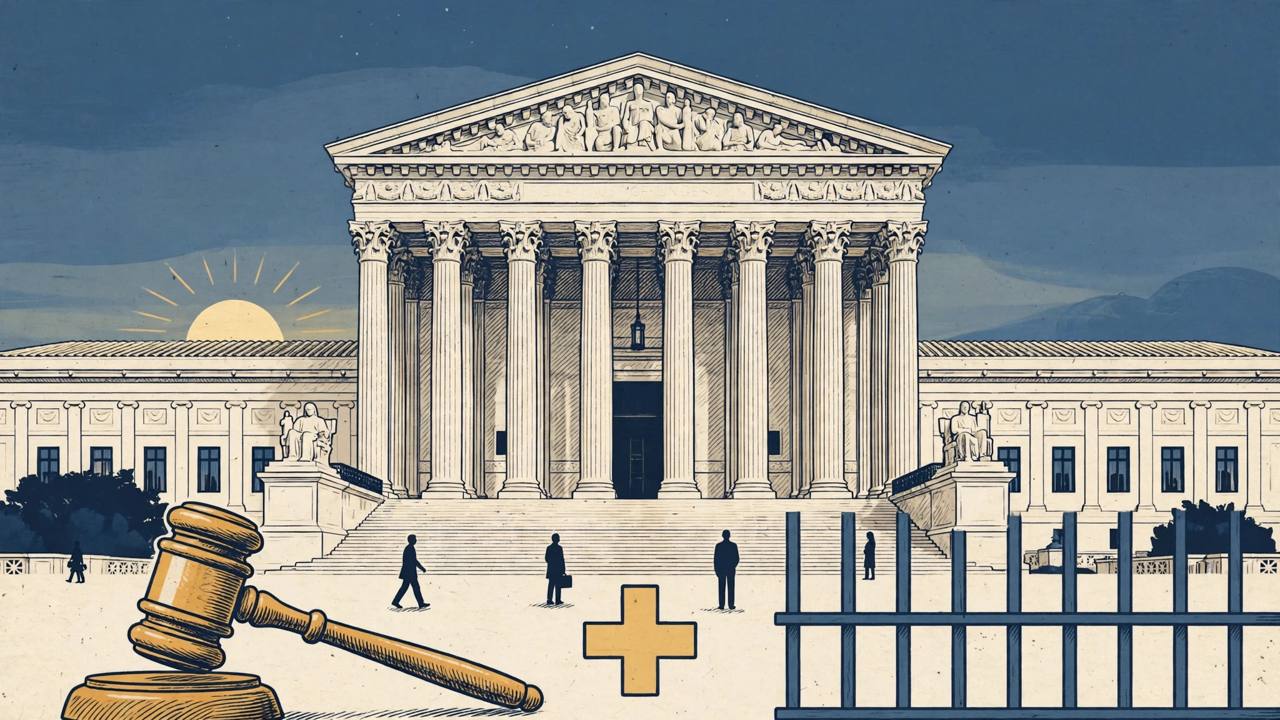
The US Supreme Court on Wednesday rejected a bid by President Donald Trump's administration to immediately enforce a policy restricting gender-affirming care for transgender inmates in federal prisons, leaving a lower court's block on the policy in place while the legal challenge continues.
Source: Reuters via WNCY
The brief order gave no explanation, as is common with emergency requests. Conservative Justices Clarence Thomas and Samuel Alito publicly dissented, saying they would have granted the administration's request, according to Reuters.
The Bureau of Prisons policy, issued in February, prohibits medical and surgical treatments as well as so-called social accommodations — such as clothing and hair-removal devices — that could be used to alter a person's appearance to align with their gender identity. Psychiatric services would still be allowed.
Source: WESA / NPR
How the case reached the top court
Three transgender inmates held at federal facilities in New Jersey, Florida and Minnesota filed a class-action lawsuit challenging the policy, in the case known as Kingdom v. Trump. A federal district judge, Royce Lamberth, barred the Bureau of Prisons from implementing the policy this summer, and on September 18 the US Court of Appeals for the District of Columbia Circuit refused the administration's request to lift that ruling. Solicitor General D. John Sauer then asked the Supreme Court to intervene.
The plaintiffs say the federal prison system has treated people with gender dysphoria with hormones since at least 1992. Li Nowlin-Sohl, a senior staff attorney at the American Civil Liberties Union involved in the case, said the ACLU believes more than 2,000 people in Bureau of Prisons custody identify as transgender, and that the case represents about 1,000 inmates with a gender dysphoria diagnosis, of whom roughly 800 have been prescribed hormone therapy.
Source: Law.com / National Law Journal
The Justice Department argued in its filing that the Bureau of Prisons had reasonably decided to prioritise mental-health treatment while discontinuing what it called medically disputed interventions, and that security and prison-administration concerns also justified the change. Wednesday's order does not decide the policy's legality — it only keeps the injunction in force while the lawsuit plays out in the lower courts.
What is solid
- The Supreme Court denied the administration's emergency request on October 21, 2026, in a brief unsigned order.
- Justices Thomas and Alito noted they would have granted the request.
- The February Bureau of Prisons policy would bar hormone therapy, surgery and social accommodations, while still allowing psychiatric services.
What is only claimed
- The administration says the restricted treatments are medically unnecessary; the plaintiffs and the ACLU say the care is established treatment provided since at least 1992.
- Estimates of how many inmates are affected differ: about 1,000 with a gender dysphoria diagnosis in the case, and more than 2,000 people in federal custody who identify as transgender, per the ACLU.