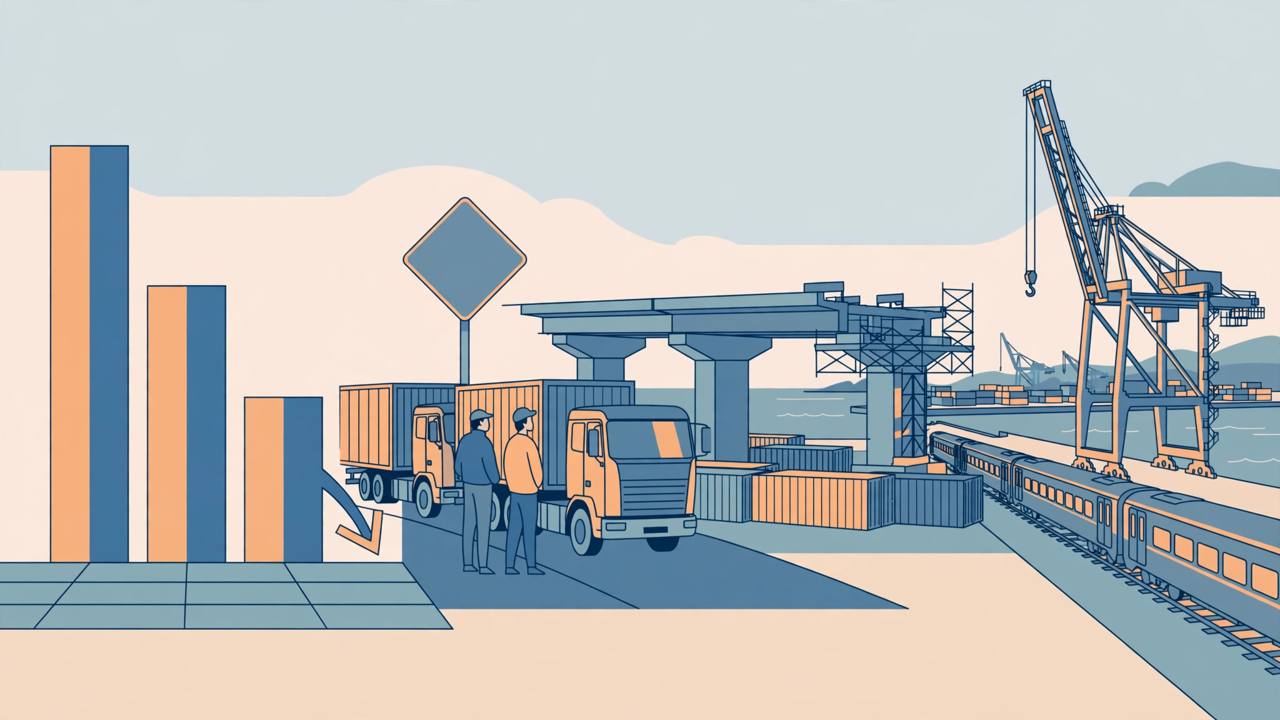
WASHINGTON — States across America have already lost more than 30 percent of their federal transportation funding, and $36.8 billion a year in road, bridge, freight, rail, airport and seaport money will be permanently eliminated unless Congress acts, Senator Maria Cantwell of Washington warned on Tuesday, October 27, as she released updated state-by-state "Chopping Block" reports through the Senate Committee on Commerce, Science, and Transportation, where she is the top Democrat.
Source: U.S. Senate Committee on Commerce, Science, and Transportation
The money at stake is the advance appropriations that the Bipartisan Infrastructure Law provided every year for five years. That law expired on October 1, 2026. Cantwell's updated reports — one for every state, plus the District of Columbia and Puerto Rico — detail what the lapse means, program by program, for formula and non-formula transportation funding in each state.
"When the Bipartisan Infrastructure Law's advance appropriations expired October 1, states saw an immediate cut of more than 30 percent to their federal transportation funding," Senator Cantwell said. "These new reports show the impacts of these unnecessary and costly cuts to freight, aviation, railroad, maritime and main street economic development infrastructure in each state that, if not reversed, will drive higher costs for families, farmers and businesses across America. Congress can and must act to restore funding for these key programs." Bloomberg Government reported the updated analysis runs to 157 pages.
Source: Bloomberg Government
Freight: the sharpest warning for truckers
The freight section of the reports is the part that matters most to the trucking industry. The United States freight transportation system moves $18.7 trillion in goods every year, and American businesses spent $2.3 trillion last year on logistics costs, the committee said. If the advance appropriations are not renewed, funding will decrease by 67 percent for four essential freight programs that could support hundreds of projects still waiting for federal funding — the ports, intermodal connectors and highway freight corridors that trucks depend on every day.
Main streets: local projects lose the most
Local economic development takes an even bigger proportional hit. The infrastructure law let local governments apply directly for federal grant money — critical, the committee noted, because only 16 percent of federal highway formula funds ever reach local roads. If the appropriations lapse for good, funding for three popular grant programs that support local economic development will decrease by 90 percent, hitting the downtown and small-town projects those grants were built for.
Rail: an 83 percent cut to key programs
Freight rail carries 29 percent of U.S. ton-miles of commodities, and Amtrak carried a record 34.5 million passengers in 2025, the reports note. Amtrak serves 40 percent of America's small and rural communities, and almost one in every five Amtrak riders travels to or from a station with no access to air service. The infrastructure law provided $66 billion over five years for passenger rail. Without renewal, funding for four essential rail programs will decrease by 83 percent.
Background: how the funding lapsed
On September 2, President Donald Trump signed the Continuing Appropriations and Extensions Act (H.R. 6500), funding the government through December 11. Congress extended the surface transportation programs themselves in that law — but it did not renew the infrastructure law's advance appropriations, which is where the $36.8 billion a year came from. Cantwell released the original Chopping Block reports on May 13, 2026, covering freight, main streets and rail, and the same day led a letter to appropriators from all Democratic senators warning of the harm if the funding was abandoned. Tuesday's release updates those reports with new state-by-state data after the lapse actually took effect.
Why this matters to Punjabi truckers and diaspora families
A large share of America's long-haul trucking workforce — including tens of thousands of Punjabi drivers and owner-operators running I-5, I-80, I-40 and I-10 — earns its living on exactly the freight corridors, ports and bridges this funding pays to maintain. When freight infrastructure money shrinks, the costs do not disappear: Cantwell's report argues they are passed along as higher shipping costs, worse roads and higher prices for families, farmers and businesses. Diaspora-heavy states such as California, Washington, New York, New Jersey and Texas each have their own state report in the new package, showing the cuts state by state rather than as one national average.
The Chopping Block reports are published by the Democratic side of the Senate Commerce Committee and make the Democrats' case for renewal. The dollar figures, percentages and project counts above are the committee's, attributed as such. The decision itself — whether to restore the money — belongs to the full Congress.
What happens next
The immediate deadline is December 11, when the current government funding law expires and Congress must pass its next funding package. Bloomberg Government noted the report landed a week before the November 3 midterm elections, which will decide control of Congress — and that Cantwell would likely chair the Commerce Committee if Democrats win the Senate. Whether the $36.8 billion is restored will be decided in those funding negotiations.