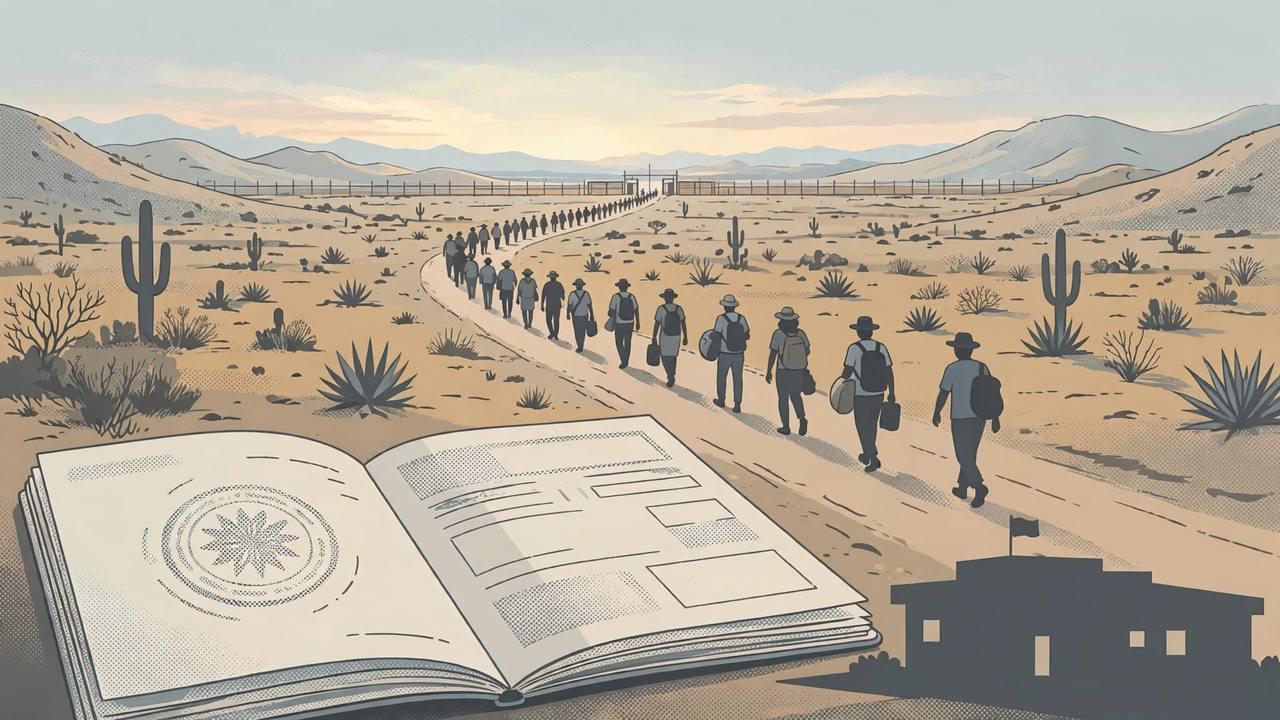
The U.S. State Department announced on Thursday, October 29, that it has taken steps to impose visa restrictions on more than 15 people it accuses of organising, facilitating or promoting migrant caravans — the large groups that travel overland through Central America and Mexico toward the U.S. southern border. United Press International (UPI) reported the announcement the same day. The department did not name the individuals, give their nationalities or say where they operate, and it did not specify how many visas have been refused or revoked; the measures were set in motion over the past week. The accusations are the department's allegations — none of the more than 15 has been publicly identified or charged in connection with the announcement.
Source: United Press International (UPI), Oct. 29, 2026
State Department spokesman Thomas Pigott said investigations indicated the individuals had recruited, coordinated and directed large groups of migrants through Central America and Mexico toward the border. 'Any of these individuals or any caravan participants who apply for a U.S. visa or attempt to travel to our nation will face additional scrutiny, and the department will take appropriate action, which may include refusing or revoking their visas,' he said in a statement. 'Crossing the U.S. southern border without authorization violates the law and can lead to arrest, detention, deportation and a future ban on entry to the United States. Those individuals involved in facilitating or participating in such illegal activity will be considered for visa restrictions.'
What a caravan is, and why Washington targets the organisers
A migrant caravan is a large group travelling together by land, often including family units, women and minors seeking safety in numbers on a route where migrants travelling alone face robbery, extortion and violence. According to a Congressional Research Service report cited by UPI, caravans bound for the United States surged in 2018 and 2019 and have drawn sustained U.S. government attention since. Thursday's action is aimed not at the travellers themselves in the first instance but at the people the department says recruit, coordinate and direct the groups — the organising layer that turns individual journeys into mass movements.
The policy this was done under
The restrictions were imposed under a broad State Department policy first introduced by the Biden administration in November 2023, targeting people who facilitate irregular migration into the United States, and expanded in February 2024. The Trump administration announced a complementary policy in March 2025 aimed at foreign officials and others accused of knowingly facilitating illegal immigration. Under the same framework, Washington has previously restricted visas for people accused of organising, promoting, supporting or funding caravans, and in January 2025 it imposed visa restrictions on executives of travel agencies accused of facilitating illegal migration, in a round reported to have affected more than 70 charter flight routes, including between Cuba and Nicaragua.
The announcement does not mean every caravan participant automatically loses a visa or faces a deportation order. The department says cases are assessed individually; the stated consequences are additional scrutiny, and possible refusal or revocation of a visa.
Why this matters beyond Central America — including for Punjabi travellers
Although Thursday's announcement names no nationalities, the facilitator economy it targets is the same one used by migrants from many regions. In recent years, Indian nationals — including Punjabis — have also travelled through Latin America toward the U.S. border on routes arranged by agents and facilitators, a journey widely known in Punjab as the 'donkey route'. Visa restrictions aimed at organisers and promoters are designed to raise the cost and risk for that organising layer; families in Punjab who are quoted large fees by agents for such journeys should understand that the people selling the route are now an explicit target of U.S. visa action, and that participants themselves face additional scrutiny, arrest, detention, deportation and future entry bans if they cross without authorisation, as the department's statement warns.
Part of a wider visa crackdown
The caravan measures land inside a much larger visa enforcement drive. Earlier this month the State Department said the administration has revoked more than 300,000 visas since January 2025 — a running total the department presents as continuous vetting of visa holders — and Thursday's announcement repeated that the administration will not condone activity it says undermines immigration laws or threatens national security. No list of the more than 15 people restricted on Thursday has been published, and the department has not said whether further rounds are planned.
What happens next
Because the individuals are unnamed, the practical effects will surface case by case: visa refusals or revocations when the targeted people — or caravan participants the department decides to scrutinise — apply or attempt to travel. Watch for any named designations in future State Department statements, for reaction from governments in Central America and Mexico, and for whether the department extends the same tool further into the travel-agency and transport networks it has targeted since January 2025.