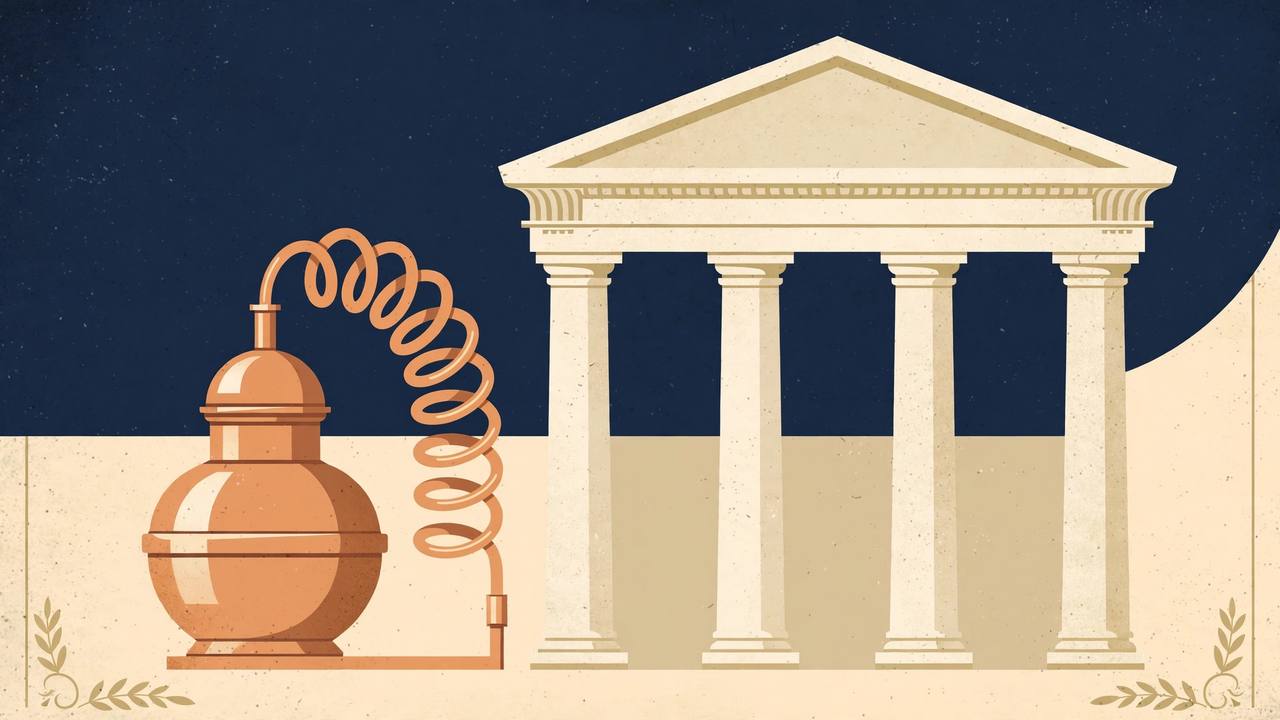
The US Supreme Court agreed on Monday, October 19, to decide whether the federal ban on distilling liquor at home — a law dating to 1868 — is constitutional, taking up the case Department of Justice v. McNutt (No. 26-204). The law says a person may not produce distilled spirits at home for personal use, and makes it a crime to use or possess a still in a dwelling house, shed, yard or enclosure; violators face up to five years in prison and a $10,000 fine, and their property may be forfeited.
Congress passed the restrictions after the Civil War to stop rampant liquor-tax evasion: a House report from 1867 put the tax at $2 a gallon — more than the product's market price — and estimated at least seven-eighths of spirits went untaxed.
The challenge was brought by the Texas-based Hobby Distillers Association and its members. In April, the 5th U.S. Circuit Court of Appeals at New Orleans ruled the ban unconstitutional, saying Congress had improperly used its taxing power; days later, the 6th Circuit at Cincinnati upheld the ban as a necessary and proper means of collecting the tax — the split the Supreme Court will now resolve.
Government attorneys argue the location restriction properly protects tax collection; the challengers argue it goes beyond Congress's listed powers. Reuters reported attorneys general from 15 Republican-led states backed the challenge.
Americans may legally brew beer and make wine at home — home brewing was legalized federally in 1978 — but distilling spirits at home has remained a federal crime. Arguments are expected next year, with a decision by late June or early July 2027.
Sources: Reuters; Associated Press; CBS News, October 19-20, 2026.