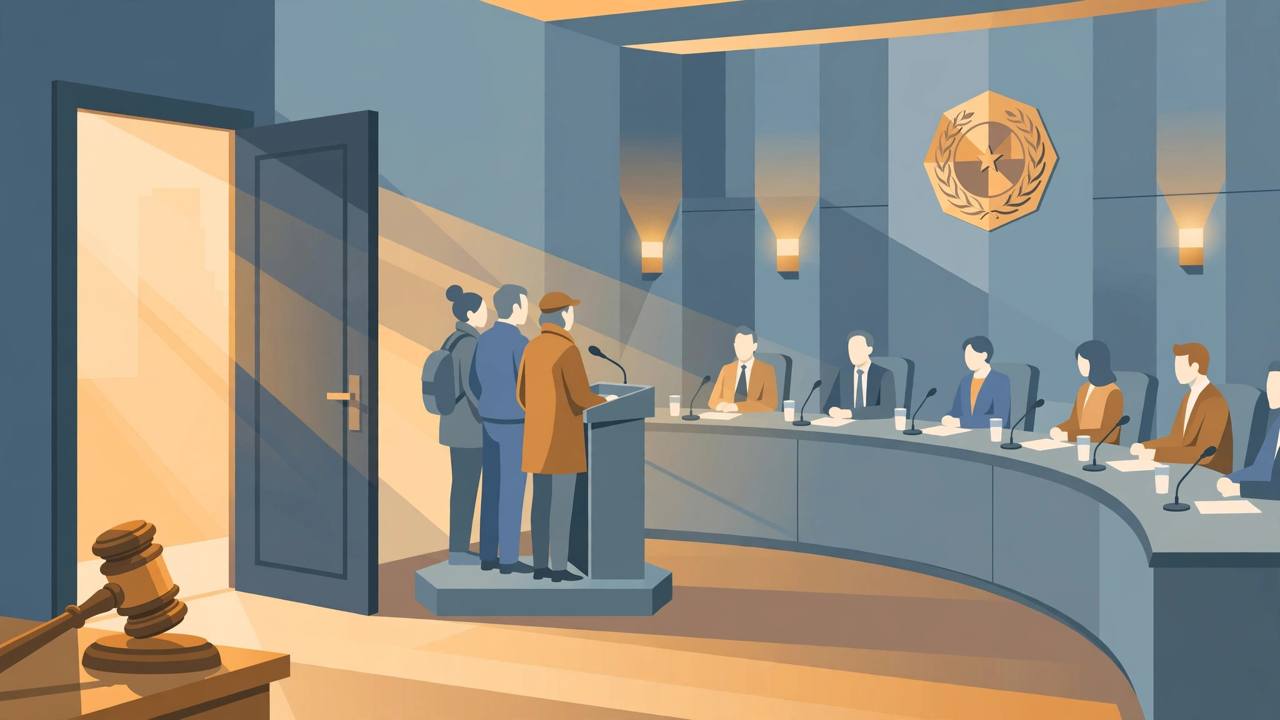
A federal judge has cleared Tennessee Rep. Justin J. Pearson and five other residents to attend Memphis City Council meetings again, ruling in favour of the plaintiffs who sued the council over a two-meeting ban, the Memphis Flyer and The Center Square reported.
The bans followed the October 6 council meeting, which went into recess after attendees protested a move to hold the final vote on a proposed moratorium on data centers. Council Chairwoman Jana Swearengen-Washington wrote to Pearson that his behaviour was "disruptive" and a violation of the council's Rules of Decorum, and banned him and the others from the next two meetings, according to court documents reported by The Center Square. Pearson, the Democratic candidate for Tennessee's 9th Congressional District seat, had used a megaphone to speak during the meeting.
The suit was filed on behalf of Justin J. Pearson, LJ Abraham, Amber Sherman, Jasmine Bernard, Kimberly Owens Pearson and KeShaun Pearson by the Vanderbilt Stanton Foundation First Amendment Clinic. U.S. District Judge Thomas L. Parker of the Western District of Tennessee said the council may set "reasonable and viewpoint neutral" limits on speech, but that banning the residents from the October 20 meeting was "unreasonable." Parker found Pearson had shown a high likelihood of irreparable harm, writing that the plaintiffs would suffer an injury to their First Amendment rights if the ban was not lifted immediately, and that the ruling does not prevent the council from enforcing its decorum rules during a meeting — only from doing so arbitrarily or based on viewpoint.
Before the October 20 meeting, Pearson and other organisers held a press conference outside City Hall, where he called the bans unconstitutional. Amber Sherman, a lead organiser for Black Voters Matter in Tennessee, said she was "elated" that the judge saw through what she described as untruths and mischaracterisations of the October 6 meeting, and said residents had complained for years that the council's speech policy restricts voices protected by the First Amendment.
Sources: Memphis Flyer, October 20, 2026; The Center Square reporting, October 20, 2026.