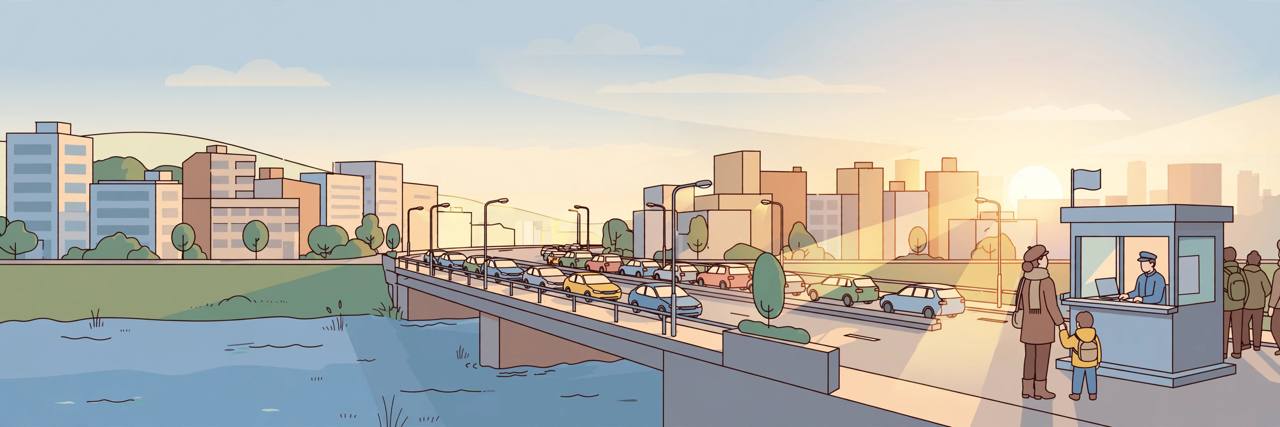
EL PASO, Texas — At the Paso del Norte International Bridge between El Paso and Ciudad Juarez, Mexicans holding border crossing cards line up each morning to shop, see family, attend school and go to events on the US side — and some now describe a new kind of questioning from US Customs and Border Protection officers, NPR reported on Monday, October 26.
Source: NPR / KTEP via WHRO
One Juarez mother, identified only by her first name, Esperanza, because she feared further harassment for speaking to the media, told NPR she was asked over the summer, while heading to a Costco with her young son: "Why was your son born in the United States of America?" She said she was taken into a room for further questioning while her five-year-old son waited outside, that officers took her fingerprints and photograph, and that a female officer then searched her. "At that point I'm with my hands on the wall with my feet apart [and] thinking: What is happening?" she said. Her account is her own description of the encounter, as reported by NPR.
Source: NPR / KTEP via WHRO
Border crossing cards are short-term, non-immigrant visitor visas used by thousands of Mexicans to visit US border cities from Brownsville to San Diego, NPR noted. In a statement to NPR, the State Department said it has revoked thousands of visas, including those of border parents whose children were born in the United States. The agency did not give a specific overall number, did not say how many of the revocations were on the border, and did not say whether it is now policy to question Mexican visitors about why their child was born in the US.
Source: NPR / KTEP via WHRO, quoting US State Department
The questioning sits inside a wider effort NPR linked to the administration's new birth-tourism visa task force. Separate reporting based on a State Department cable shared by Politico said diplomatic missions must report suspicious cases to a Birth Tourism Prevention Task Force established in August, and put visas revoked in connection with the practice at more than 2,300 since the task force began, amid a broader total of more than 250,000 visa revocations reported under the current administration. Those figures come from that cable reporting, not from NPR's border reporting, and the two totals describe different scopes.
Source: CubaHeadlines, reporting a State Department cable shared by Politico
US policy since 2020 has allowed consular officers to deny a visitor visa when they conclude the main purpose of the trip is to give birth so the child obtains US citizenship, while giving birth in the US is not itself a crime. El Paso immigration attorney Kathleen Walker told NPR that people travelling on tourist visas should know that rule. For diaspora and border families alike, the practical change reported this week is at the crossing itself: a routine shopping or family trip can now include secondary questioning about a child's place of birth, and a card relied on for years can be revoked.
Source: NPR / KTEP via WHRO