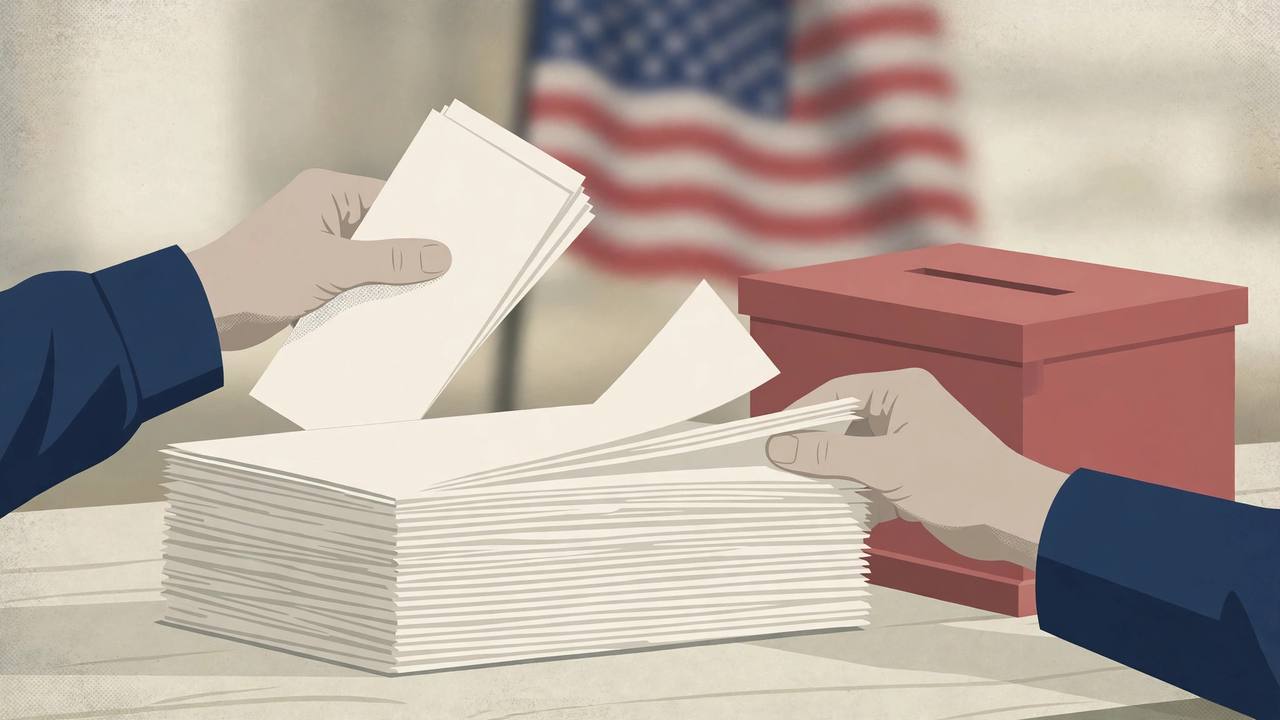
One day before Americans vote in the midterm elections, a federal lawsuit in Texas is asking a judge to block certification of the state's results until every paper ballot is counted by hand. The Potter County Republican Party and its chairman, Daniel Rogers, filed the case on October 27 in the US District Court for the Northern District of Texas, in Amarillo, seeking to stop officials from certifying the November 3, 2026, federal election results unless a statewide hand count is completed first.
Source: Democracy Docket, Oct 2026
What the lawsuit asks for
The plaintiffs want the court to bar county officials from completing certification of Texas' federal election results until officials have manually counted all paper ballots and records in every precinct in the state. The suit is filed against Potter County Elections Administrator Christy Benge, but it asks the court to certify a class of Texas county election administrators, with Benge serving as their representative — a device that would let a single county case reach all 254 counties.
The case, Potter County Republican Party v. Benge, case number 2:26cv-215, is assigned to US District Judge Matthew J. Kacsmaryk in the Amarillo Division. No ruling on the request has been reported. As of Election Eve, the case remains pending, which means the certification fight will play out after votes are cast — not before.
The complaint does not allege that voting machines in Potter County — or anywhere else in Texas — have actually changed votes. The plaintiffs explicitly concede they are not claiming any previous Potter County election was altered or inaccurately reported. They also say they do not seek to prevent voting, postpone Election Day, invalidate lawfully cast ballots, or require wholesale replacement of voting equipment before November 3. What they seek is prospective relief aimed at the post-election verification and certification process.
The arguments behind the case
The plaintiffs argue that Texas' existing post-election audits are insufficient to detect potential hacking, artificial intelligence tampering or errors in electronic voting systems. They allege that voting machines contain components manufactured in China that could be manipulated, and that US adversaries such as China, Iran and Russia are capable of accessing election systems. Those are allegations in the complaint, not findings — the complaint does not specify whether any machine in Potter County, or elsewhere in Texas, has been compromised.
On that basis, the plaintiffs argue that certifying results without a full manual count would violate voters' Fourteenth Amendment rights under the US Constitution. They point to federal election-security conditions that call for a 5 per cent manual audit for certain federal grant funding, and argue the Constitution requires Texas to manually count 100 per cent of the paper ballots before certification.
Texas law already requires post-election hand-count audits when electronic voting systems are used, Democracy Docket and Al Jazeera both note. The plaintiffs' argument is that those audits — a sample, not a full count — are not enough to confirm the accuracy of the final counts produced by the machines used in most Texas jurisdictions.
Who has joined the fight
The case has drawn organised opposition from both parties' campaign arms and from voting-rights groups. The Democratic Senatorial Campaign Committee and the Democratic Congressional Campaign Committee filed motions to intervene as defendants on October 29. On October 30, the NAACP Texas State Conference, the League of Women Voters of Texas, MOVE Texas Civic Fund and Common Cause filed a motion to intervene as defendants.
A spokesperson for the Texas Secretary of State's office declined to comment on the lawsuit, Al Jazeera reported. The Potter County Republican Party did not immediately return requests for comment, Al Jazeera reported. The legal challenge arrives as polls reported by Al Jazeera show Democrat James Talarico narrowly leading his Republican challenger, Ken Paxton, in Texas' US Senate race — a contest that could help decide which party controls the Senate after November 3.
Why the timing matters
The timing is the point. Election Day is Tuesday, November 3, when voters will decide all 435 US House seats, 35 Senate seats, 36 governorships and 145 ballot measures across 40 states, according to election trackers. Certification normally follows the canvass of results by county officials and the Secretary of State. If the court granted the plaintiffs' request, counties would have to perform a procedure Texas law does not currently require — a complete hand count of paper ballots across the state — before results for federal races could be certified.
That is why the case matters beyond Potter County's 117,000 residents: a single Amarillo judge's order could, in principle, hold up certification of one of the largest states' federal results, including a Senate race both parties see as pivotal. Equally, if the court rejects the request, certification would proceed under the existing audit rules — the sample hand-count audits Texas already requires.
For voters, nothing in the lawsuit changes how or where to vote on Tuesday. The case is about what happens after the votes are counted: how thoroughly the count is checked before it becomes official. The next step is a ruling from Judge Kacsmaryk, and then — if either side appeals — the higher courts that would decide whether a full hand count is a constitutional requirement or an extraordinary remedy the law does not demand.
What is solid
- The Potter County Republican Party and chairman Daniel Rogers filed the lawsuit on October 27, 2026, in the Northern District of Texas, Amarillo Division.
- The plaintiffs seek a statewide hand count of all paper ballots before certification of the November 3 federal results.
- Texas law already requires post-election hand-count audits when electronic tabulators are used.
What is only claimed
- Whether electronic voting systems are vulnerable to hacking, AI tampering or foreign manipulation in a way that makes existing audits constitutionally inadequate — the plaintiffs' claim, not an established finding.
- Whether the Fourteenth Amendment requires a 100 per cent manual count — the plaintiffs' legal argument, opposed by the intervening campaign committees and voting-rights groups.