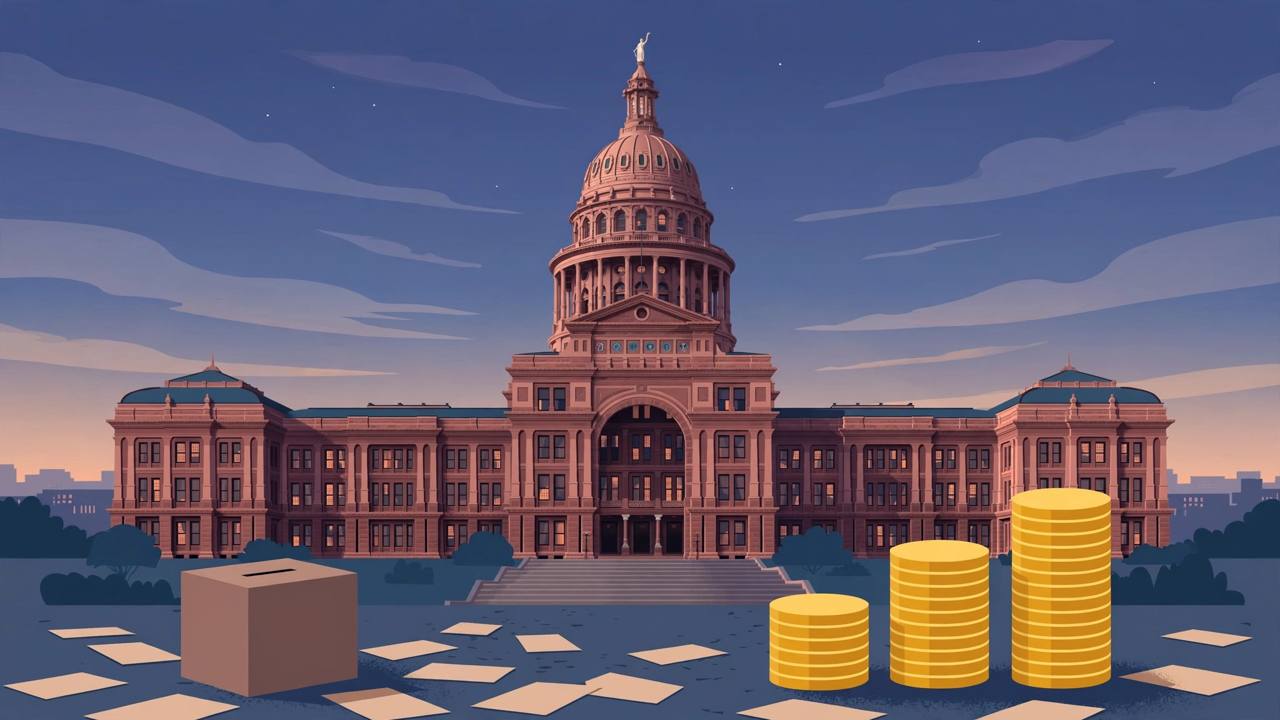
The Texas Senate race has become the most expensive non-presidential contest in American electoral history, with political advertising spending and reservations reaching $573 million, according to advertising intelligence firm AdImpact, in figures reported on Monday, November 2 — the eve of the November 3 midterm elections. Republican Ken Paxton and Democrat James Talarico are contesting the seat in one of the closest Senate races in the country.
Source: AdImpact figures reported by ANI
AdImpact's breakdown shows $165.7 million spent on advertising in the primary phase and a further $407.5 million in general-election advertising spending and reservations. Texas is only the second non-presidential race in U.S. history to cross the $500 million mark, after the 2024 Ohio Senate contest, which recorded $542.7 million.
Source: AdImpact figures reported by ANI
Paxton, the Texas attorney general, won the Republican nomination in a Trump-backed primary runoff against Senator John Cornyn; Talarico is a Democratic state representative. NPR's final ratings roundup, summarised by NewsCubby, reported that more than $500 million has been spent in the race since the primary, and in San Antonio on Sunday Talarico told supporters that more than $300 million had already been spent by outside groups trying to defeat him, calling it the most expensive Senate contest in American history.
Source: NPR via NewsCubby; Dispatch Times
A follow-up to the final polls — what the money is chasing
The spending record follows the final pre-election surveys Awaaz Punjab reported earlier: the New York Times/Siena University polls put Talarico ahead of Paxton 50 per cent to 43 per cent in Texas, with 1,215 voters surveyed. A separate Texas Southern University survey reported this weekend is much tighter — Talarico 49 per cent, Paxton 47 per cent, with Libertarian Ted Brown on 3 per cent — which is precisely why both sides and their outside backers have kept buying advertising into the final hours.
Source: New York Times/Siena via ANI; Texas Southern University survey via Dispatch Times
The historical stakes explain the price tag. Texas has not elected a Democrat to the U.S. Senate since 1988, and no Democrat has won any statewide race in Texas since 1994. A Talarico win would therefore be a generational breakthrough for Democrats, while a Paxton win would extend a Republican statewide streak of more than three decades — and, with control of the Senate itself in play, national groups on both sides have treated Texas as worth almost any advertising budget.
Source: NPR via NewsCubby
The national picture the Texas money sits inside
All 435 House seats and 35 Senate seats are being decided on Tuesday, November 3. Democrats need a net gain of four seats to take the Senate and three seats to take the House. The New York Times/Siena battleground surveys found only 38 per cent of likely voters across the seven surveyed states approving of President Donald Trump's job performance, with Democrats holding a nine-point advantage on the cost of living. Texas's governor race is running in parallel and is also tight: the Texas Southern University survey puts incumbent Republican Greg Abbott on 50 per cent against Democratic challenger Gina Hinojosa on 47 per cent.
Source: NBC News polling via Devdiscourse; Dispatch Times
Texas is one of the largest advertising markets in America: campaigns must buy television and digital time across several major metro media markets — Dallas–Fort Worth, Houston, San Antonio and Austin among them — to reach a statewide electorate of millions. When a race is also rated a toss-up with control of the U.S. Senate at stake, national party committees and outside groups add their own spending on top of the candidates' campaigns, which is how a single Senate contest passes half a billion dollars.
For Punjabi and South Asian voters in Houston, Dallas and other Texas metros, the saturation is impossible to miss: the same electorate being courted with this record spending will help decide a Senate seat that shapes federal immigration policy, judicial confirmations and the balance of power in Washington for the next two years. Turnout in South Texas's Latino communities and in the big metro suburbs is being watched by both campaigns as the variable most likely to settle a race that polling cannot separate cleanly.
What happens next
Polling stations across Texas are open from 7 a.m. to 7 p.m. local time on Tuesday, November 3. Counting in a state this large — with heavy early and mail voting already recorded nationally — may run late into the night, and a margin as tight as the final surveys suggest could delay a clear call. Whatever the result, the $573 million figure is now the benchmark every future big-state Senate race will be measured against.