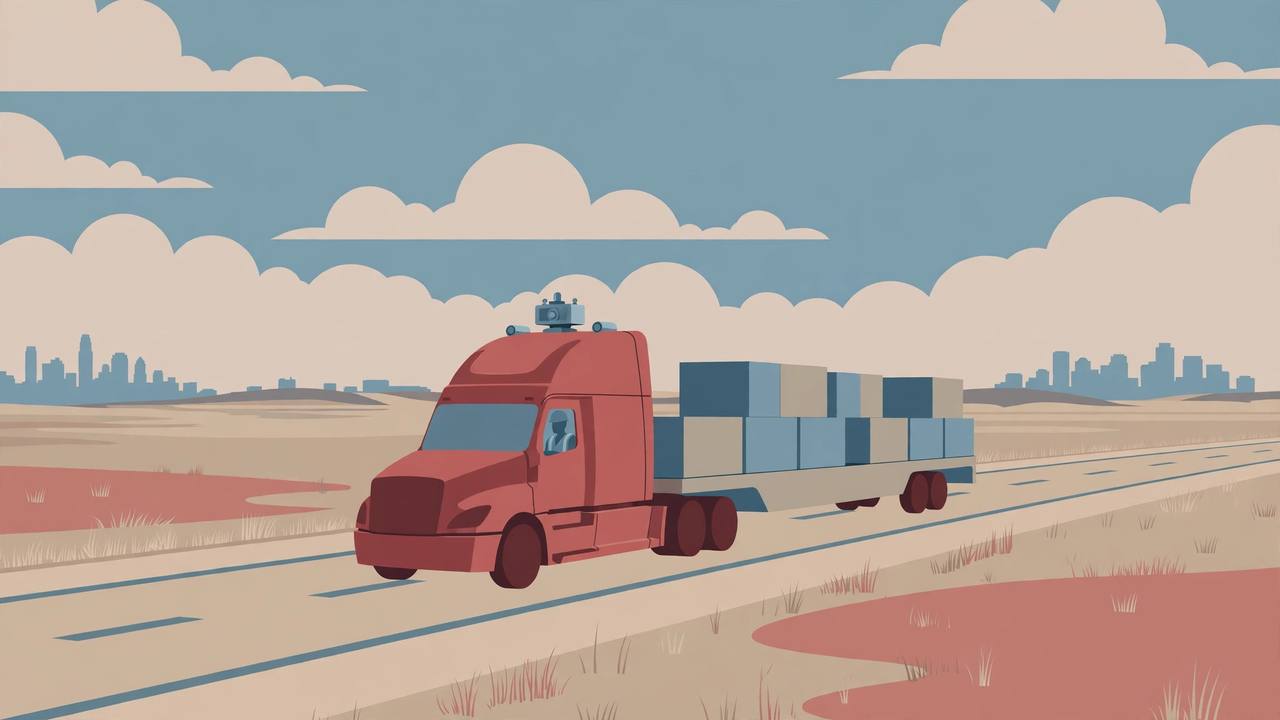
Autonomous trucking has taken another step from test runs to paying work in Texas. Volvo Autonomous Solutions and technology partner Waabi have launched their first autonomous customer operation in the state, hauling freight for logistics company Warp along the heavily travelled Dallas–Houston corridor, according to an October 5 company announcement reported this week by Trucking Dive.
Source: Trucking Dive
The trucks doing the work are Volvo VNL Autonomous tractors powered by the Waabi Driver, Waabi's artificial-intelligence driving system. They are transporting Warp customers' goods directly to third-party facilities, rather than running only between company terminals. For now, a human safety observer remains in the driver's seat during the hauls, the companies said.
Warp runs an open freight network covering less-than-truckload (LTL) and full-truckload shipping — the segment where loads from many customers are combined and moved on tightly coordinated schedules. Volvo Autonomous Solutions president Nils Jaeger said the launch brings autonomous freight into customer operations in "one of logistics' most demanding segments," and that what the partners learn on the Dallas–Houston corridor will help them improve the system as they scale.
Source: Commercial Carrier Journal
Route: Dallas–Houston corridor, Texas. Truck: Volvo VNL Autonomous with the Waabi Driver system. Customer: freight forwarder Warp (LTL and full-truckload). Human role today: a safety observer sits in the driver's seat. Status: first customer operation of the Volvo–Waabi partnership, announced October 5 and reported October 22.
Waabi chief operating officer Lior Ron called the Warp work "the first milestone" on the path to showing the truck can handle "the full range of real-world freight," while Warp chief executive Daniel Sokolovsky said the value of autonomy grows when freight from multiple customers can be coordinated around it — aligning routes, capacity and timing so one lane's gains help the wider network.
For the Punjabi and Indian truckers who run Texas freight corridors in large numbers, the immediate picture is change at the edges rather than overnight replacement: the cab still carries a human, and the companies say the Texas lane is a learning ground for additional routes in the coming years. But each new paying lane moves autonomous hauling from demonstration to business — and the Dallas–Houston corridor is one of the busiest freight routes in the United States.
Source: Truckers News